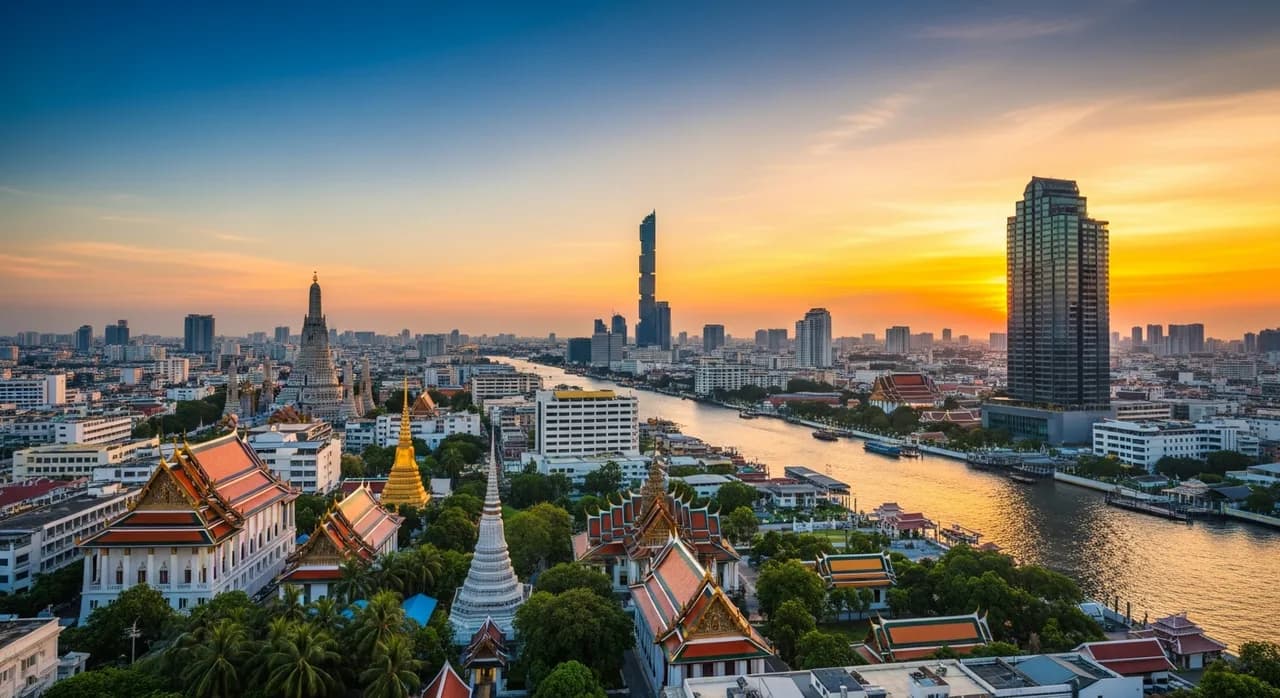
Few cities engage the senses like Bangkok. A few Skytrain stops take you from the golden roofs of the Grand Palace to the glass towers of Siam, from a market where you eat on a plastic stool to a tropical garden of complete calm. The Thai capital isn't so much visited as travelled through: by boat on the Chao Phraya, on foot in the lanes of Chinatown, by tuk-tuk between two temples. Nothing here is ever quite tidy, and that is exactly its charm. Here are the 12 experiences not to miss to truly understand Bangkok, from its most iconic landmarks to its quieter corners, along with the practical tips to enjoy them at your own pace.
✈️ Flights right now to Bangkok on Yoosky
Complete guide
In this article
- The Grand Palace and Wat Phra Kaew: Thailand's Sacred Heart
- Wat Pho: Meeting the 46-Metre Reclining Buddha
- Wat Arun: Climbing the Temple of Dawn at Sunset
- Cruising the Chao Phraya and the Canals of Thonburi
- Chatuchak Market: 15,000 Stalls in a Single Weekend
- Yaowarat, Bangkok's Chinatown: Street Food Capital of the World
- The Jim Thompson House: Six Teak Houses and a Mystery
- Ayutthaya: A Day Trip to the Ancient Capital of Siam
- The Floating Markets: Choose Amphawa over Damnoen Saduak
- A Thai Cooking Class: Taking Bangkok Home With You
- Wat Saket: 344 Steps up the Golden Mount
- Lumphini Park: A Green Breath Among the Skyscrapers
1/12The Grand Palace and Wat Phra Kaew: Thailand's Sacred Heart
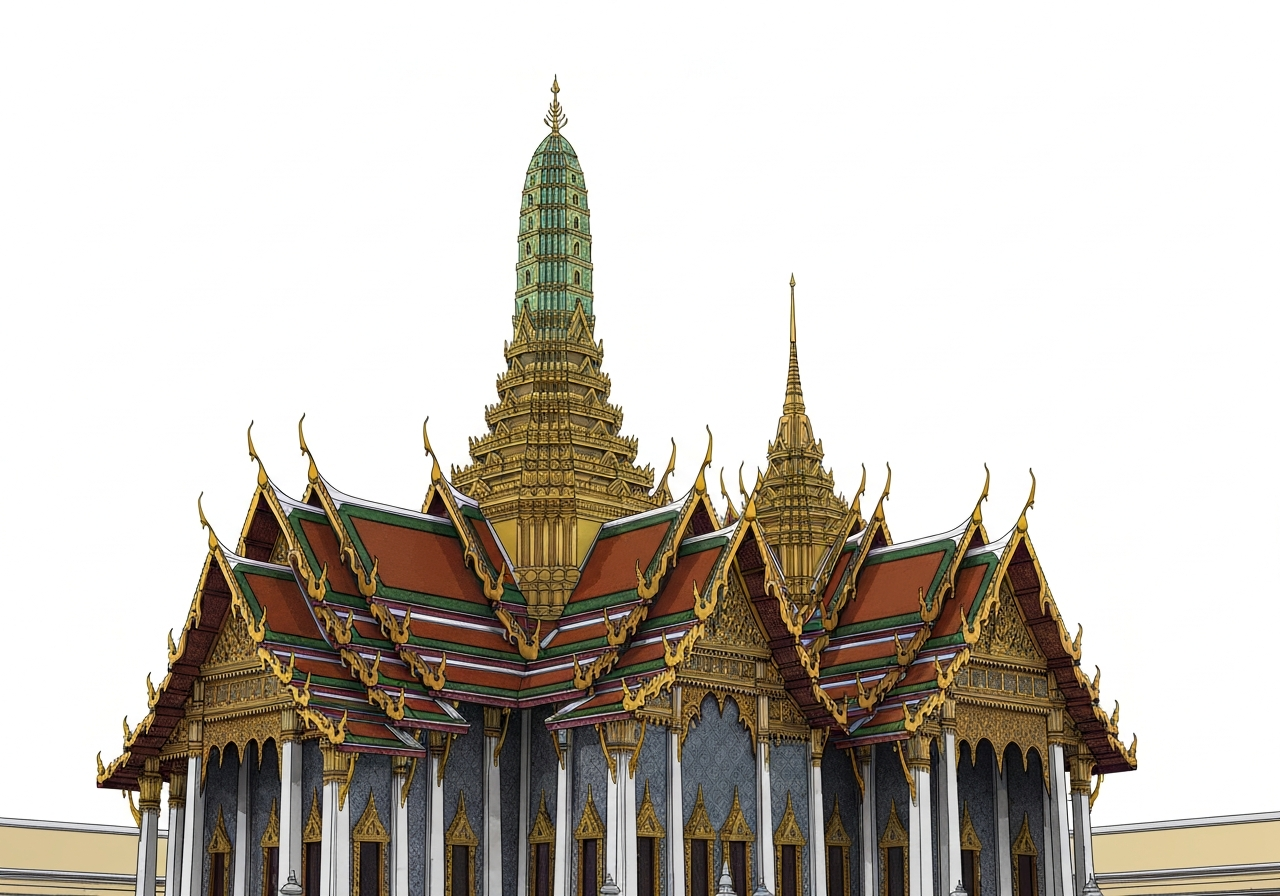
This is the image everyone brings home from Bangkok: a forest of golden roofs, carved spires and mosaics catching the light. Built in 1782, the Grand Palace was the royal residence for a century and a half. At its heart, Wat Phra Kaew houses the Emerald Buddha, a 66 cm jade statue regarded as the kingdom's palladium — the king himself changes its robes with each season. Allow two hours and arrive at opening time, 8:30 am, ahead of the heat and the tour groups. The dress code is strictly enforced: shoulders and knees covered, for everyone. Entry is 500 baht and includes the Vimanmek mansion museum.
2/12Wat Pho: Meeting the 46-Metre Reclining Buddha
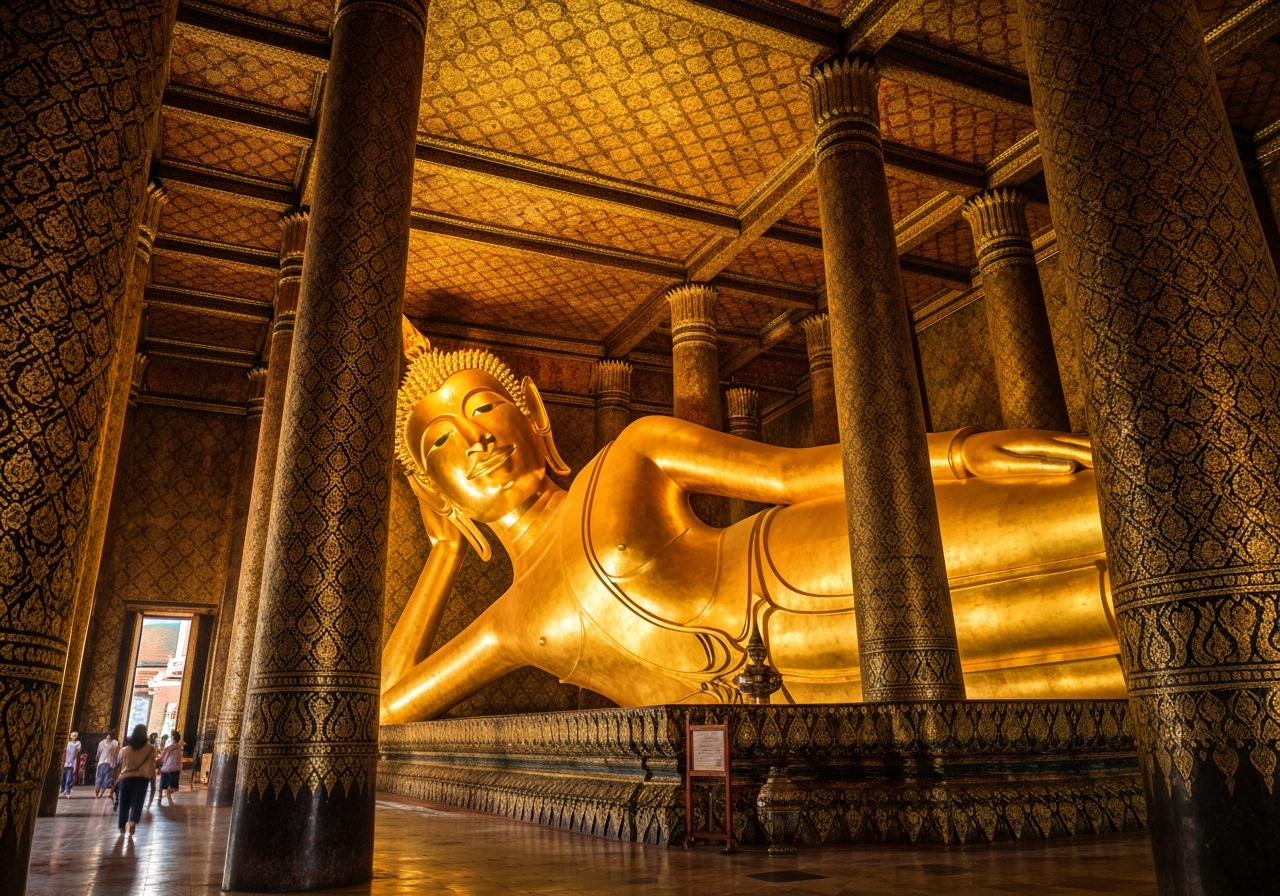
A five-minute walk from the Grand Palace, Wat Pho holds one of Bangkok's most striking sights: a reclining Buddha 46 metres long and 15 high, entirely covered in gold leaf, its mother-of-pearl inlaid feet depicting 108 auspicious signs. This is also the city's oldest temple and the birthplace of traditional Thai massage — its school, still running today, offers one-hour sessions in an open pavilion. Don't leave without wandering the quieter inner courtyards, lined with almost 400 gilded Buddhas. Entry is 300 baht, open 8 am to 6:30 pm.
3/12Wat Arun: Climbing the Temple of Dawn at Sunset
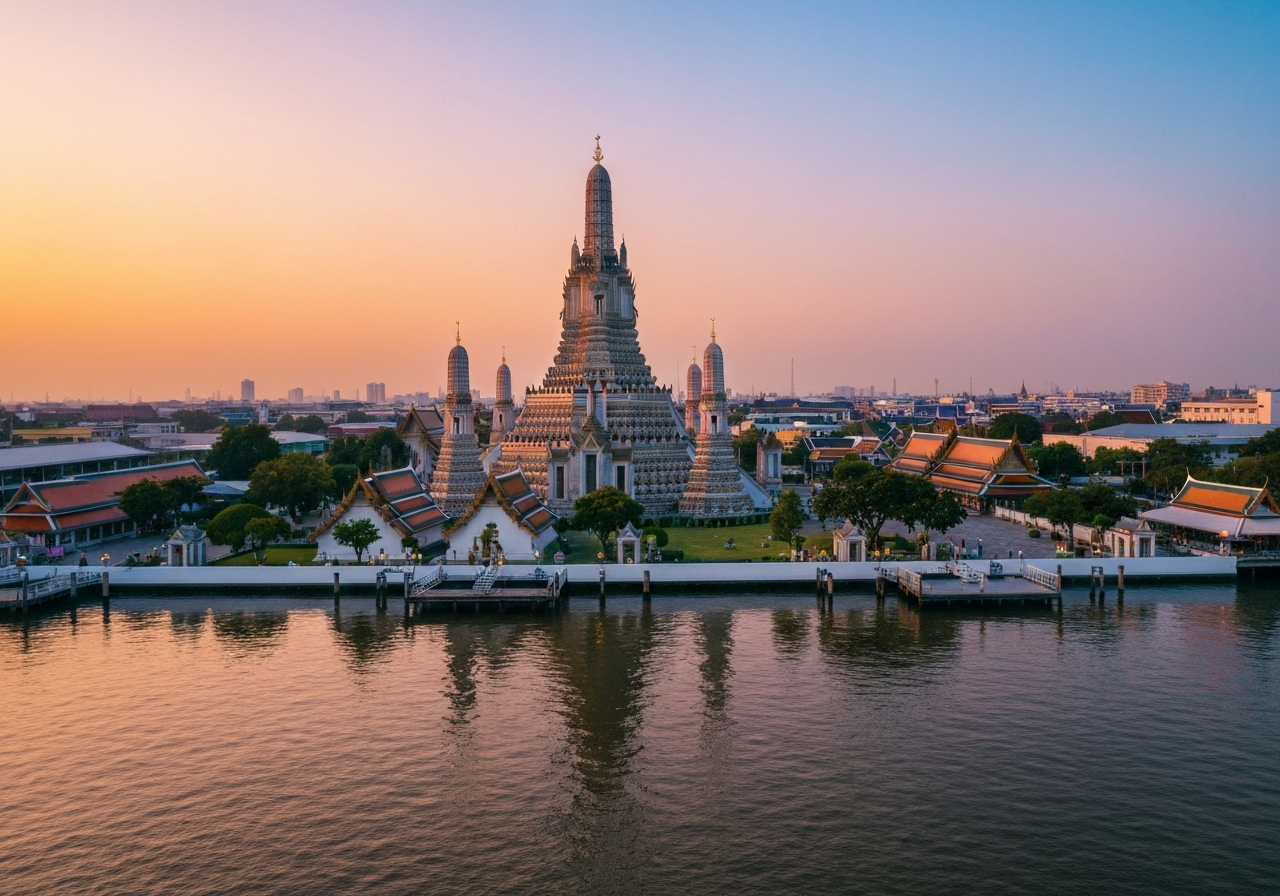
On the Thonburi bank, Wat Arun raises its 82-metre central prang above the Chao Phraya. From a distance it looks white; up close you discover it is entirely clad in crushed Chinese porcelain and seashells, salvaged from the ballast of merchant ships. Climb its steep steps for a superb view over the river and the Grand Palace roofs opposite. Fittingly for a paradox, the Temple of Dawn is at its most beautiful late in the day, when low light turns the ceramic pink. Cross by ferry from Tha Tien pier for 5 baht; entry is 200 baht.
4/12Cruising the Chao Phraya and the Canals of Thonburi
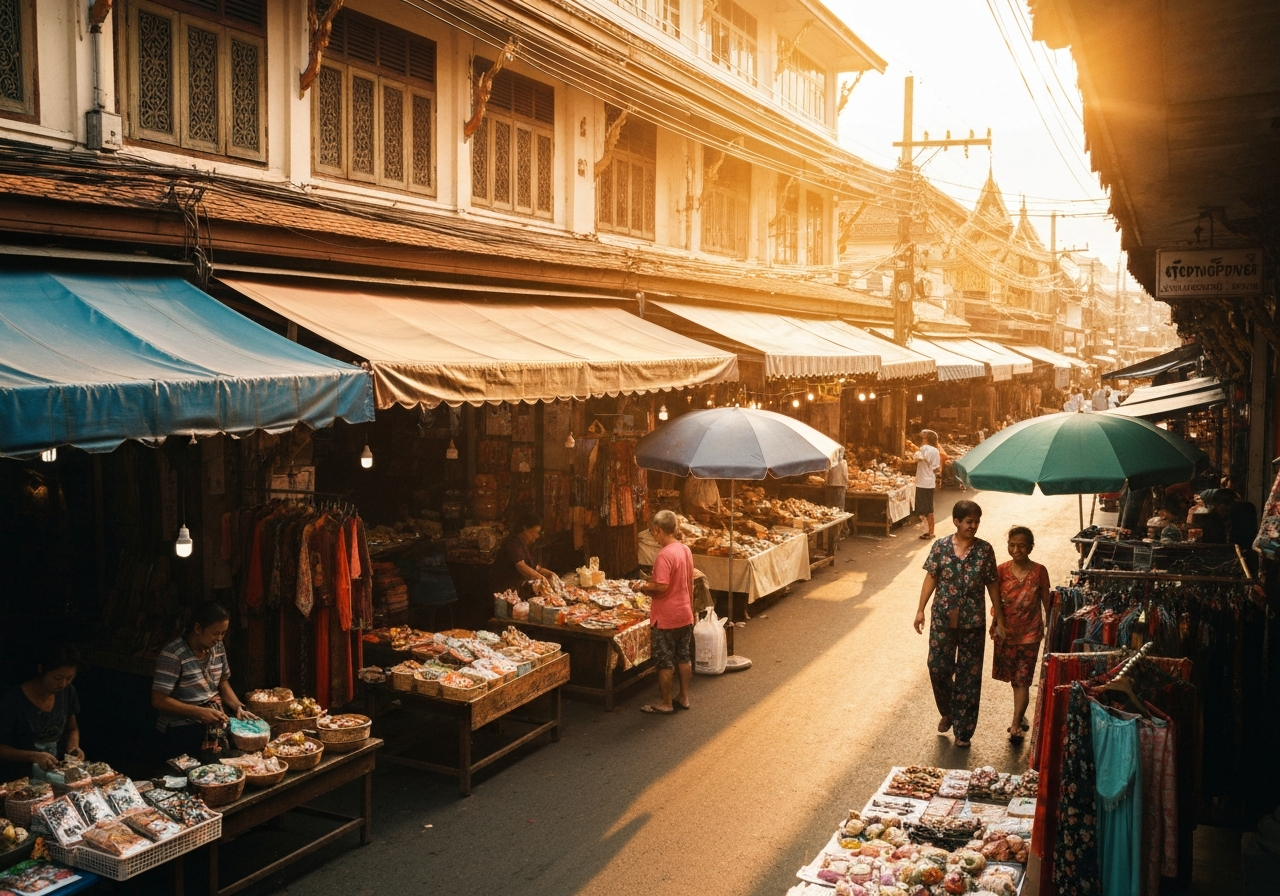
Bangkok was built on water, and a boat is still the best way to understand it. The orange commuter boat running up the Chao Phraya costs 16 baht and stops at most of the temples — the best value in the city. To go further, board a long-tail boat into the khlongs of Thonburi, canals lined with stilt houses where you'll spot monitor lizards, tiny shrines and children waving from the jetties. Budget 1,200 to 1,500 baht for a private hour and a half, negotiated at the Tha Chang or Sathorn piers.
5/12Chatuchak Market: 15,000 Stalls in a Single Weekend
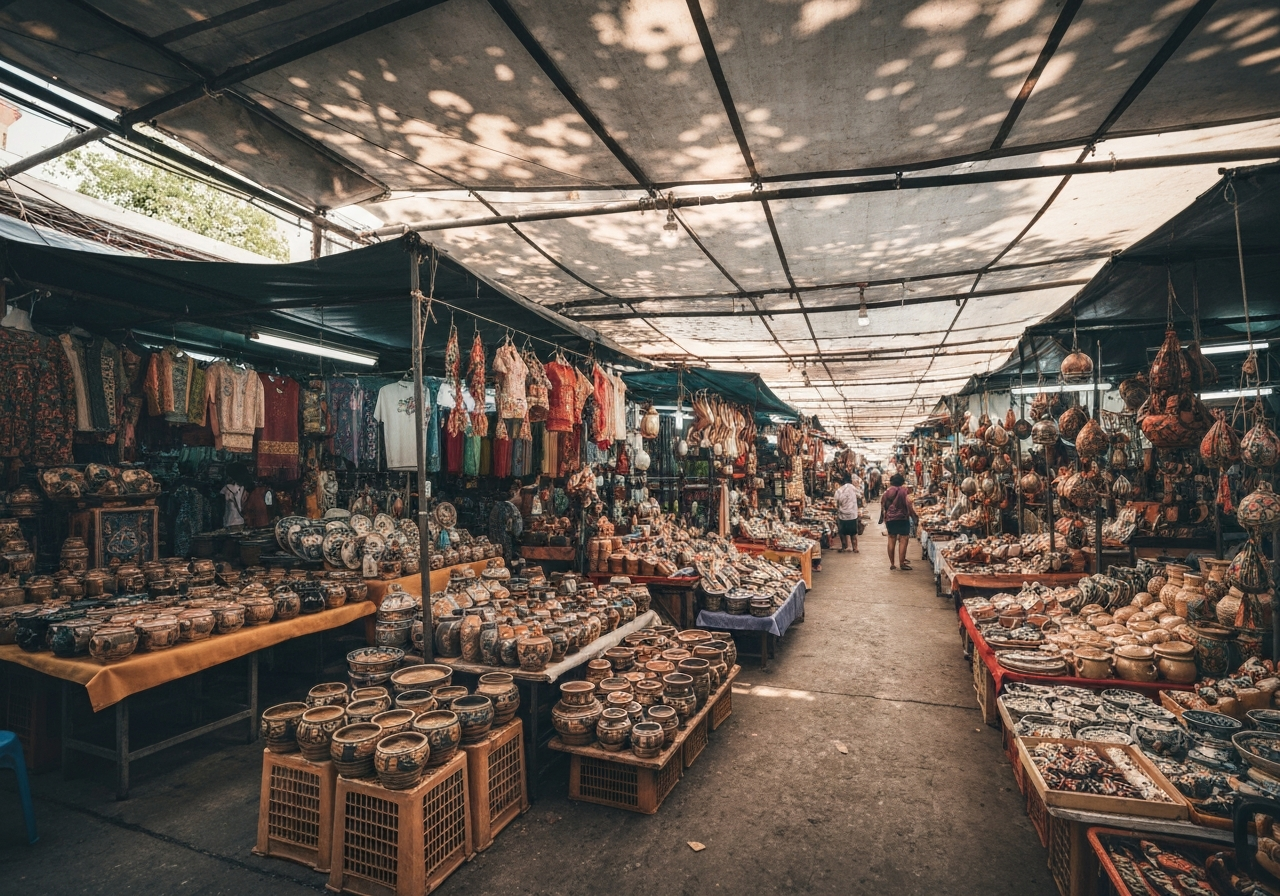
Southeast Asia's largest open-air market opens only on Saturdays and Sundays, 9 am to 6 pm. Its 15,000 stalls across 27 sections form a labyrinth selling absolutely everything: ceramics, textiles, antique furniture, tropical plants, northern handicrafts, Thai designer clothing. The method that works: grab a map at the entrance, target two or three sections, and accept that you'll get lost. Always haggle, with a smile, aiming for 20 to 30% off the opening price. Direct access via MRT Kamphaeng Phet, exit 2, which comes out in the middle of the market.
6/12Yaowarat, Bangkok's Chinatown: Street Food Capital of the World
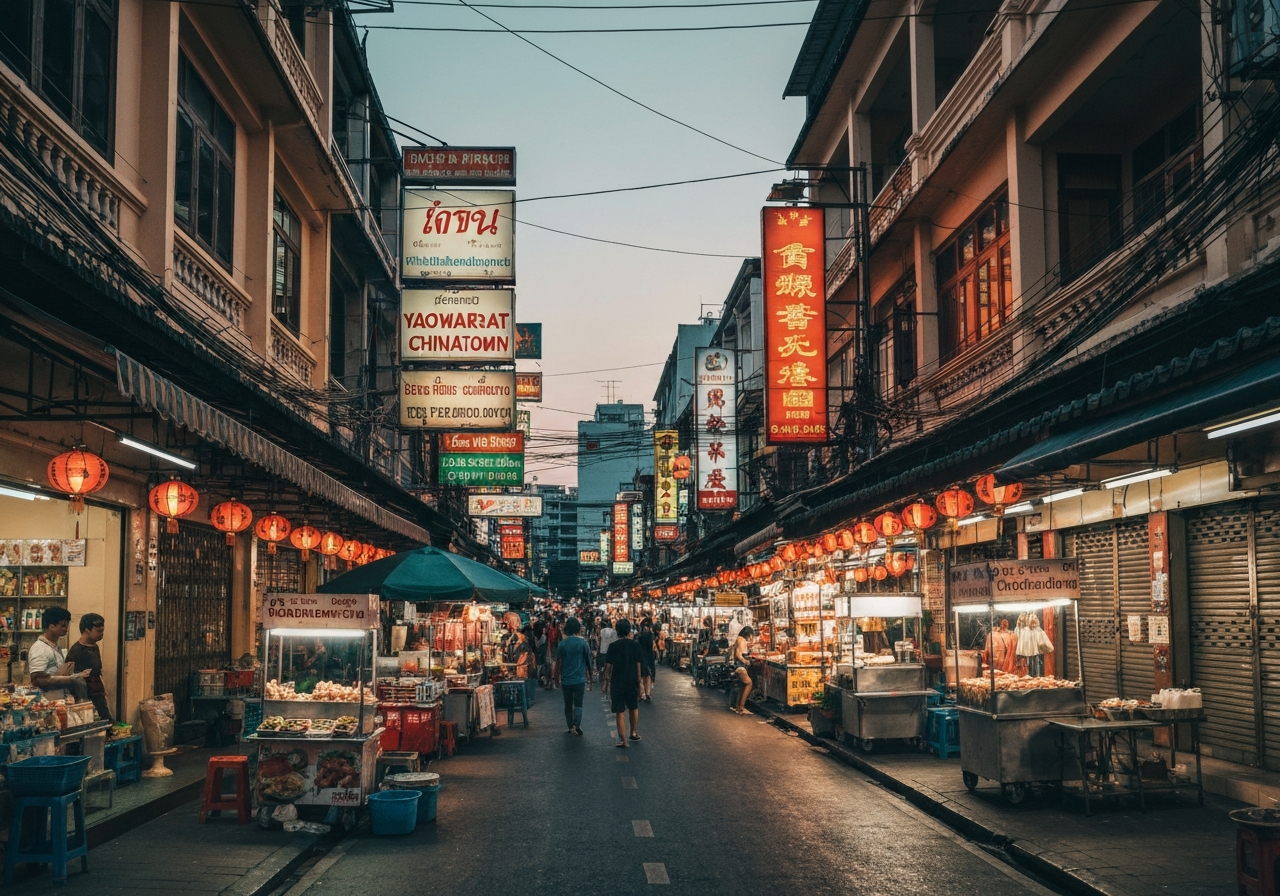
Founded in 1782 by the Chinese community displaced during construction of the Grand Palace, Yaowarat is a neighbourhood with two faces. By day you explore its covered lanes, herbal medicine shops, gold dealers and the superb Wat Traimit, home to a 5.5-tonne solid gold Buddha. In the evening, the main avenue turns into an open-air food market: stir-fried noodles, dim sum, grilled skewers, pork soups, mango sticky rice. The best places are simply the ones with the longest queue. Bring small notes and come hungry — a dish rarely costs more than 60 baht.
7/12The Jim Thompson House: Six Teak Houses and a Mystery
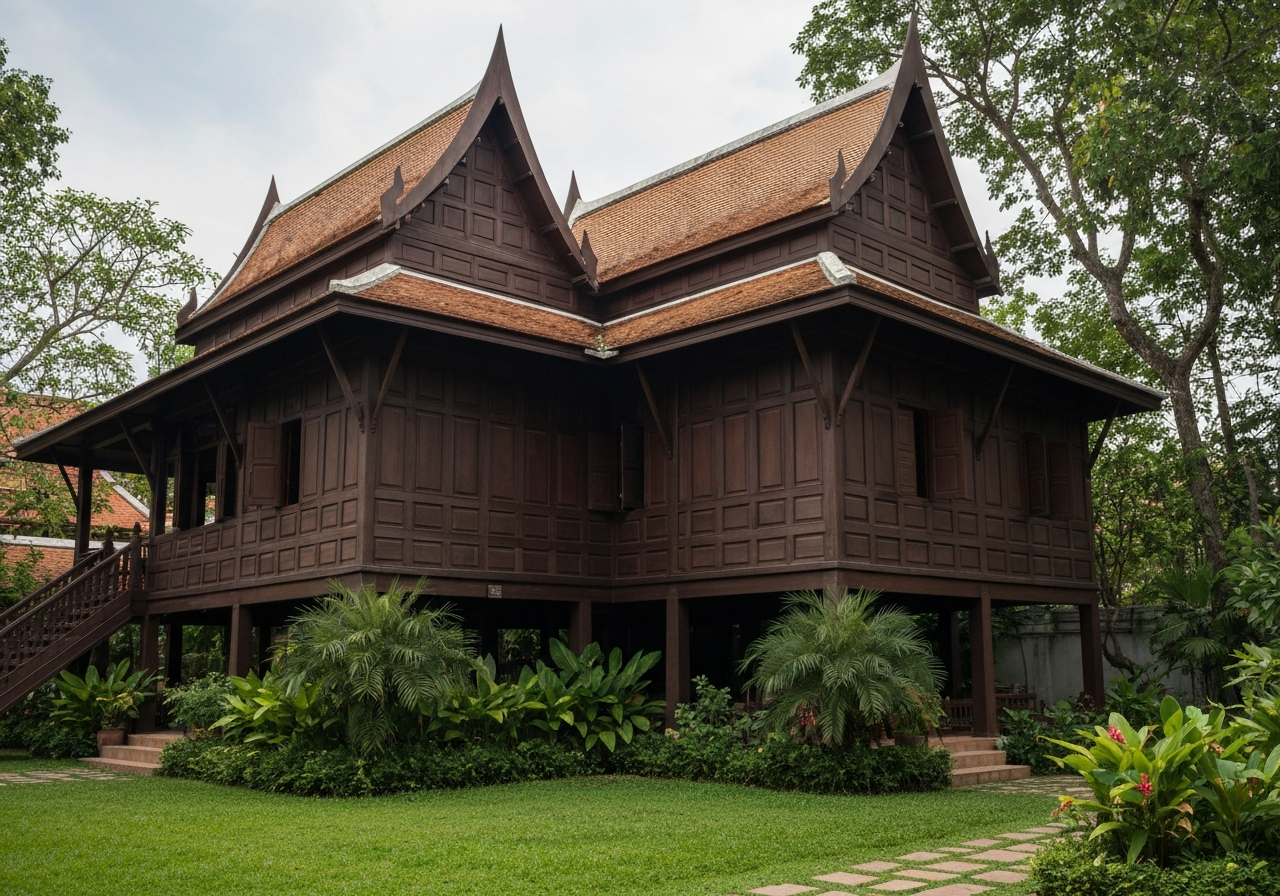
In the heart of the city, steps from the frenzy of Siam, this oasis of teak and bamboo is one of Bangkok's loveliest surprises. Jim Thompson, an American architect who revived the Thai silk industry, had six traditional houses dismantled and reassembled here in 1959 around a tropical garden. He filled them with his Asian art collection — then vanished without trace during a walk in Malaysia in 1967. The guided tour, included in the 200-baht ticket, lasts thirty minutes and runs in several languages. The silk shop is worth the detour.
8/12Ayutthaya: A Day Trip to the Ancient Capital of Siam
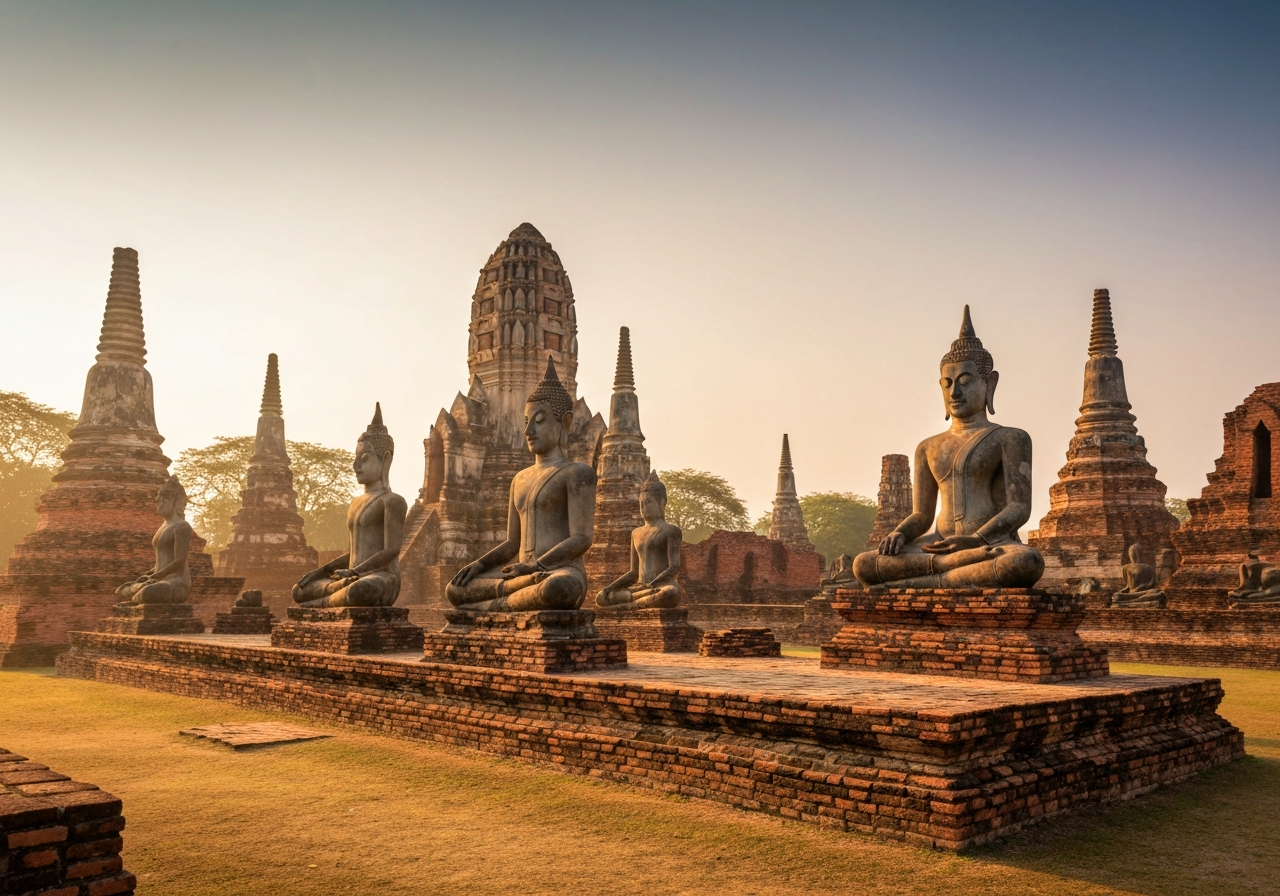
Eighty kilometres north, Ayutthaya was from 1350 to 1767 one of the largest cities in the world, before being razed by the Burmese army. What remains is a UNESCO-listed archaeological park: dozens of red-brick temples, rows of headless Buddhas and, at Wat Mahathat, the Buddha head cradled in fig tree roots that has become Thailand's most photographed image. The train from Krung Thep Aphiwat station costs under 50 baht and takes about 90 minutes. Rent a bicycle on arrival — the site is vast and flat. Leave early: by midday the heat over the ruins is fierce.
9/12The Floating Markets: Choose Amphawa over Damnoen Saduak
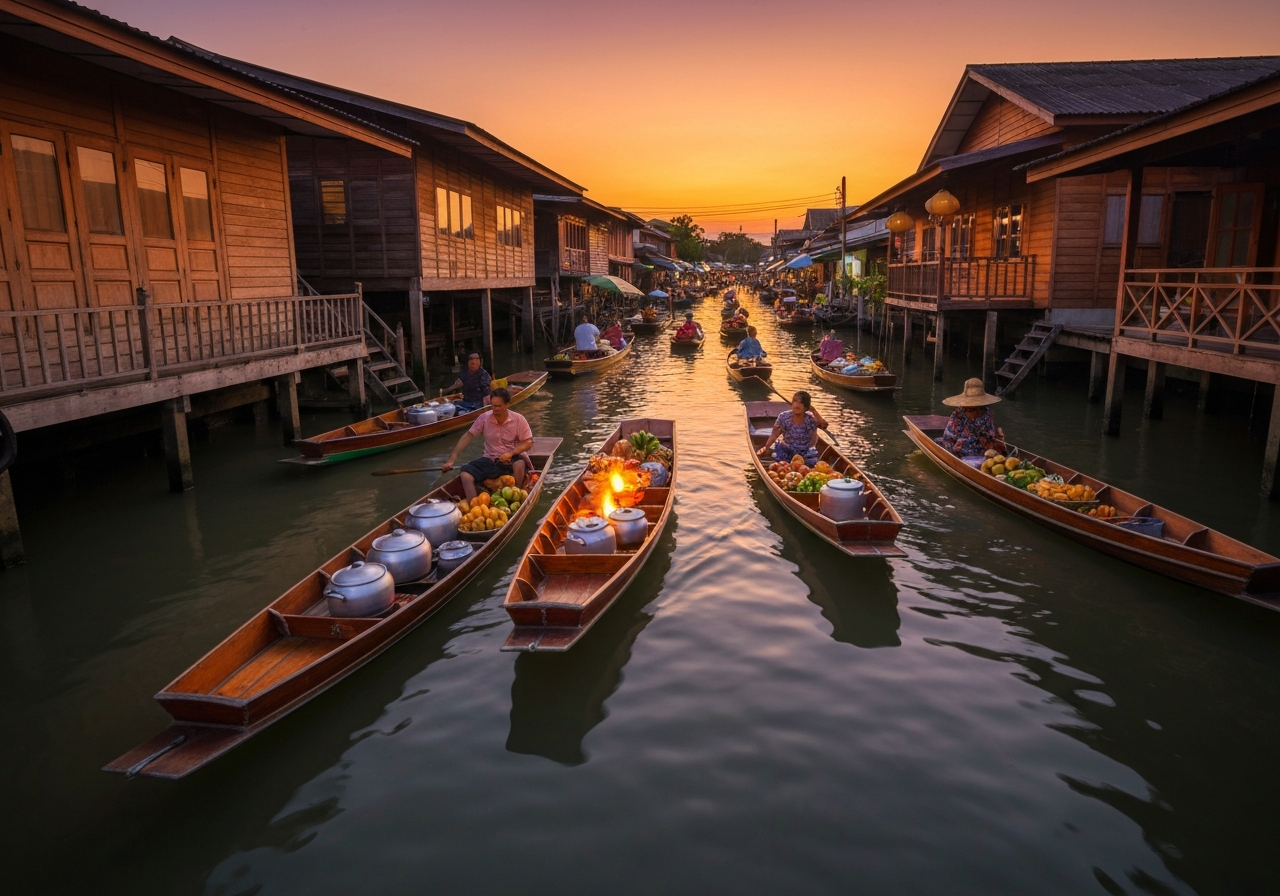
The floating market is part of Thailand's imagery: boats loaded with fruit, noodles and skewers mooring alongside wooden houses. Damnoen Saduak, the most famous, is also the most touristy. Prefer Amphawa, 90 minutes from Bangkok and lively from Friday to Sunday from midday onwards, where you eat sitting at the canal's edge, feet almost in the water. A closer, free alternative is Taling Chan market, 30 minutes from the centre and open at weekends. Organised trips from Bangkok start around 800 baht including transport.
10/12A Thai Cooking Class: Taking Bangkok Home With You
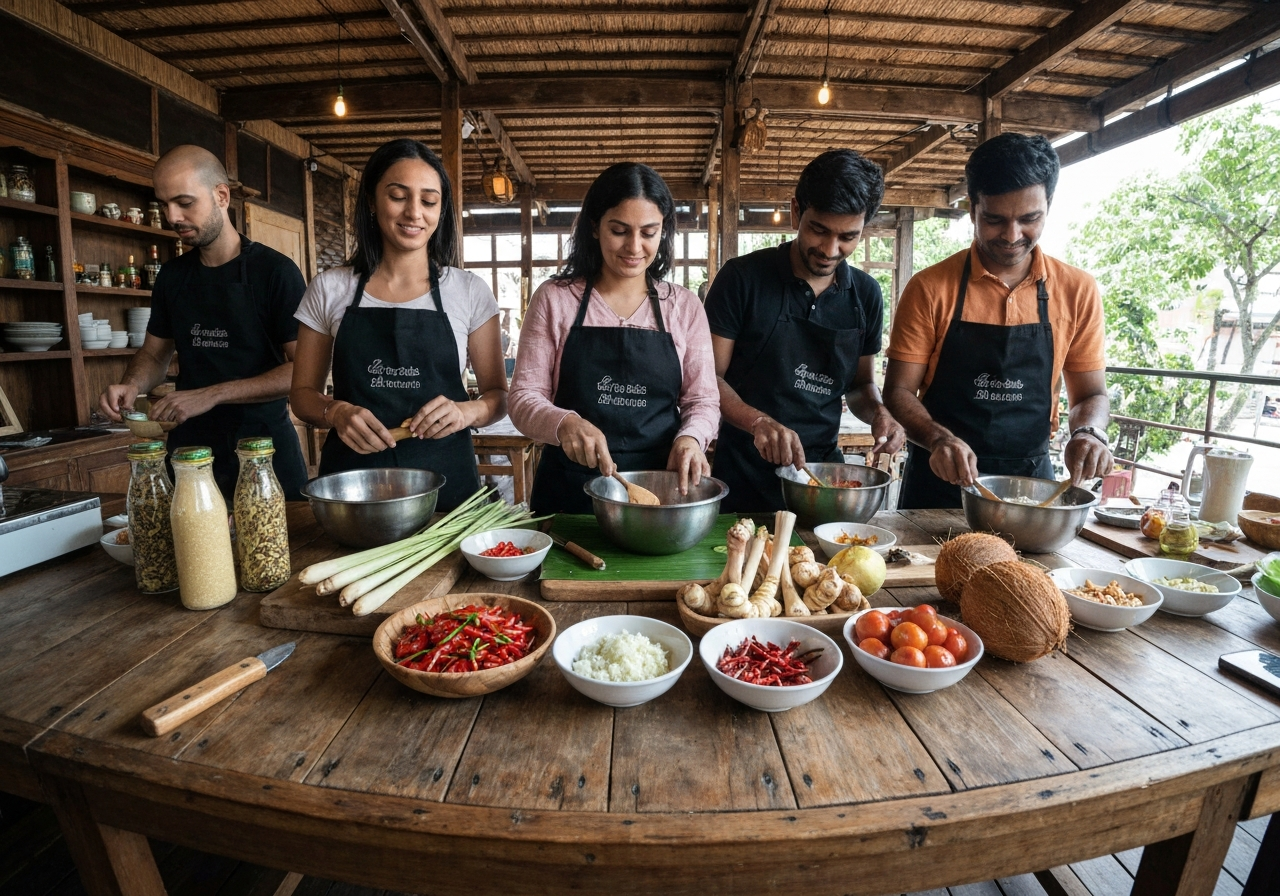
This is probably the best souvenir you can bring back from Thailand. Most Bangkok schools begin the morning with a local market visit: you learn to tell apart the five Thai basils, to pick galangal from ginger, to recognise fresh curry paste. Then it's into the kitchen for four classics — pad thai, tom kha kai, green curry, mango sticky rice — which you sit down and eat together. Expect 1,000 to 1,800 baht for a half-day, with apron, recipes and transport often included. Vegetarian options are always available and children are welcome at most schools.
11/12Wat Saket: 344 Steps up the Golden Mount
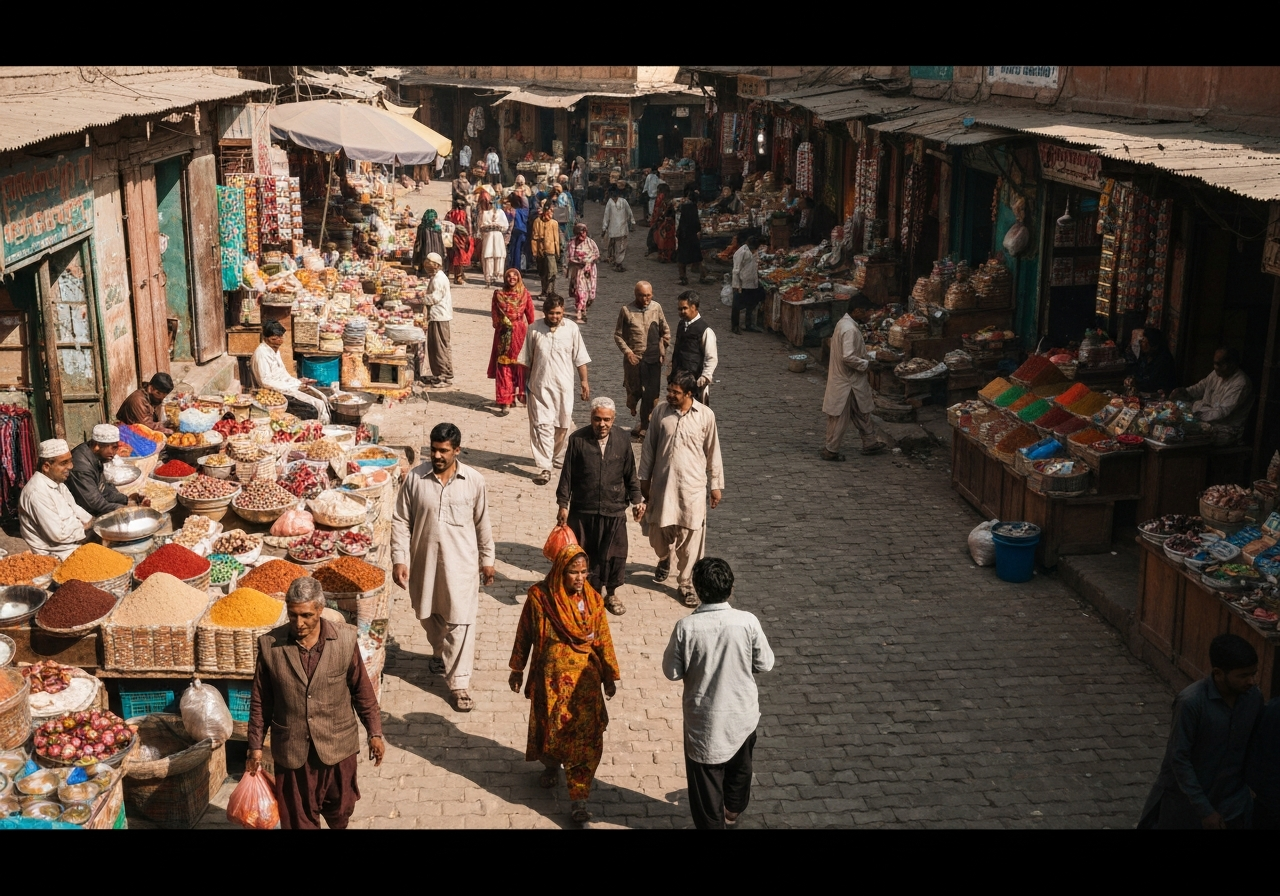
Perched on an 80-metre artificial hill, Wat Saket offers the finest 360-degree panorama over old Bangkok — and you have to earn it. The climb follows a spiral staircase of 344 steps winding up in the shade, past bronze bells that visitors ring as they pass and small waterfalls. At the top, a golden chedi holds relics of the Buddha and you look out over the rooftops of Rattanakosin, the river and, in the distance, the downtown towers. Open 8 am to 7 pm, entry 100 baht. Come late afternoon: the climb is far easier and the light is superb.
12/12Lumphini Park: A Green Breath Among the Skyscrapers
After three days of temples and traffic, this 57-hectare park created in the 1920s is a genuine relief. From 6 am, Bangkokians gather for group tai chi, running and music-led aerobics sessions — a wonderful, entirely free spectacle. You can rent a pedal boat on the artificial lake for 40 baht per half hour, spot metre-long Bengal monitor lizards that are completely harmless, and picnic in the shade of the banyan trees. Access via MRT Silom or BTS Sala Daeng. Open 4:30 am to 9 pm, free entry.