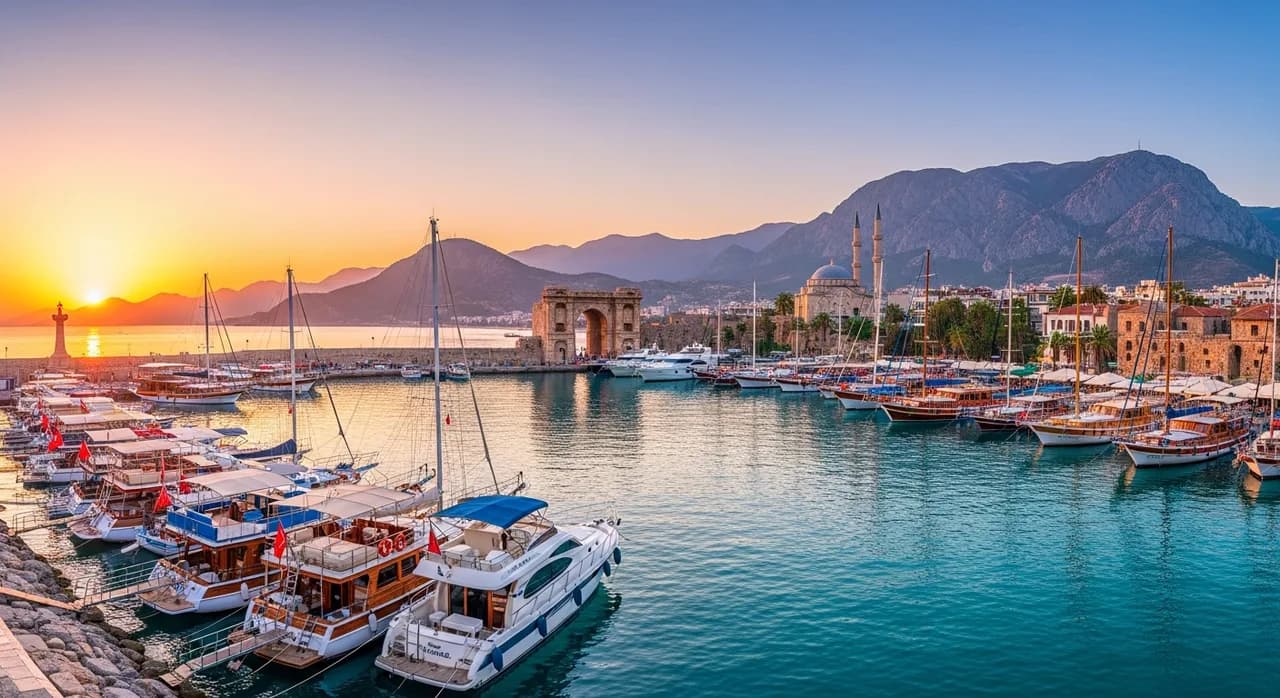
Backed by the Taurus mountains and opening onto a sea of almost unreal turquoise, Antalya is far more than Turkey's seaside capital: it is one of the most history-dense cities in the Mediterranean. In a single day you can move from an Ottoman lane in Kaleiçi to a Roman triumphal arch, from a pebble beach beneath the mountains to an almost intact ancient theatre. Around it, the cities of Pamphylia and Lycia — Perge, Aspendos, Side, Phaselis, Termessos — make up an exceptional archaeological playground, all less than two hours away. Add three hundred days of sunshine a year, waterfalls that fall straight into the sea and generous local cooking: Antalya suits families and slow travellers alike. Here are the thirteen experiences not to miss.
✈️ Flights right now to Antalya on Yoosky
Complete guide
In this article
- Kaleiçi: getting lost in the old town at the edge of the Mediterranean
- Hadrian's Gate: walking through a nineteen-century-old triumphal arch
- The Düden waterfalls: watching a river pour straight into the sea
- Aspendos Theatre: stepping into the best-preserved Roman theatre in the world
- Antalya Archaeological Museum: two thousand years of Pamphylia in one morning
- Konyaaltı and Lara: pebbles beneath the mountains or fine sand
- Perge: walking the colonnaded street of a great ancient city
- Yanartaş and the Chimaera flames: a fire that has burned since antiquity
- Phaselis: swimming in the three bays of an ancient harbour under the pines
- Termessos: climbing to the city that defied Alexander the Great
- Side and the Temple of Apollo: watching the sun set between white columns
- Köprülü Canyon: rafting a turquoise river as a family
- The Tünektepe cable car: the whole Gulf of Antalya in a single view
1/13Kaleiçi: getting lost in the old town at the edge of the Mediterranean
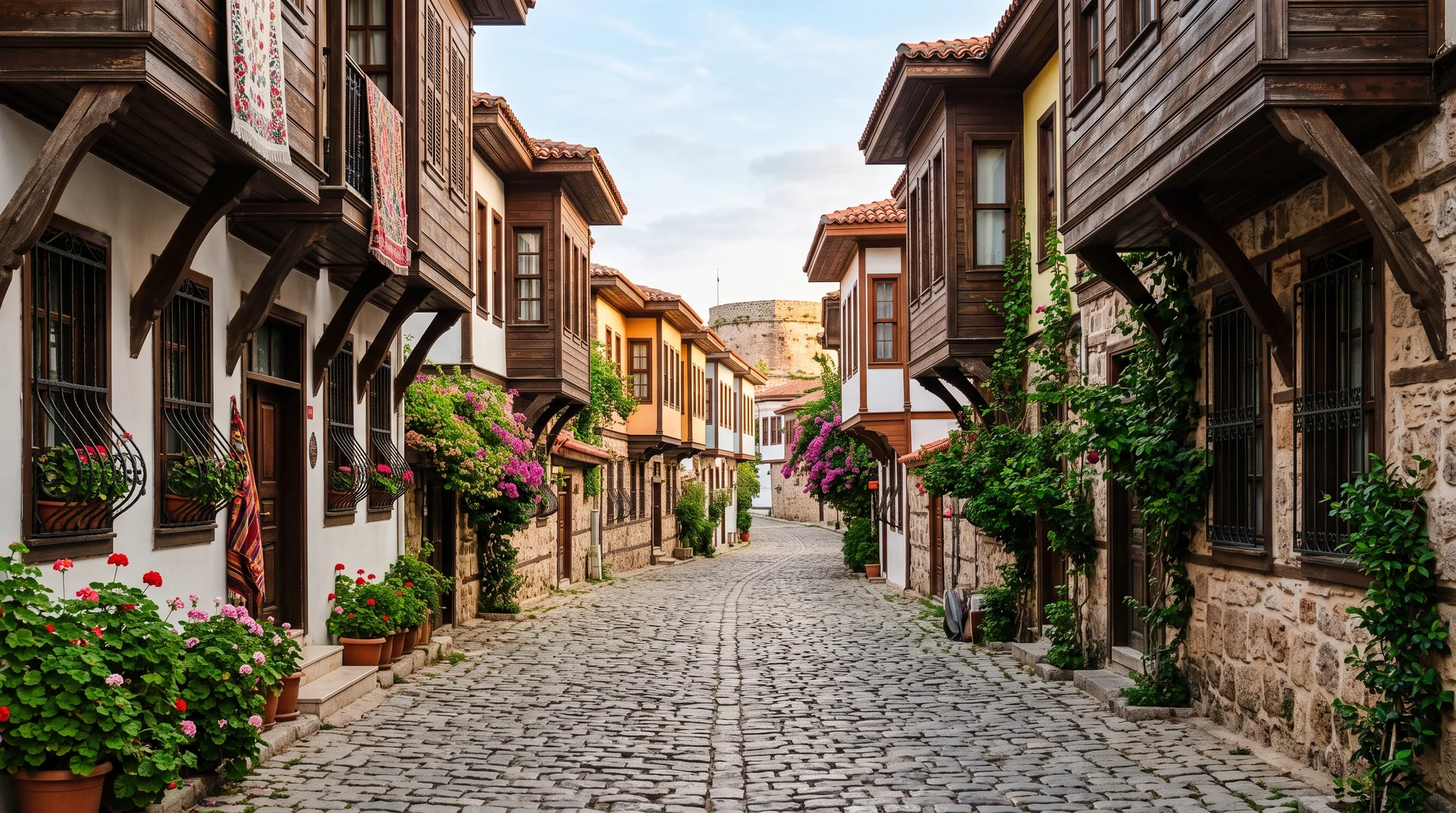
Kaleiçi is Antalya's historic heart, a maze of cobbled lanes wrapped in Roman and Ottoman ramparts. You walk it without a plan, past timber houses with overhanging upper floors, courtyards planted with orange trees, carpet workshops and the fluted Yivli Minare, a 13th-century Seljuk landmark. The route drifts down to the old harbour, now a sheltered marina at the foot of the cliff, then climbs back towards Hıdırlık Tower, a cylindrical Roman mass facing the open sea. Access is free and always open; the nostalgic tram stops at Kale Kapısı, by the northern gate. Come early, before 10am, while the lanes are still cool and empty: in summer, afternoon temperatures comfortably top 35°C. Allow three unhurried hours.
2/13Hadrian's Gate: walking through a nineteen-century-old triumphal arch
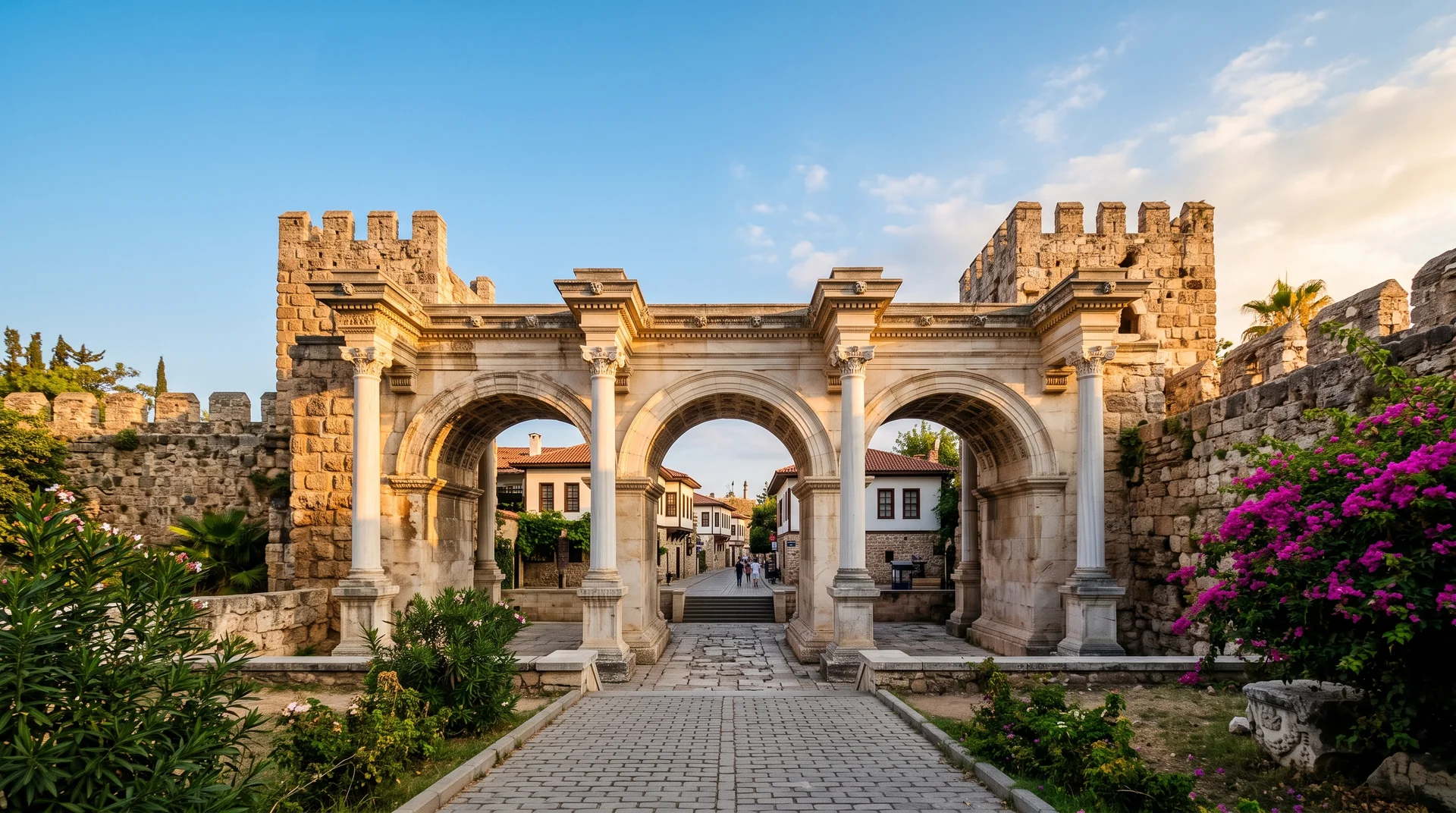
Three white marble arches, two flanking towers and carved coffered ceilings: Hadrian's Gate, known in Turkish as Üçkapılar ("the three gates"), was raised around 130 AD for Emperor Hadrian's visit to the city of Attaleia. It is the only one of the city's four ancient gateways to survive almost intact, precisely because it was walled up for centuries and therefore shielded. Look down: the ruts cut by Roman chariots are still visible under the central arch. Entry is free and the monument is simply walked through, on Atatürk Avenue, a step from the tram stop of the same name. Late afternoon light gilds the marble and gives the best photographs, ideally around 5pm.
3/13The Düden waterfalls: watching a river pour straight into the sea
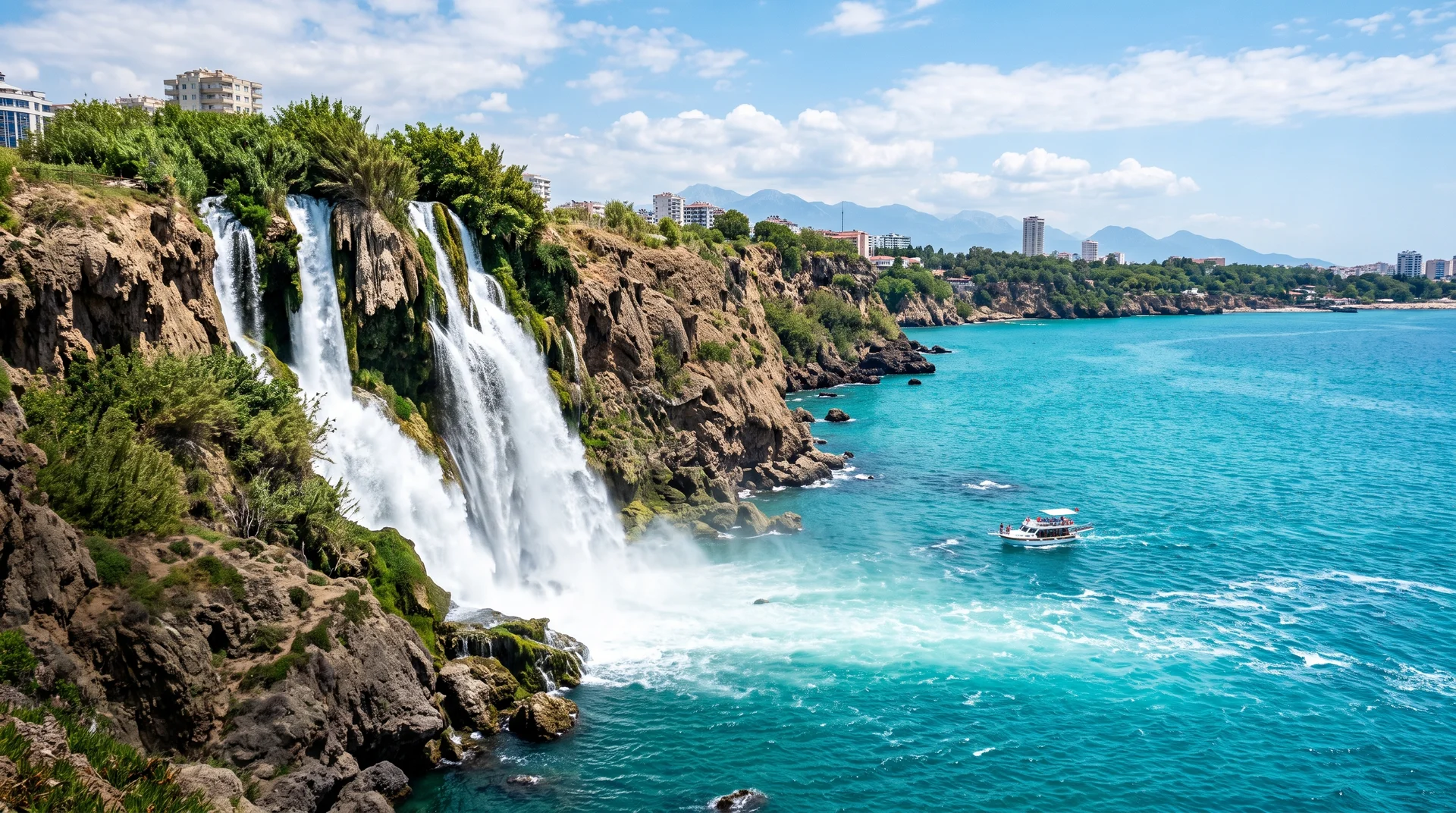
Antalya has two waterfalls of the same name, and both deserve a visit. The lower falls, known as Karpuzkaldıran, are the more dramatic: the Düden river drops some forty metres over the cliff edge straight into the Mediterranean, east of the city near Lara. You can take them in from the landscaped clifftop park or, better still, from a sightseeing boat leaving the old harbour. The upper falls, 10km north, sit in a shaded park where a path runs literally behind the curtain of water, through a cool cave — a blessing with children in 35°C heat. The parks open roughly 8am to 7pm and entry costs a few dozen Turkish lira. Flow peaks in spring, in April and May.
4/13Aspendos Theatre: stepping into the best-preserved Roman theatre in the world
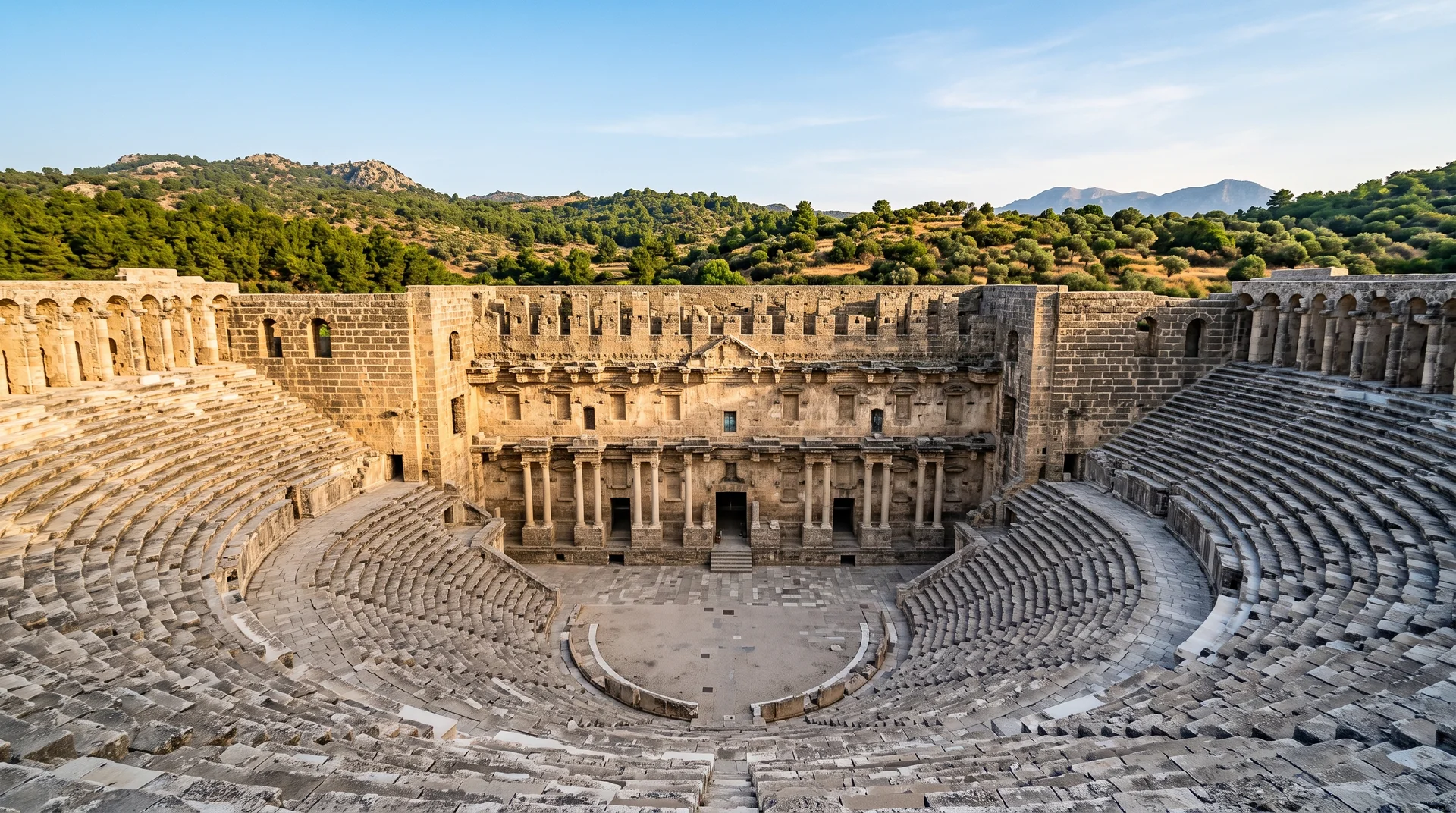
Forty-seven kilometres east of Antalya, Aspendos preserves a 2nd-century Roman theatre whose stage building, seating tiers and back wall still stand almost complete. Close to seven thousand spectators once sat here, and the acoustics are so clean that a coin dropped on the orchestra can be heard from the back row — try it, children love it. Above the site, don't miss the aqueduct and its pressure tower, a feat of Roman hydraulics rarely preserved elsewhere. The site opens 8.30am to 7pm in summer, 5pm in winter; foreign visitors pay in euros, around twenty. Arrive at opening time: there is not a scrap of shade in the tiers after 11am. Buses run from Antalya's otogar, then a shared taxi.
5/13Antalya Archaeological Museum: two thousand years of Pamphylia in one morning
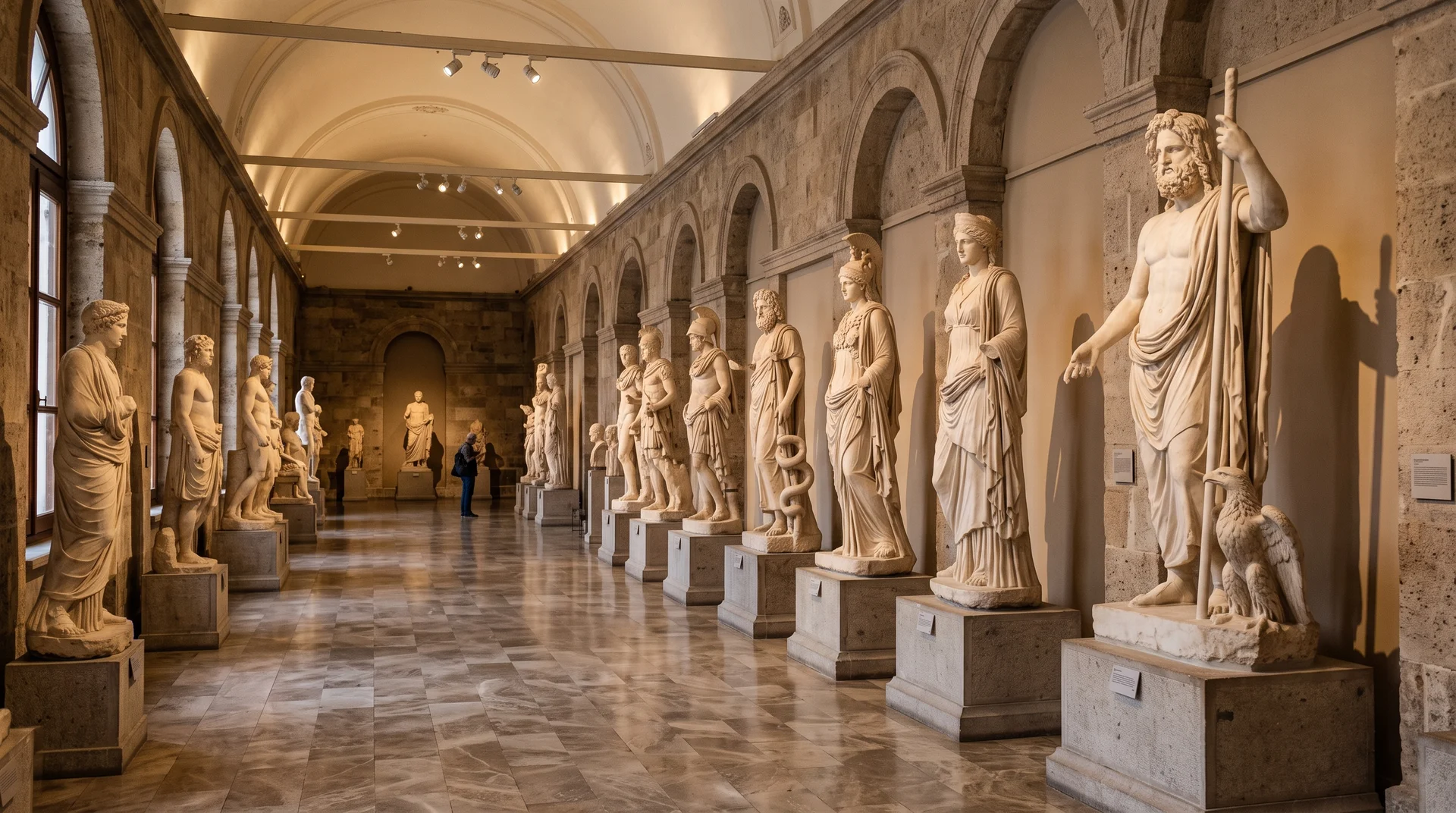
One of Turkey's richest museums, and best visited before the ancient sites rather than after: almost everything excavated at Perge, Aspendos or Side ended up here. The Hall of Gods lines up monumental Roman statuary of astonishing quality, the Weary Hercules foremost among them. Then come carved sarcophagi, a gallery of Byzantine icons, mosaics and an ethnographic section on Ottoman domestic life in the region. Thirteen halls, two unhurried hours, air conditioning included — the ideal plan for a scorching afternoon or a rainy winter day. The museum sits west of the centre, at the Müze terminus of the nostalgic tram, and opens 8.30am to 7pm in high season. Audio guides are available in English and French.
6/13Konyaaltı and Lara: pebbles beneath the mountains or fine sand
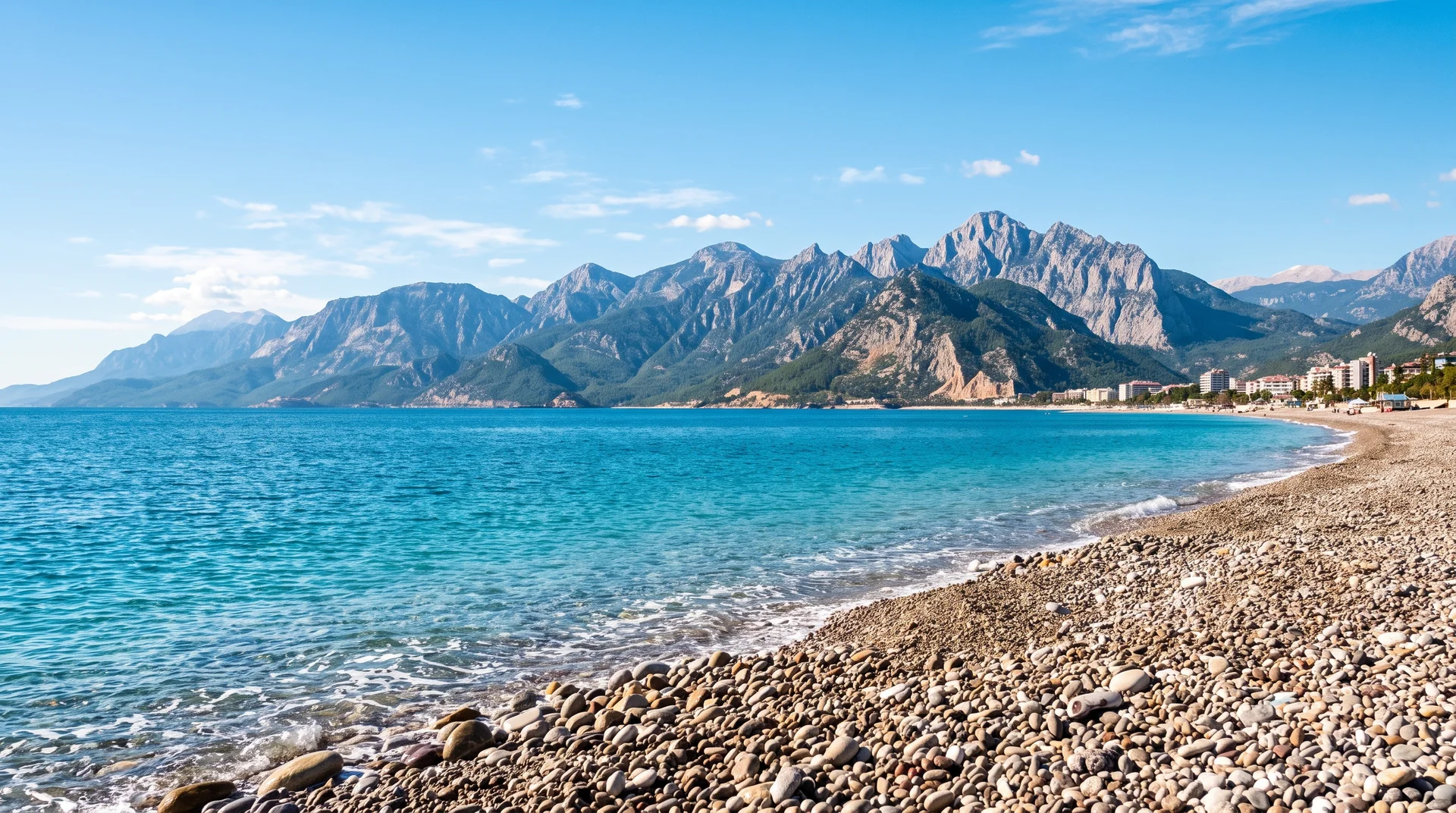
Antalya is lucky enough to have two large city beaches of opposite character. To the west, Konyaaltı unrolls seven kilometres of pale pebbles against a backdrop of the Beydağları range dropping straight into the sea: it is the finest view in town, and the water has a rare clarity. To the east, Lara offers fine sand, gentle shelving and lifeguarded sections, more reassuring with small children. Both are twenty minutes or less from the centre by tram or city bus, with showers, sunbed rental and Blue Flag status on several stretches. Swimming runs from April to November, with the sea around 26°C in August. Pack water shoes for Konyaaltı: those pebbles are scorching at noon.
7/13Perge: walking the colonnaded street of a great ancient city
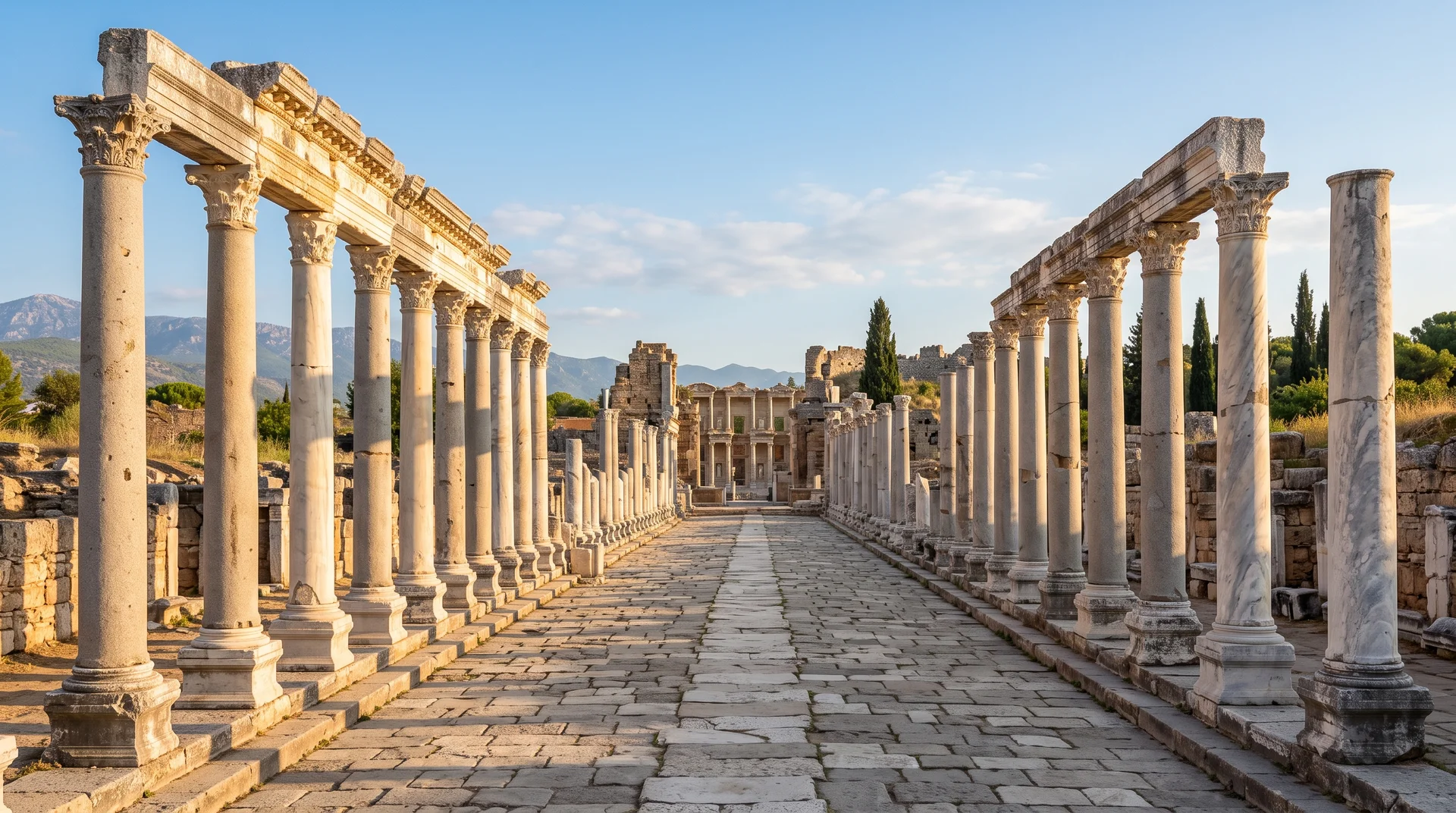
Eighteen kilometres from the centre, near Aksu, Perge is Antalya's most accessible ancient site and one of the most readable in Turkey. You enter through a stadium built for twelve thousand people, pass the Hellenistic towers of the southern gate, then climb a three-hundred-metre colonnaded street lined with shopfronts and split down the middle by a running water channel that once cooled the city. Roman baths, the agora and the necropolis round out the walk. Saint Paul preached here on his first journey. The site opens 8am to 7pm in summer; reckon on around fifteen euros entry and two hours inside. There is almost no shade: a hat, water and an early start are essential. Bus 526 from the otogar, then a twenty-minute walk.
8/13Yanartaş and the Chimaera flames: a fire that has burned since antiquity
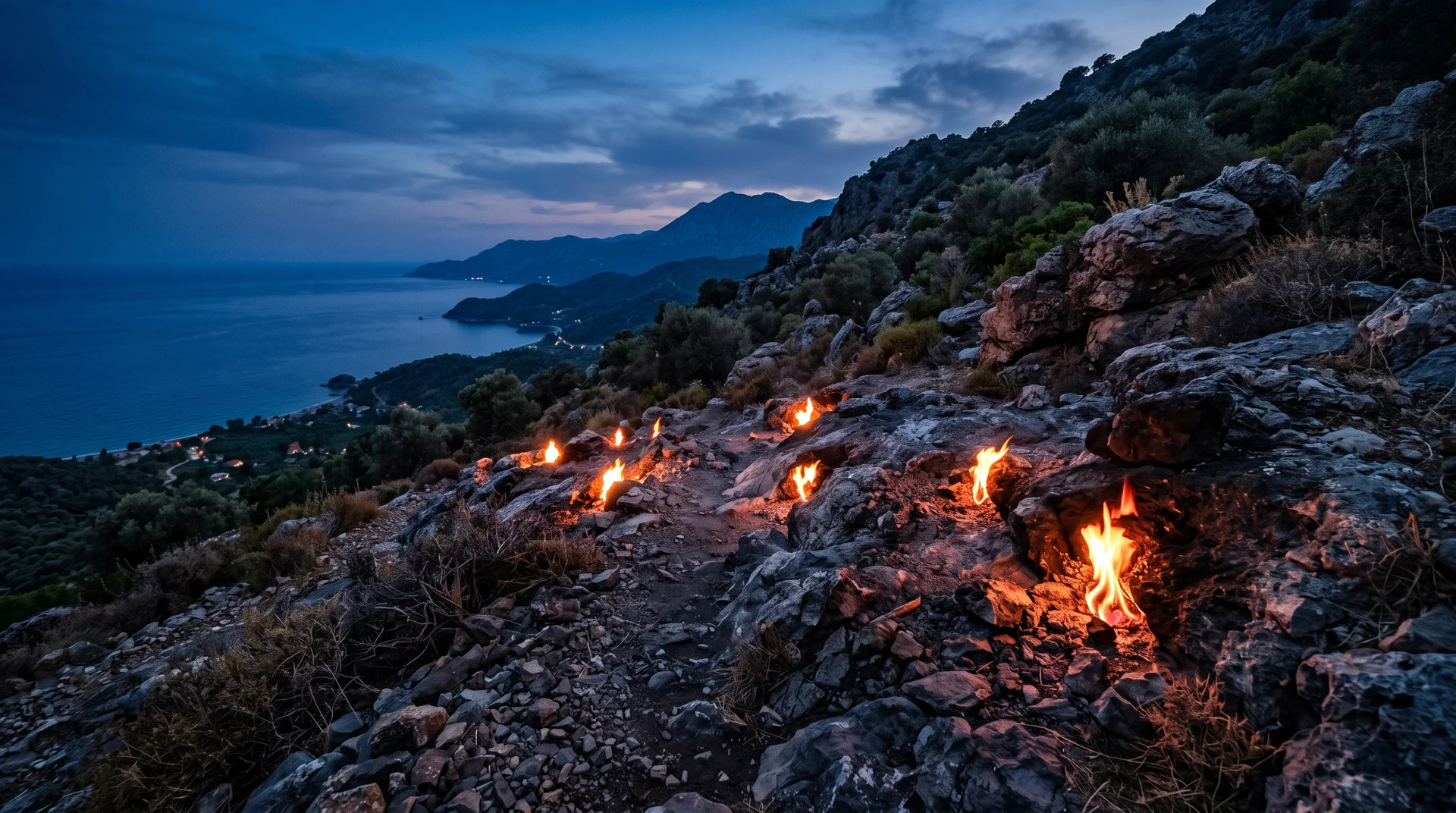
On the slopes of Mount Chimaera above the village of Çıralı, some twenty flames rise straight out of the rock and have burned without pause for millennia, fed by methane seeping from the ground. The ancients read them as the breath of the Chimaera slain by Bellerophon; sailors used them as a lighthouse. Reaching them means a twenty to thirty minute climb on a well-marked stony path with a few staircases: manageable for children from about six or seven, but bring proper shoes and a head torch. Go at dusk, around 7pm in summer, when the flames turn genuinely vivid against the dark. Çıralı lies 80km south-west of Antalya, about ninety minutes by road; site entry costs a few euros.
9/13Phaselis: swimming in the three bays of an ancient harbour under the pines
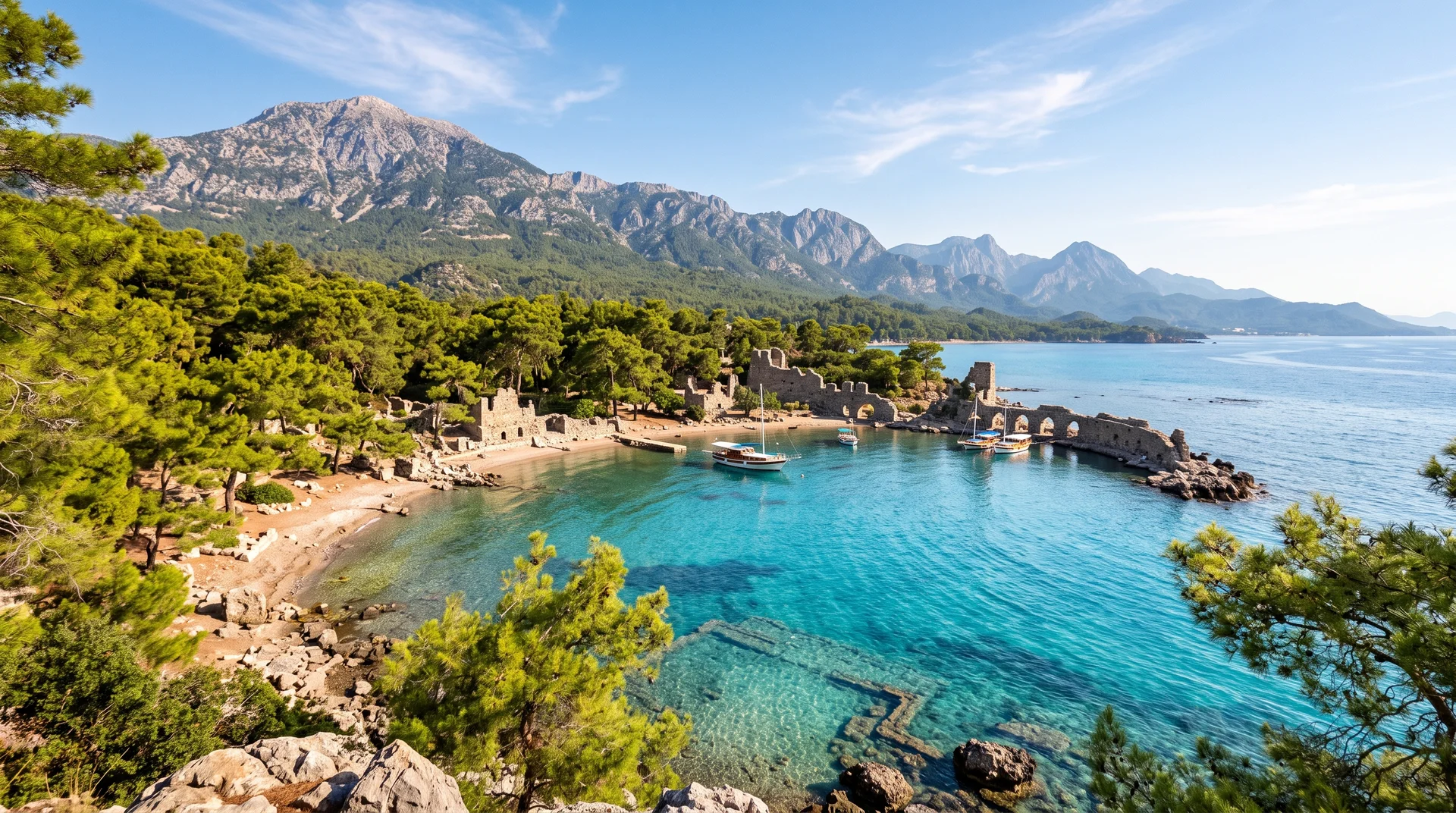
Phaselis is the most enjoyable spot on this stretch of the Lycian coast for a family day out, because ruins and swimming come together. Founded in the 7th century BC, the harbour city stretches across a wooded peninsula between three sand-and-pebble bays; the aqueduct, Roman baths, agora and a small theatre reveal themselves in the shade of the pines, metres from the water. The real luxury: you swim in the former military harbour, with ancient blocks still visible beneath the surface. The site lies 55km south-west of Antalya near Kemer, open 8.30am to 7pm in summer, entry around ten euros. Bring a picnic, mask and snorkel, and aim for the morning to have the bays almost to yourself.
10/13Termessos: climbing to the city that defied Alexander the Great
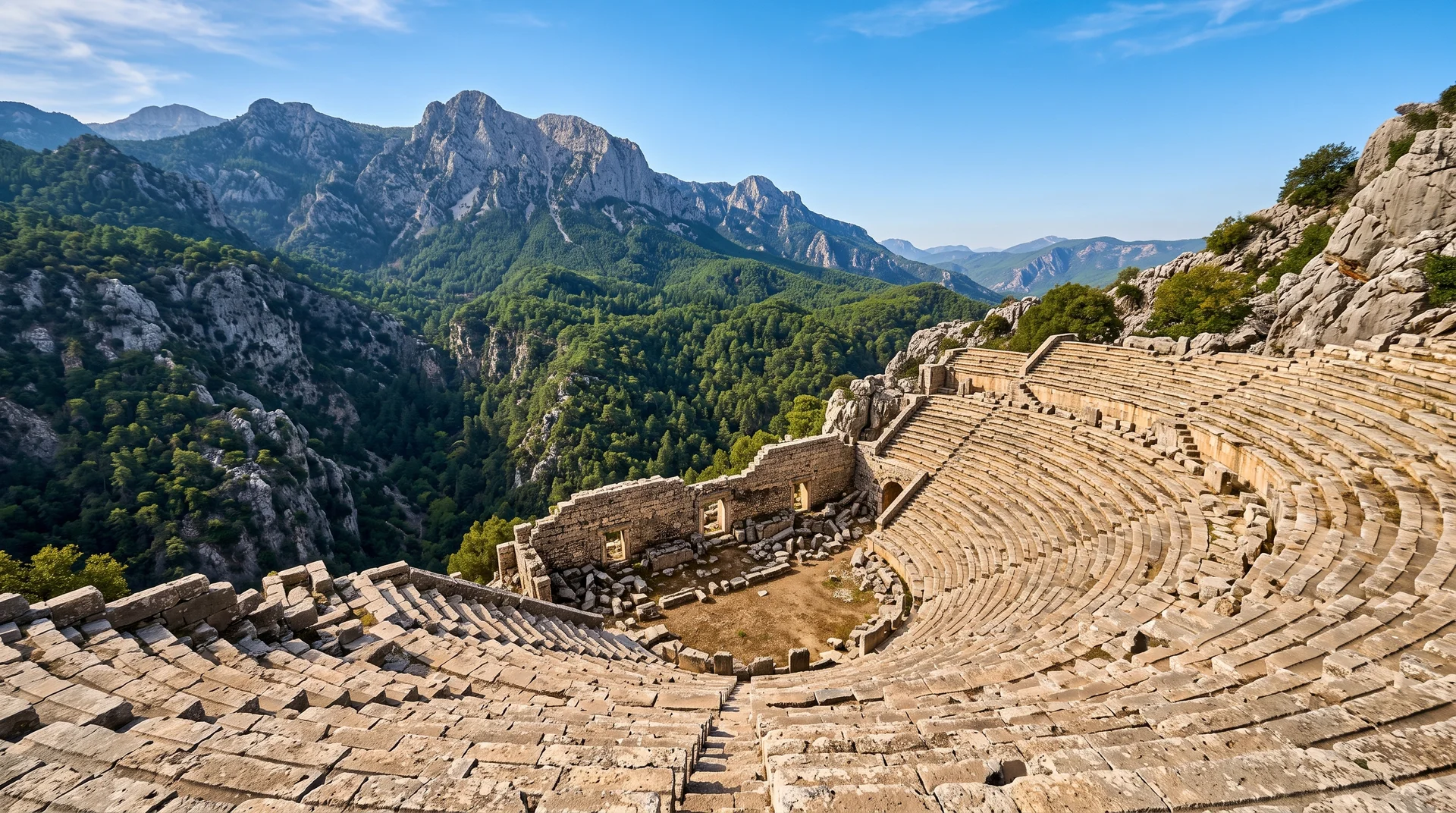
Perched at a thousand metres inside Güllük Dağı national park, 34km north-west of Antalya, Termessos is the wildest site in the region — and the most memorable. Alexander the Great gave up besieging it in 333 BC, so impregnable was its position. Today a steep thirty to forty minute climb from the car park leads to the ramparts, a necropolis of sarcophagi toppled by earthquakes, the cisterns and above all a theatre suspended over a ravine with the Taurus mountains behind it: one of the finest ancient panoramas in Turkey. Bring walking shoes, two litres of water per person and allow three hours. The site opens 8am to 7pm in summer. Not one for very young children.
11/13Side and the Temple of Apollo: watching the sun set between white columns
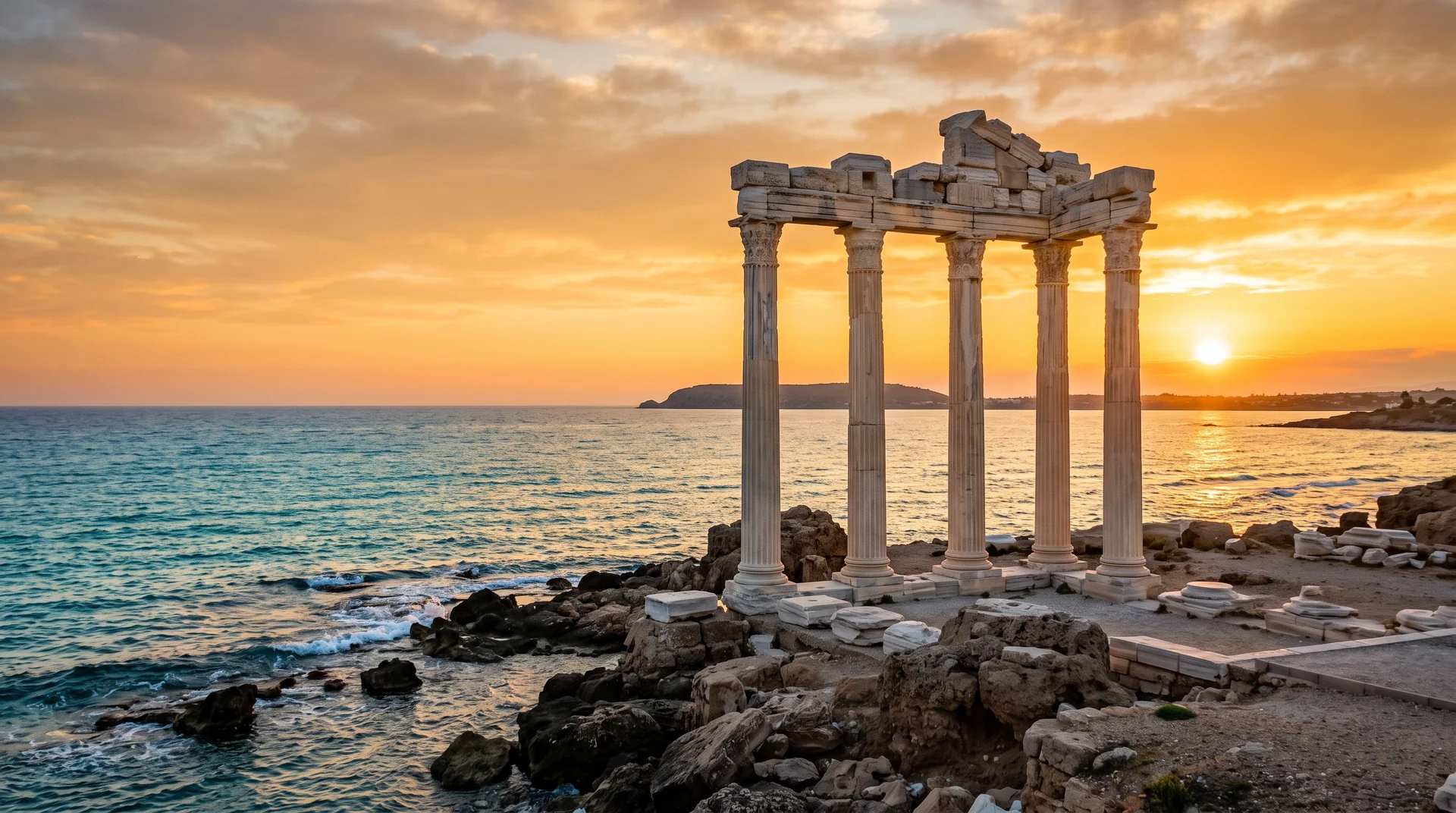
Sixty-five kilometres east of Antalya, the small peninsula of Side packs in an ancient theatre seating fifteen thousand, an agora, Roman baths converted into a museum and, at its very tip, the five re-erected columns of the Temple of Apollo, standing at the water's edge. The image is famous and earns it: at sunset the marble shifts from white to pink and the sea catches the light behind the shafts. The temple is free and always open; the other monuments sit inside the ticketed site, open 8am to 7pm. The pedestrian centre is easy going with a pushchair. Arrive an hour before sunset, scout the temple, then eat grilled fish or pide in the lanes nearby. Regular minibuses (dolmuş) run from Manavgat.
12/13Köprülü Canyon: rafting a turquoise river as a family
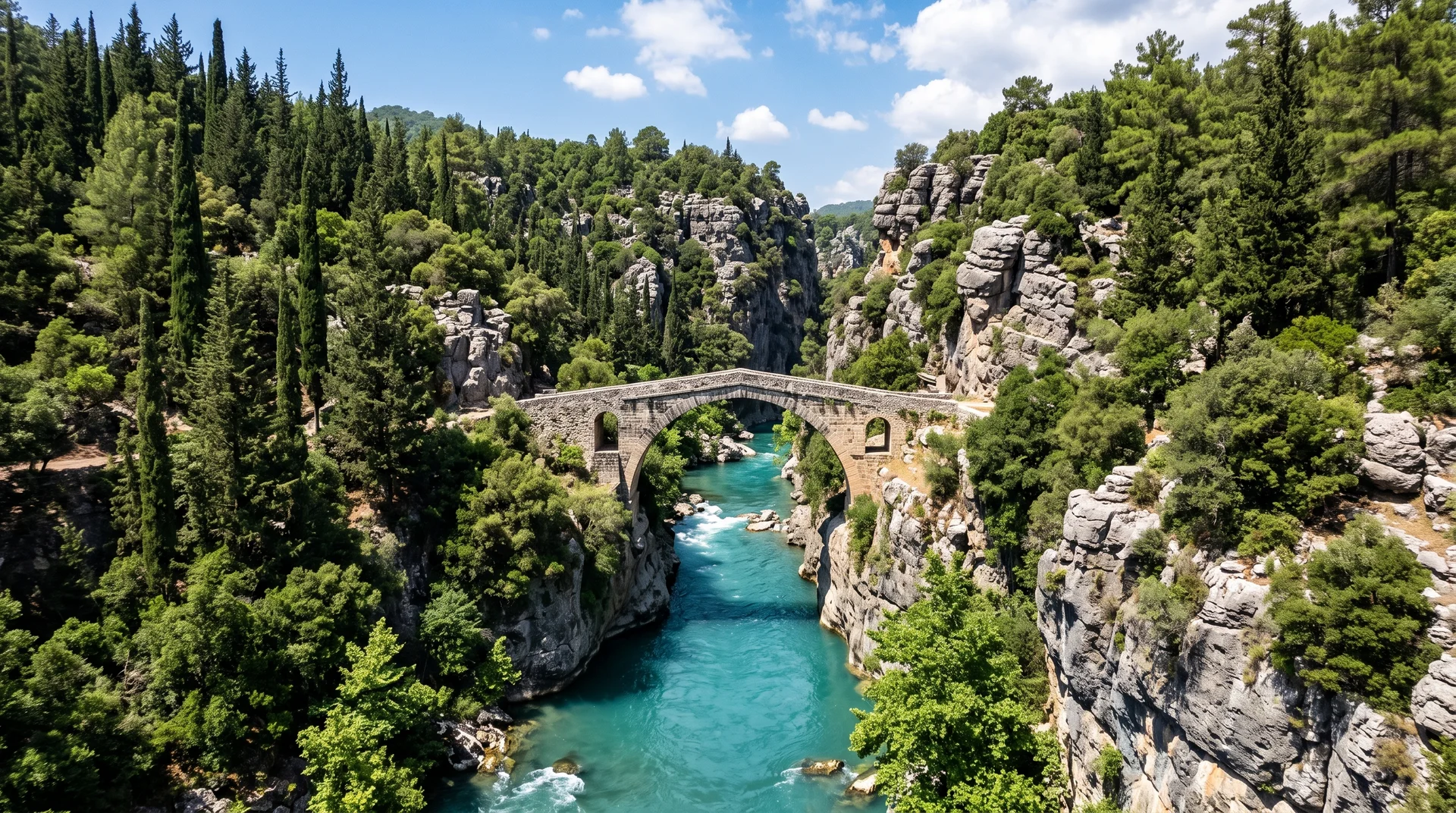
A hundred kilometres north-east of Antalya, the Köprüçay river has cut a fourteen-kilometre canyon through Taurus limestone, in the middle of a forest of endemic cypress. It is Turkey's most popular rafting spot, and for good reason: the rapids are graded II to III, lively without being risky, which opens the descent to children from about seven or eight depending on the operator. Standard trips cover fourteen kilometres in roughly three hours, with helmet, buoyancy aid and guide provided, transfer from Antalya and often lunch included. Allow a full day and 25 to 40 euros per person. The water leaves the mountain at 10°C: take a wetsuit, especially in spring. While there, don't miss the Roman bridge at Oluk, still in use, or the national park trails.
13/13The Tünektepe cable car: the whole Gulf of Antalya in a single view
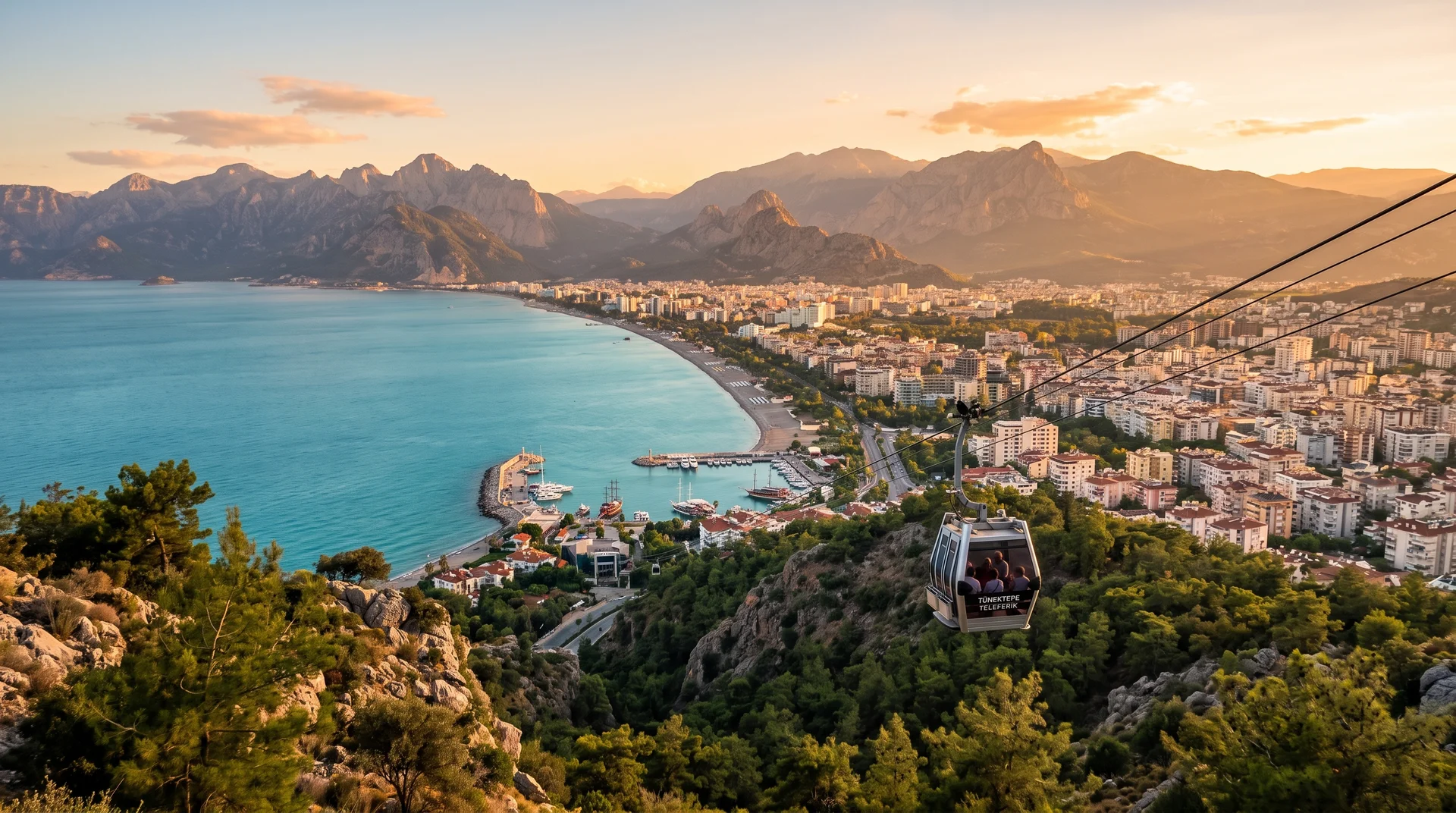
This is the activity foreign visitors know least and the one that pays off most for the effort involved. From the western end of Konyaaltı, an eight-hundred-metre cable car lifts its cabins to the summit of Tünektepe, at 618 metres, in about ten minutes. At the top, a panoramic terrace lays out the bay, the old town cliffs, the beaches and the entire Beydağları range in one sweep: on a clear day you can pick out the coast as far as Kemer. A return ride costs the equivalent of a few euros and the site runs continuously from 10am to 11pm in summer, though it closes in strong wind. Go up an hour before sunset and come down after dark, once the city lights up below. Bus 11 or a taxi from the centre.