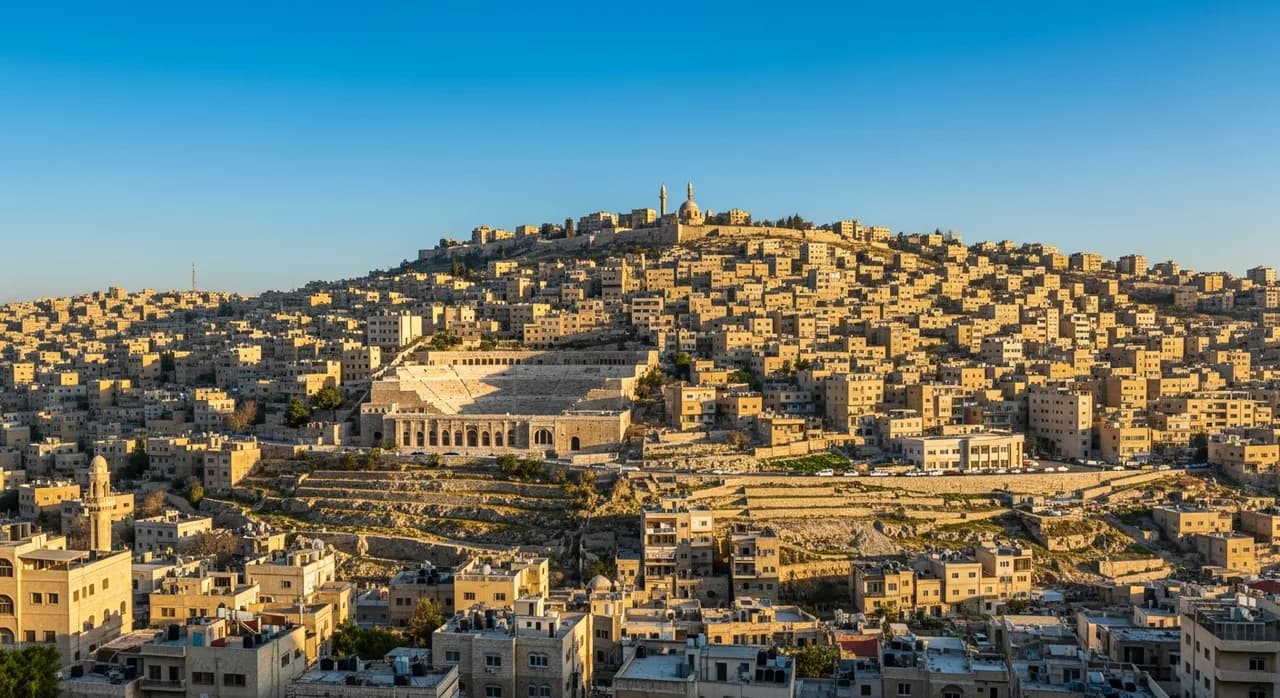
Amman doesn't reveal itself at first glance. Spread across some twenty hills of white limestone, Jordan's capital stacks its eras on top of one another: a Roman temple at the summit, an Umayyad palace right beside it, cubic apartment blocks climbing the slopes, and down in the hollow a downtown of souks and falafel steam that hasn't changed its rhythm in fifty years. Travellers rarely come for Amman alone — Jordan has Petra and Wadi Rum — and that's a mistake: the city is a perfect base, an hour from the Dead Sea, the mosaics of Madaba and the colonnades of Jerash. Allow three days for the city and its immediate surroundings, ideally in spring or autumn.
✈️ Flights right now to Amman on Yoosky
Complete guide
In this article
- Amman Citadel: 9,000 years of history atop Jabal al-Qala'a
- The Roman Theatre: a 6,000-seat amphitheatre in the heart of downtown
- Jerash: the best-preserved Roman city in the Near East, 50 km away
- The Dead Sea: floating at the lowest point on Earth
- The Jordan Museum: 1.5 million years explained in one morning
- Downtown Al-Balad and its souks: spices, gold and street life
- King Abdullah I Mosque: Amman's great blue dome
- Rainbow Street and Souk Jara: the Jabal Amman walk
- Eating in Amman: falafel at Hashem, mansaf and kunafa at Habibah
- Madaba and Mount Nebo: the mosaic map and the Jordan Valley view
- The desert castles: Qasr Amra, Kharana and Azraq in a one-day loop
- Darat al Funun: contemporary Arab art in the villas of Jabal al-Weibdeh
1/12Amman Citadel: 9,000 years of history atop Jabal al-Qala'a
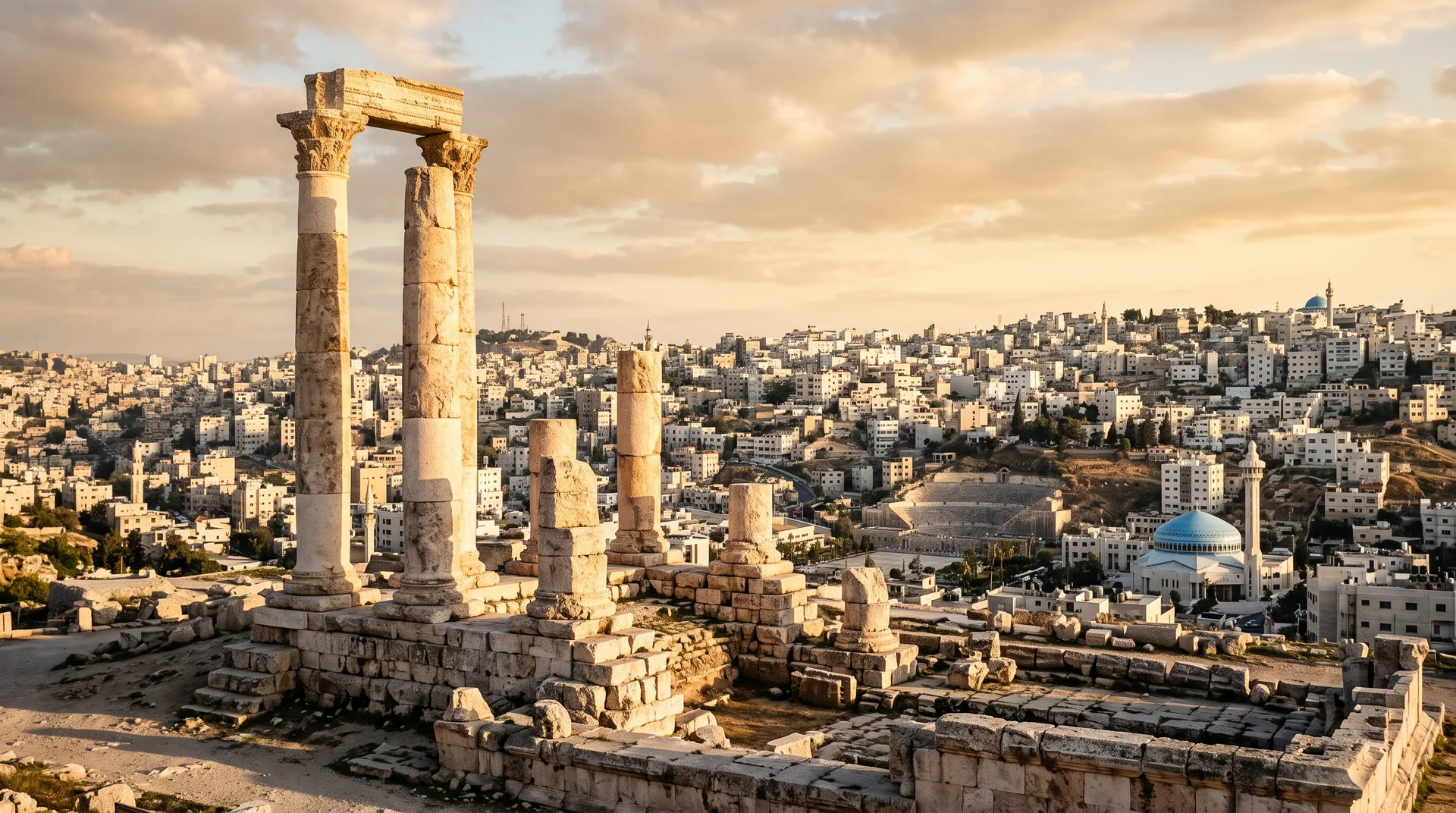
Perched on Jabal al-Qala'a, the hill overlooking downtown, the Citadel packs nine millennia of human occupation onto a single plateau. You walk between the six surviving columns of the Temple of Hercules, raised under Marcus Aurelius, the colossal stone hand that once belonged to its statue, and the 8th-century Umayyad palace whose domed audience hall has been restored. Off to the side, a ruined Byzantine church and a cistern cut into the rock are reminders that the site has almost never been abandoned. The small archaeological museum on the grounds rounds out the visit. Entry costs around 3 JOD, free with the Jordan Pass, and you'll want ninety minutes. Come late in the day: the light turns the hills golden and the call to prayer rises from the whole city — the finest panorama in Amman.
2/12The Roman Theatre: a 6,000-seat amphitheatre in the heart of downtown
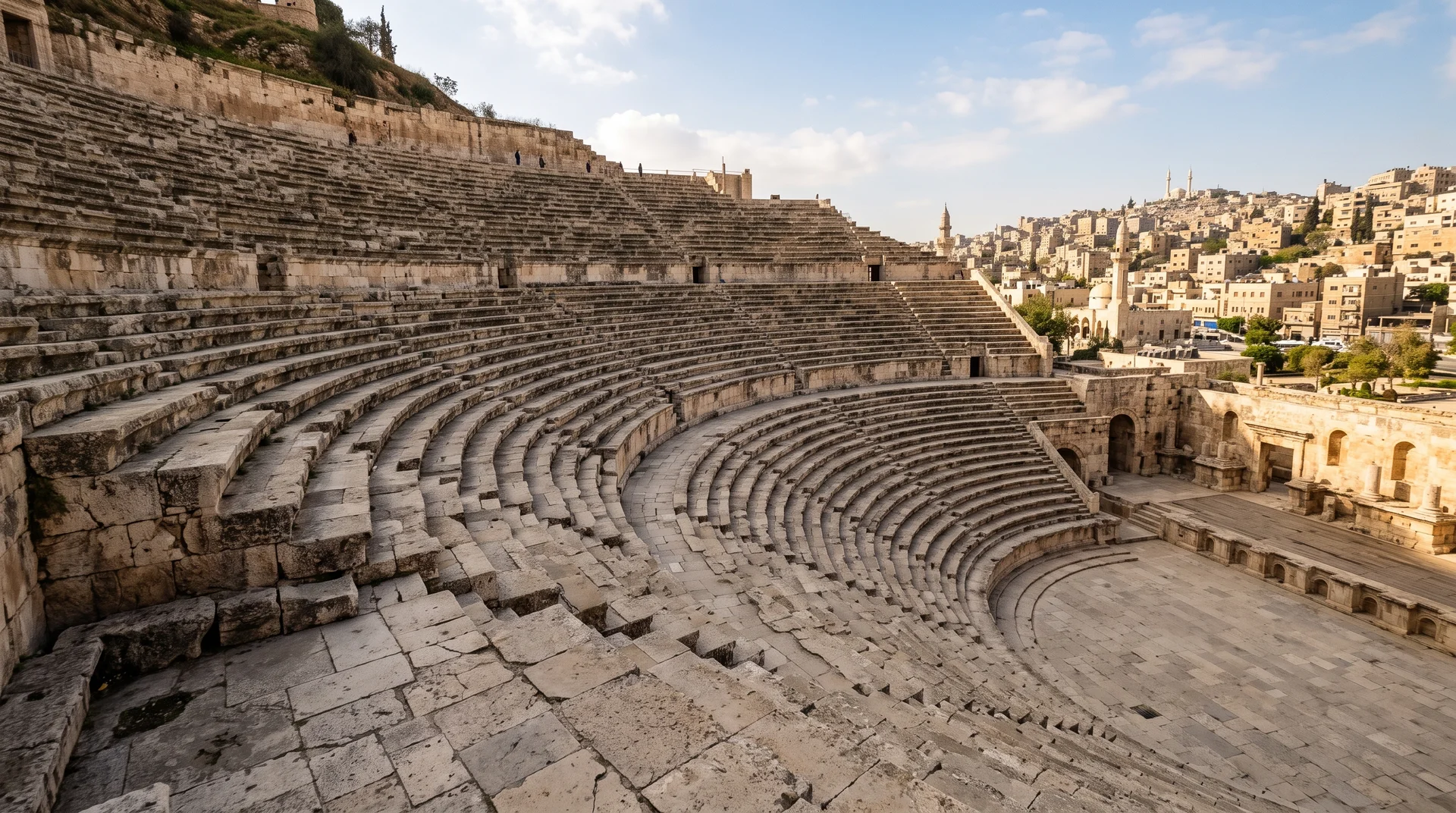
Carved into the hillside in the 2nd century under Antoninus Pius, the Roman theatre of Philadelphia — Amman's ancient name — once held 6,000 spectators. It has survived remarkably intact, and climbing to the top row is the thing to do: the gradient is steep and the steps are high, but the acoustics are so precise that you can clearly hear a conversation held down on the stage. The Romans oriented it north to keep the audience in shade, a detail that makes a visit bearable even in high summer. Two small museums occupy the side wings, devoted to Jordanian folklore and costume; they are included in the ticket, around 2 JOD. The theatre borders Hashemite Plaza, where families gather in the late afternoon — a good moment to continue on foot into downtown.
3/12Jerash: the best-preserved Roman city in the Near East, 50 km away
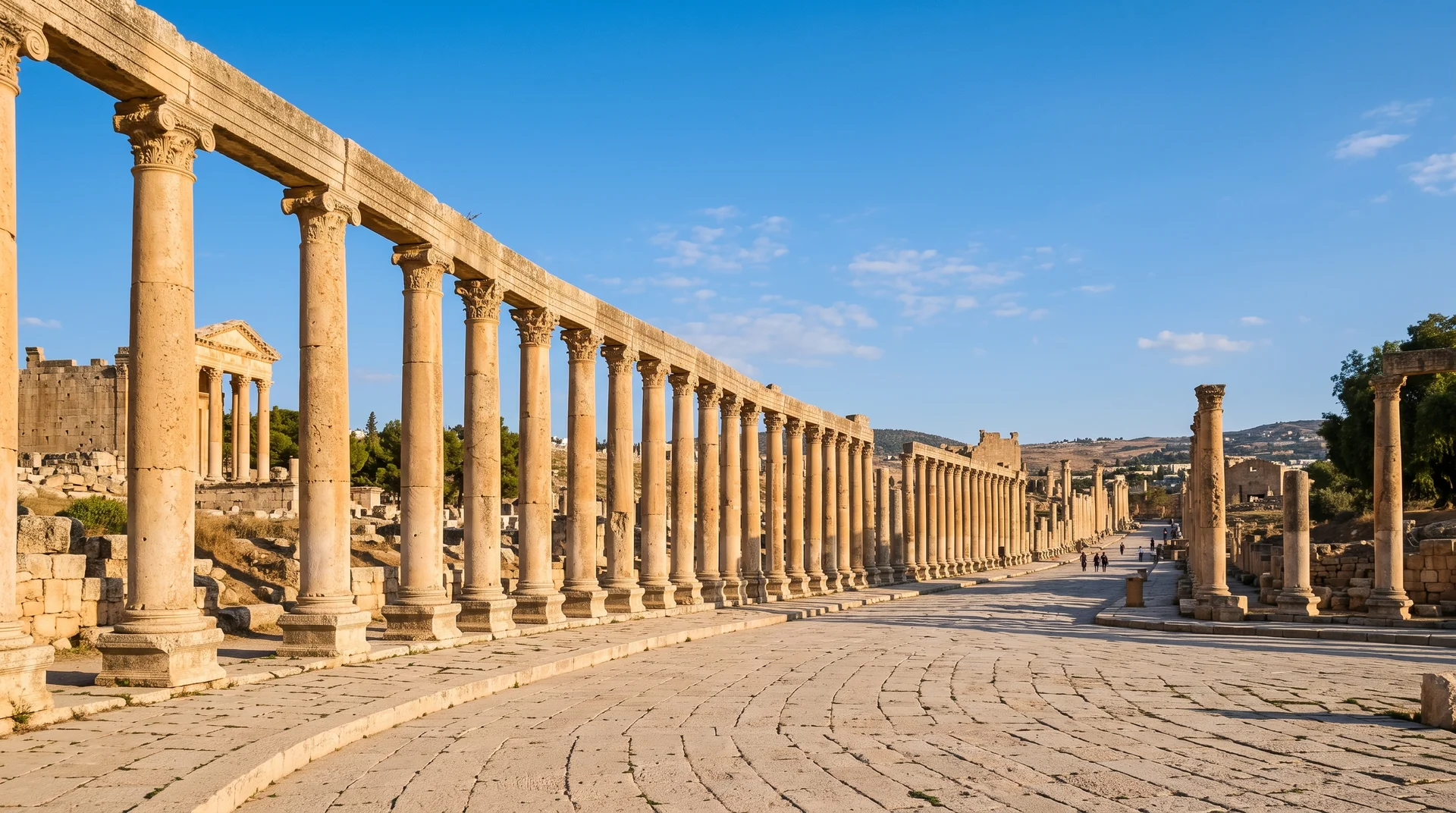
Fifty kilometres north of Amman, Jerash is one of the best-preserved Roman cities anywhere and the most spectacular in the Near East. You enter through Hadrian's Arch, pass the hippodrome, and then the oval plaza ringed with Ionic columns opens onto the cardo maximus, a kilometre of paved avenue where chariot ruts are still visible. Higher up: the Temple of Artemis and its monumental forecourt, the South Theatre whose tiers still host concerts, the baths, the nymphaeum. Budget a full half-day and good shoes — the site runs almost a kilometre end to end and shade is scarce. Entry is around 10 JOD, included in the Jordan Pass. Minibuses leave from the Tabarbour north terminal for under 2 JOD; a taxi for the day costs 40 to 50 JOD and lets you add Ajloun Castle on the way back.
4/12The Dead Sea: floating at the lowest point on Earth
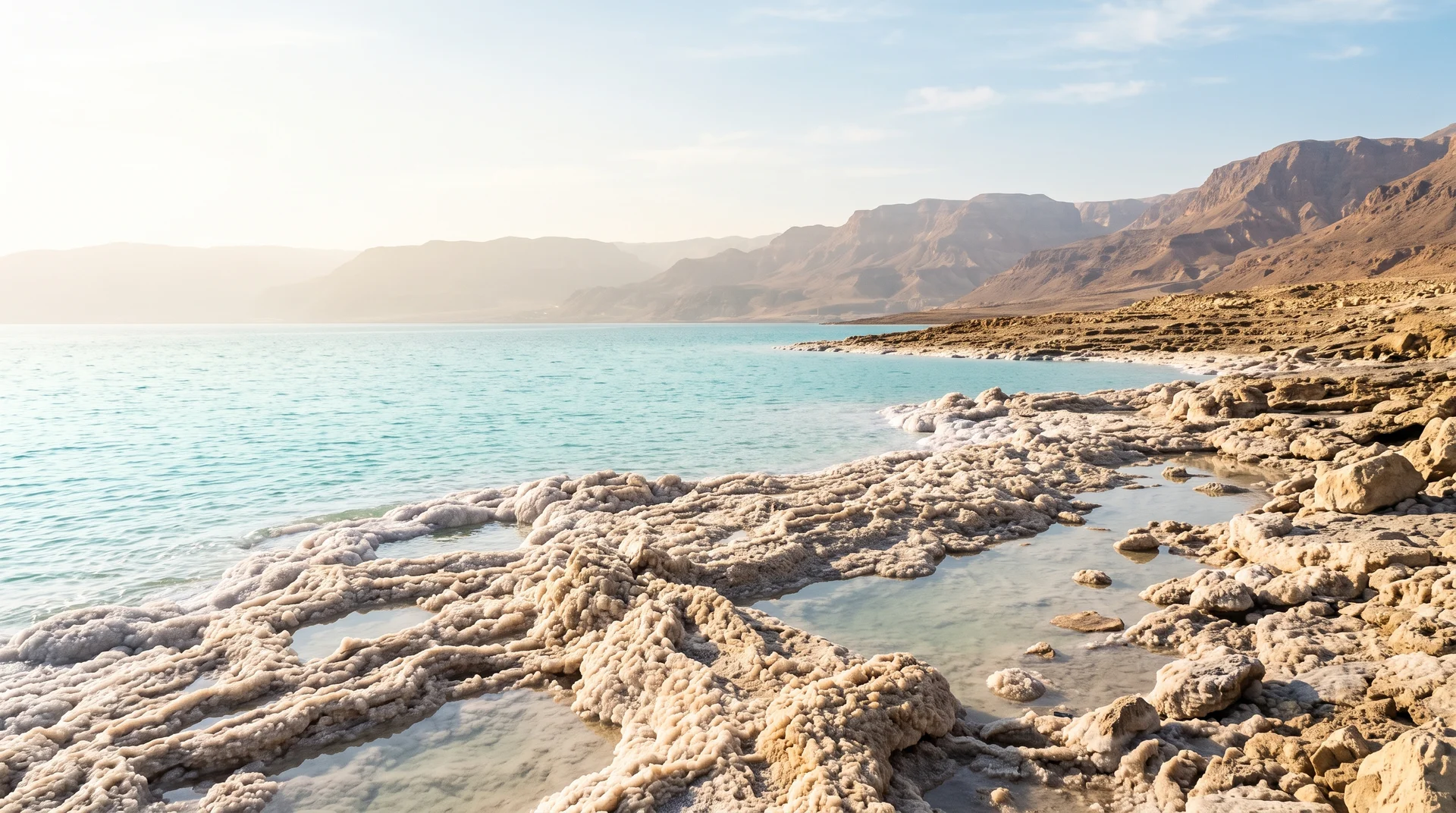
An hour's drive west and the road descends to 430 metres below sea level: the lowest point on dry land anywhere on Earth. The water, ten times saltier than the ocean, carries your body effortlessly — you float upright, book in hand, in an unreal white light, with the hills of the West Bank across the water. The mineral-rich black mud on the shore goes on in a thick layer, then rinses off. A few precautions are worth taking seriously: don't submerge your head, don't shave the day before, get out after fifteen to twenty minutes, drink plenty of water and shower thoroughly. The developed public beaches at Sweimeh charge 20 to 25 JOD including pools and changing rooms. The heat is crushing from June to September, so go in the morning.
5/12The Jordan Museum: 1.5 million years explained in one morning
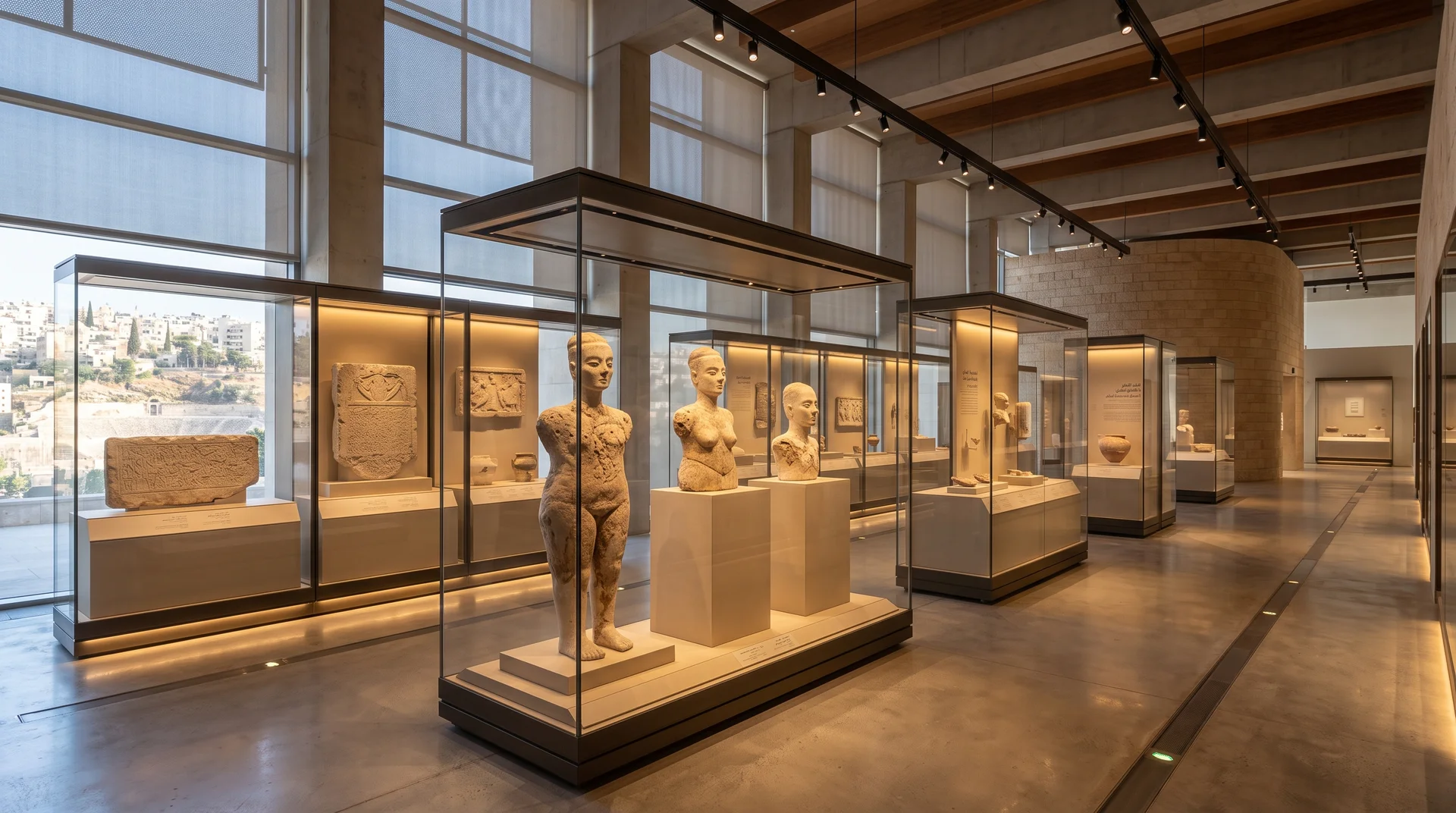
Opened in 2014 in the Ras al-Ain district, the Jordan Museum is the national museum and by far the best-designed in the country. The chronological route starts with tools a million and a half years old and ends in contemporary Jordan, passing the pieces that alone justify the visit: the Ain Ghazal statues, plaster figures with ringed eyes modelled around 7500 BC and among the oldest known human representations, and the Copper Scroll from the Dead Sea Scrolls. Labels are bilingual and genuinely explanatory, which makes this an excellent first stop for making sense of the rest of your trip. Entry is 5 JOD, allow about two hours, and check the weekly closing day before you go. Very well pitched for children.
6/12Downtown Al-Balad and its souks: spices, gold and street life
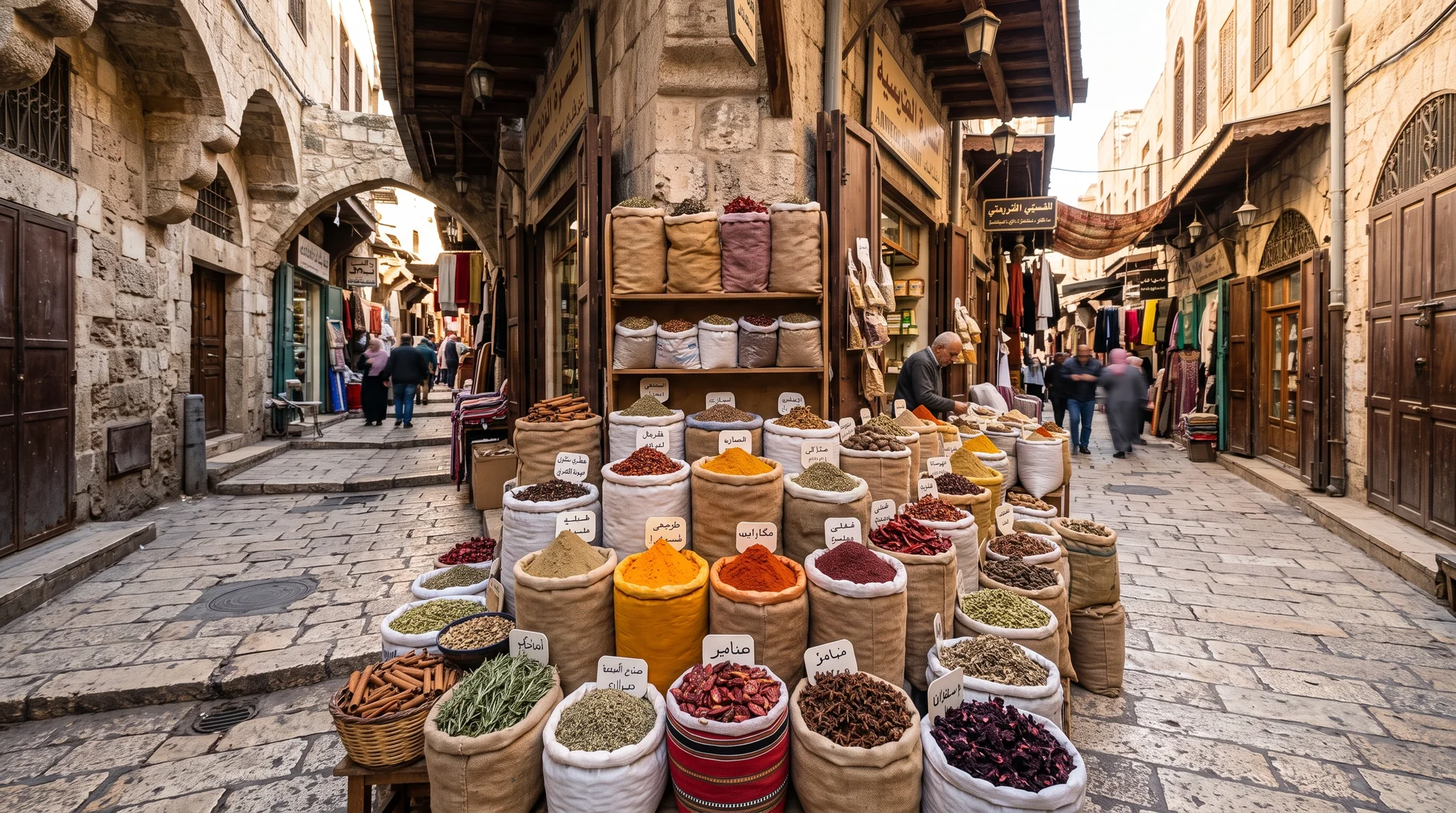
The old centre, which locals simply call Al-Balad, sits in the hollow between seven hills and is walkable end to end. Around King Hussein Street and Quraysh Street the stalls cluster by trade: the gold souk with windows crammed full of bracelets, the spice market where za'atar and sumac are sold by the kilo from open sacks, the fruit and vegetable stands, the shops of roasted seeds and dates. You'll pass vendors pressing pomegranate juice to order and bakers turning out sagh, the flatbread cooked on a domed griddle. Around ten in the morning the activity peaks and the light rakes across the facades. Haggle without aggression — it's expected — and keep small notes and coins on you.
7/12King Abdullah I Mosque: Amman's great blue dome
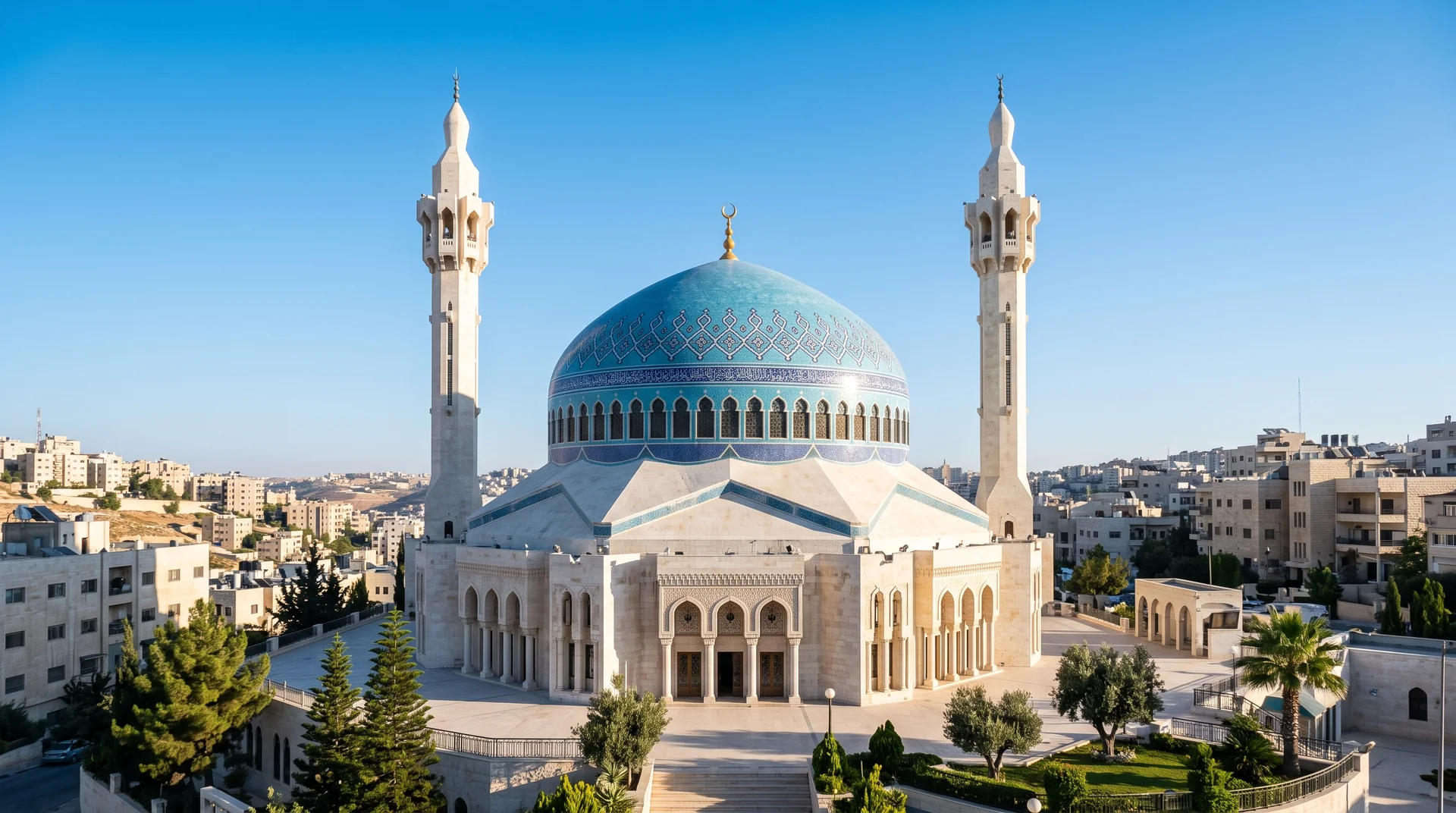
Its blue mosaic dome, resting on an octagonal prayer hall without a single interior pillar, is one of Amman's great visual landmarks. Built in the late 1980s in memory of King Abdullah I, it is one of the few mosques in the country open to non-Muslim visitors outside prayer times. The interior is striking for its restraint: light filtered through stained glass, deep blue carpet, a vast central chandelier. Abayas and headscarves are lent at the door, shoulders and legs must be covered, and shoes are left at the cloakroom. The ticket, around 2 JOD, includes a small museum of royal objects. Come in the morning, when the hall is empty and the light is softest; it's about a fifteen-minute walk from the Roman theatre.
8/12Rainbow Street and Souk Jara: the Jabal Amman walk
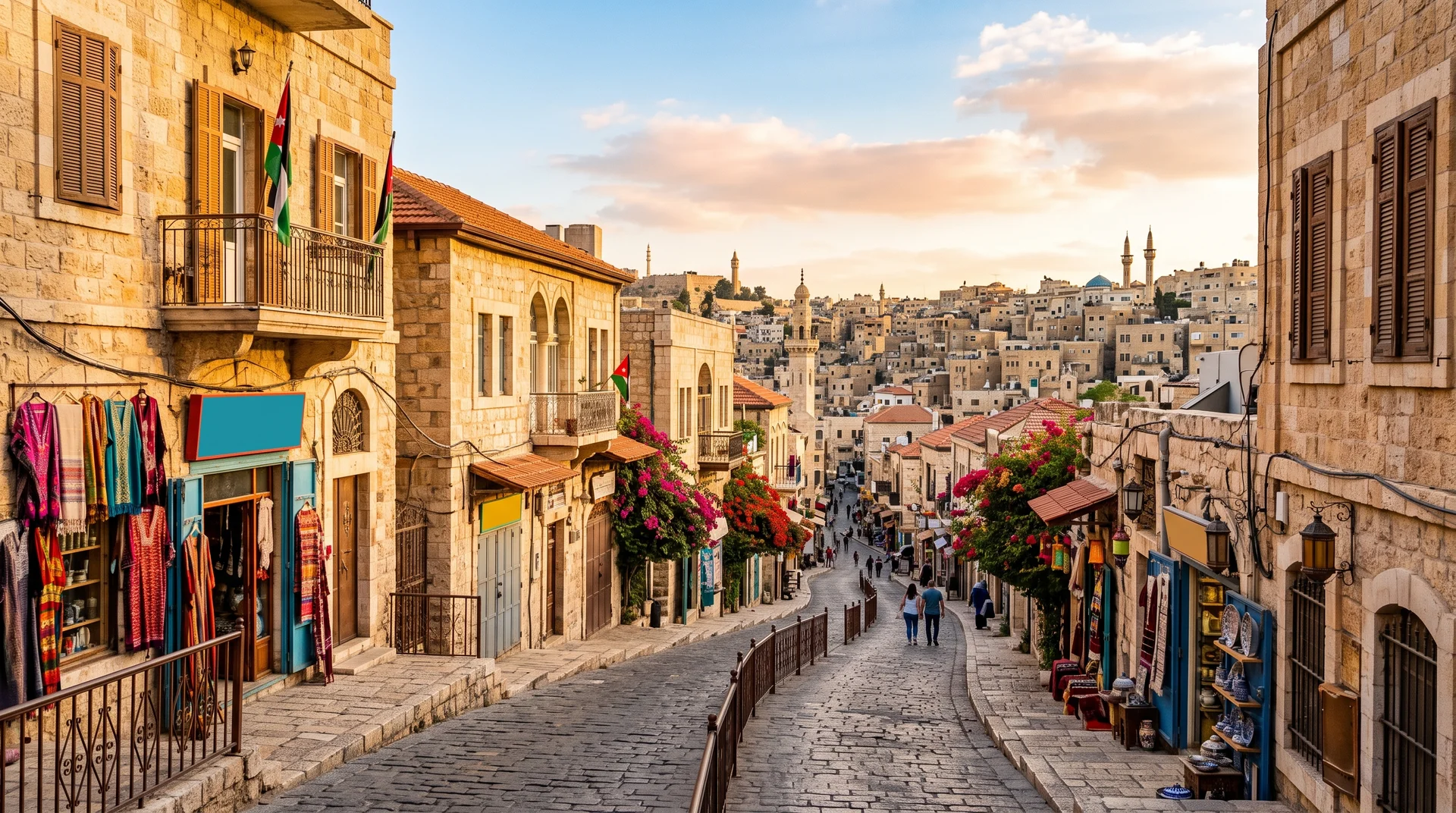
Along the ridge of Jabal Amman, between the first and second circles, Rainbow Street lines up 1930s limestone houses, bookshops, ceramic studios and pastry terraces. It's the most pleasant urban walk in the city, gently sloping, with sudden views over the rooftops of downtown. Stop at Wild Jordan, whose cantilevered terrace has the finest plunging view of Al-Balad, and at Mango House, a patrician residence turned exhibition space. On Fridays through the warm season, Souk Jara sets up its stalls of handicrafts, olive-oil soap and home cooking in a neighbouring street; check the season's dates, as it generally runs from spring to autumn. Perfect with children in the late afternoon, once the heat drops.
9/12Eating in Amman: falafel at Hashem, mansaf and kunafa at Habibah
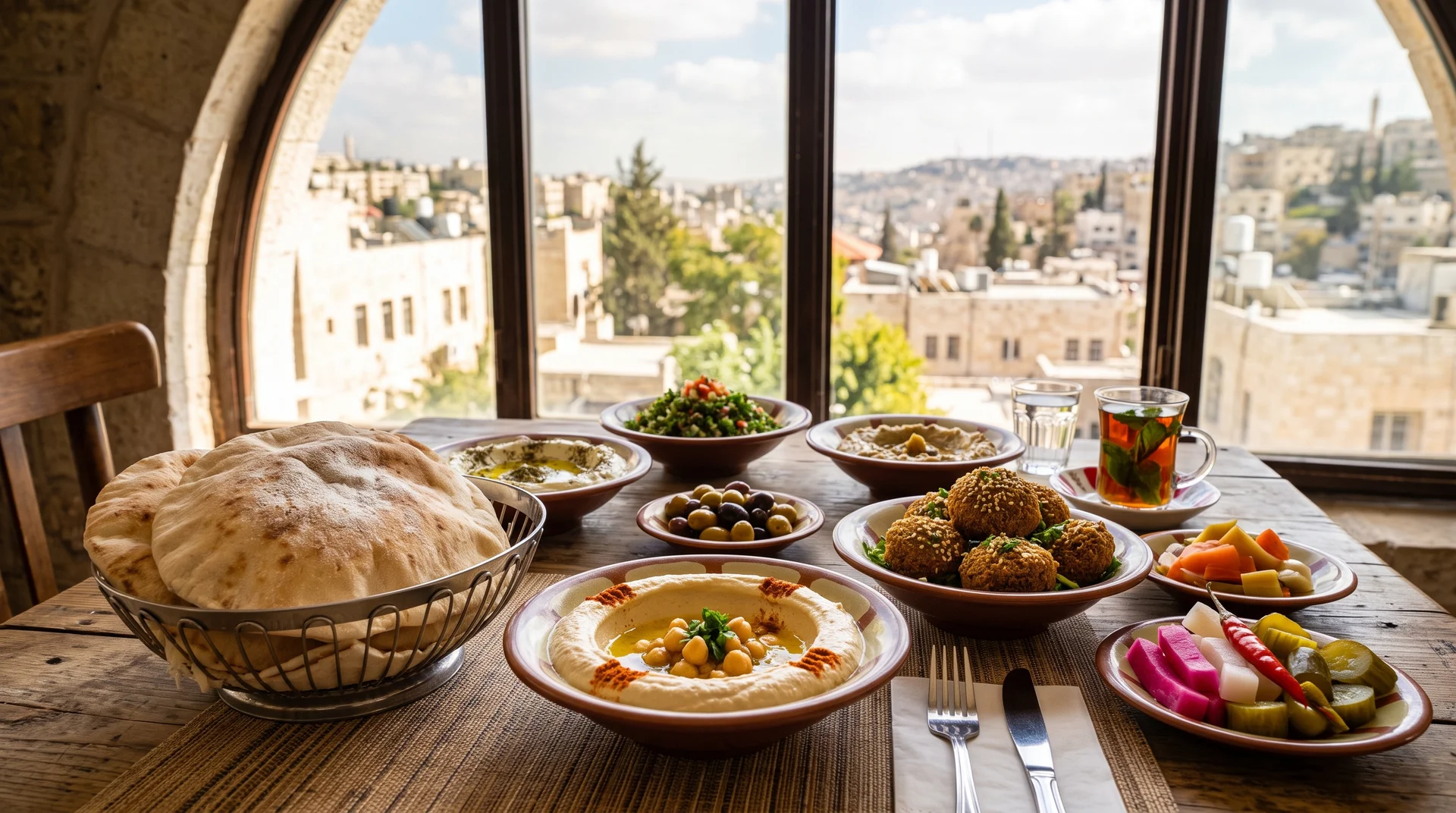
Jordanian food is best discovered standing up. At Hashem, a round-the-clock institution in a downtown alley, you sit on a plastic stool for a tray of falafel, hummus, fuul and hot bread that costs barely a few dinars. A few steps away, Habibah has served the city's best kunafa since the 1950s: melted cheese under crisp strands of pastry drenched in syrup, sold by weight to take away. The national dish, mansaf — lamb simmered in a sauce of dried sheep's yoghurt, served over rice and bread — is better ordered for two and calls for a long digestion. Add pomegranate juice pressed on the street, sage tea and cardamom coffee. The kitchens of Jabal al-Weibdeh serve more refined versions of the same classics.
10/12Madaba and Mount Nebo: the mosaic map and the Jordan Valley view
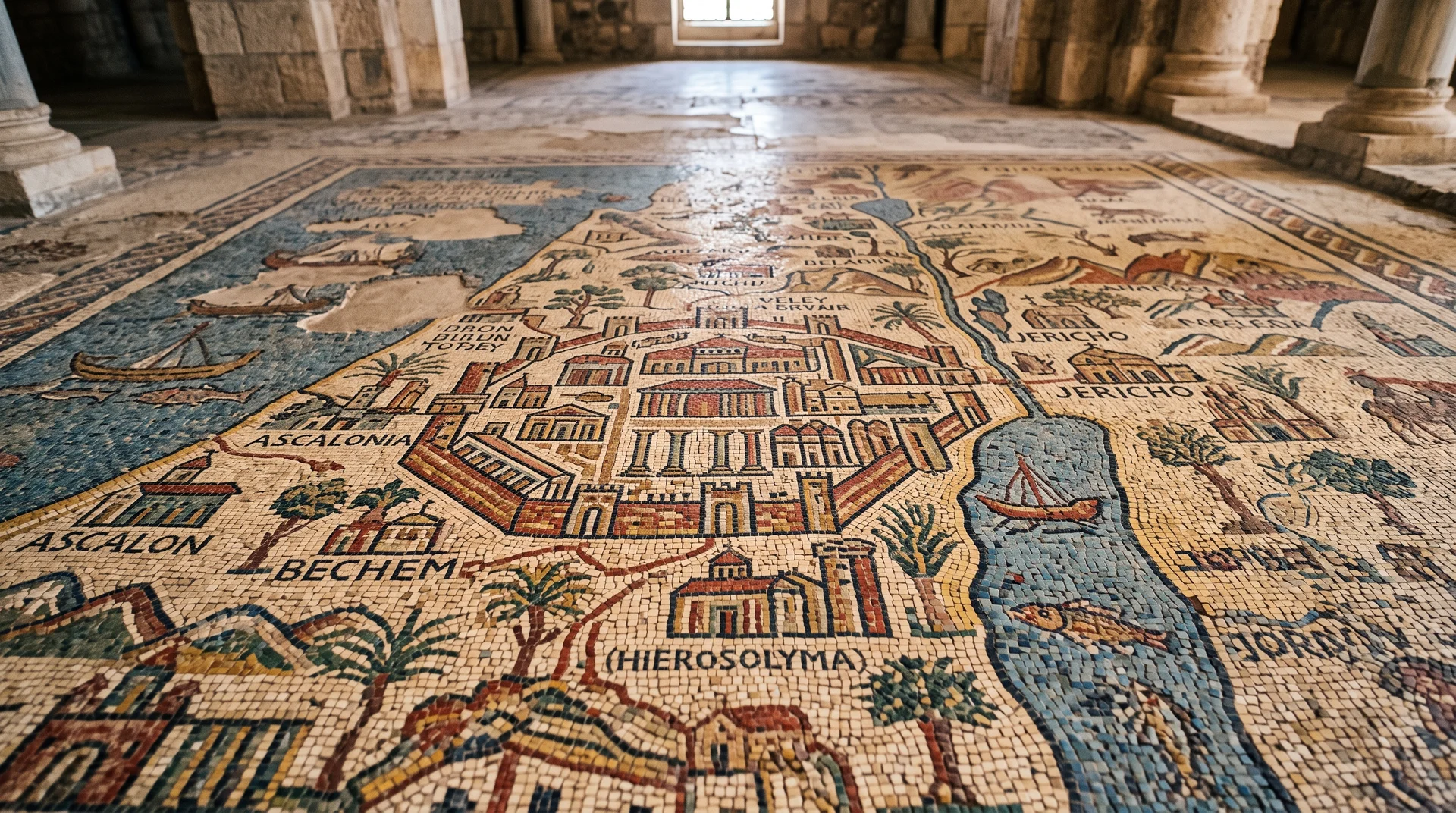
Thirty kilometres south, Madaba's Church of St George holds the most famous mosaic map in the world: a 6th-century floor depicting the Holy Land, two million tesserae and a plan of Jerusalem of astonishing precision. The whole town lives off mosaic — workshops and restoration schools welcome visitors, and the archaeological park gathers further Byzantine pavements. Ten kilometres on, Mount Nebo looks out over the Jordan Valley from 800 metres up: on a clear day you can pick out the Dead Sea, the oasis of Jericho and sometimes the far hills. The memorial at the summit preserves superb mosaic floors. Reckon 2 to 3 JOD per site, both included in the Jordan Pass, and combine them with the Dead Sea in a single day by car.
11/12The desert castles: Qasr Amra, Kharana and Azraq in a one-day loop
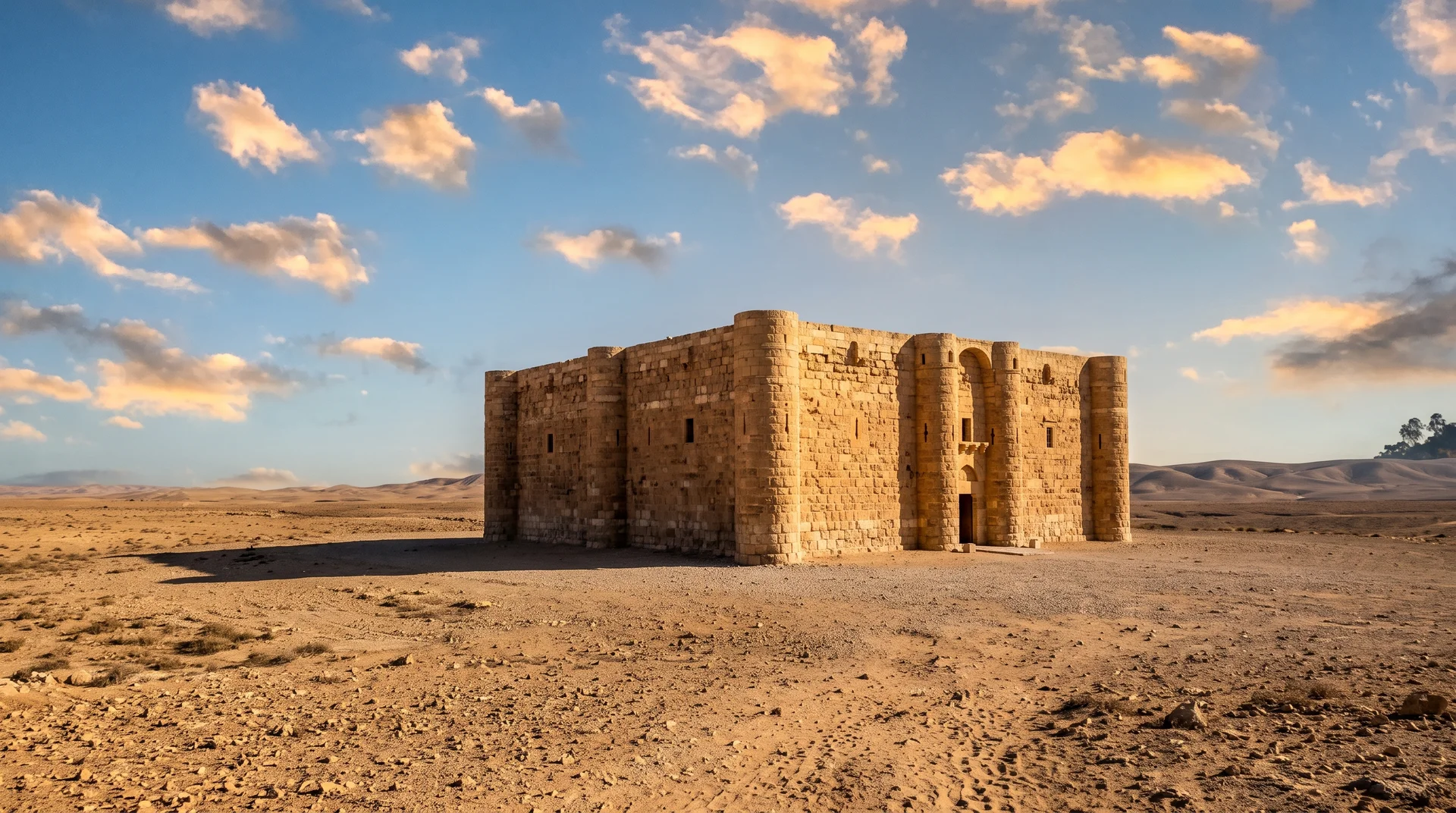
To the east, the road runs towards Iraq across a plain of black basalt, and three fortresses punctuate the loop. Qasr Amra, a UNESCO World Heritage site, is the most surprising: a small 8th-century Umayyad bathhouse whose walls and vaults are entirely covered in frescoes — hunting scenes, musicians, a zodiac painted across the dome, an absolute rarity in early Islamic art. Qasr Kharana, a perfect two-storey cube set on the plateau, takes thirty minutes to explore. Azraq Fort, built entirely of black basalt, served as Lawrence of Arabia's headquarters through the winter of 1917. The neighbouring wetland reserve draws migratory birds in spring. Reckon 250 kilometres round trip, a rental car or a driver for the day at 60 to 80 JOD, entries included in the Jordan Pass.
12/12Darat al Funun: contemporary Arab art in the villas of Jabal al-Weibdeh
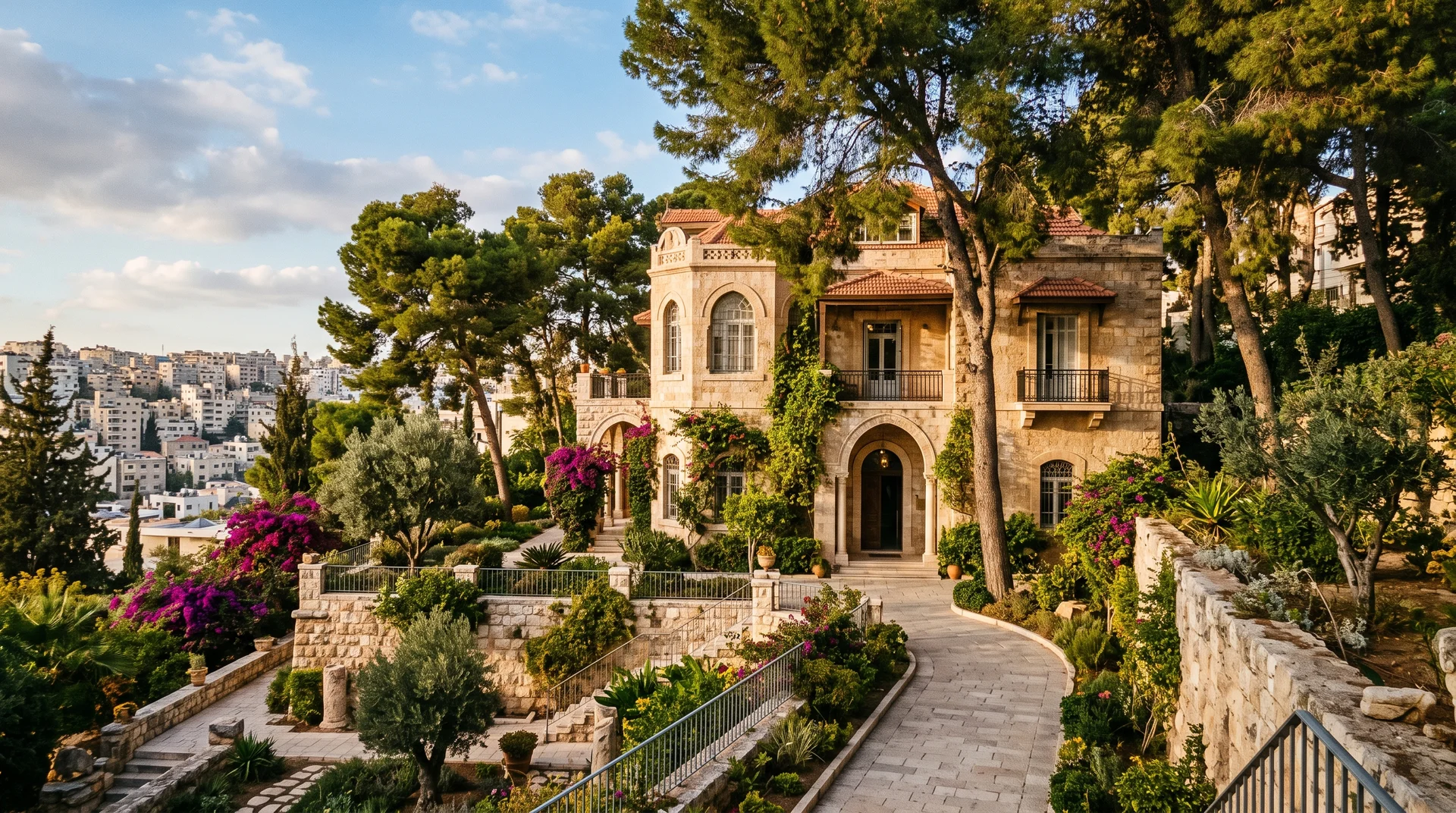
Clinging to the flank of Jabal al-Weibdeh, Darat al Funun occupies three 1920s stone villas linked by terraced gardens. It is the region's oldest institution devoted to contemporary Arab art: exhibitions of Jordanian, Palestinian and Lebanese artists, residencies, a specialist library, screenings. The place is worth as much for its architecture and its quiet as for what hangs on the walls — and in the lower garden you come across the remains of a 6th-century Byzantine church built above a cave, looking straight out over the rooftops of downtown. Entry is free. The terrace cafe, shaded by pines, is the most peaceful spot in Amman for a mint tea. Check the opening hours online before climbing up: it closes one day a week and between exhibitions.