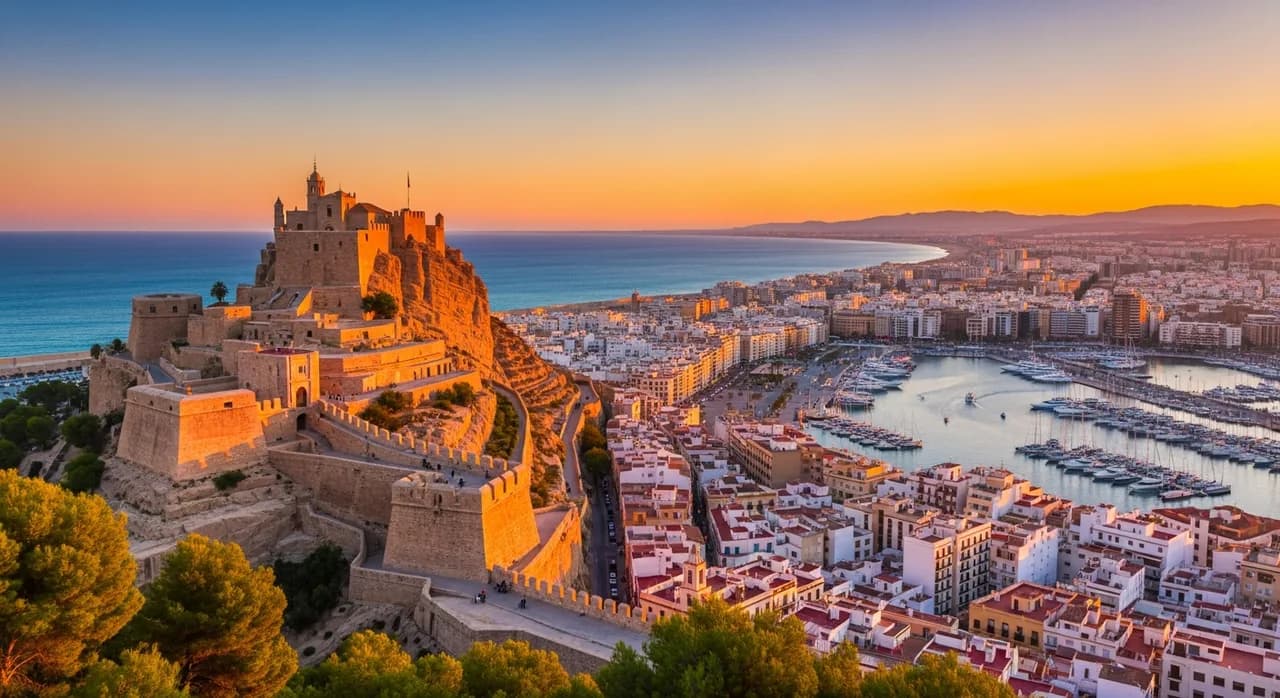
Backed by Mount Benacantil and facing a sea of almost unreal blue, Alicante has a rare quality: you can explore it entirely on foot without ever losing sight of the Mediterranean. In an hour's walk you go from a thousand-year-old fortress to a pale-sand city beach, from a maze of whitewashed houses with laundry drying overhead to an esplanade paved with six million marble tesserae. The capital of the Costa Blanca lives outdoors all year round: 300 days of sunshine, markets overflowing with fish and citrus, palm-shaded terraces and children playing on the seafront until dusk. Add a protected island forty minutes away by boat and hilltop villages in the hinterland, and you have an ideal destination for a long family weekend.
✈️ Flights right now to Alicante on Yoosky
Complete guide
In this article
- Santa Bárbara Castle: The Fortress Standing Guard Over the Bay
- Barrio de Santa Cruz: Getting Lost in the Old Town's Flowered Lanes
- Explanada de España: Spain's Most Famous Marble Promenade
- Playa del Postiguet: Fine Sand at the Foot of the Castle
- Tabarca Island: A Boat Trip to a Protected Marine Reserve
- The MARQ: Diving into 100,000 Years of Alicante's History
- San Nicolás and Santa María: The Historic Centre's Two Religious Jewels
- Mercado Central: Alicante's Belly and Its Mediterranean Flavours
- Playa de San Juan and Cabo de las Huertas: Big Beaches and Secret Coves
- The MACA: 20th-Century Art in Alicante's Oldest House
- The Hogueras Museum: Understanding Alicante's Greatest Festival
- Guadalest and the Algar Springs: The Hinterland Day Trip
1/12Santa Bárbara Castle: The Fortress Standing Guard Over the Bay
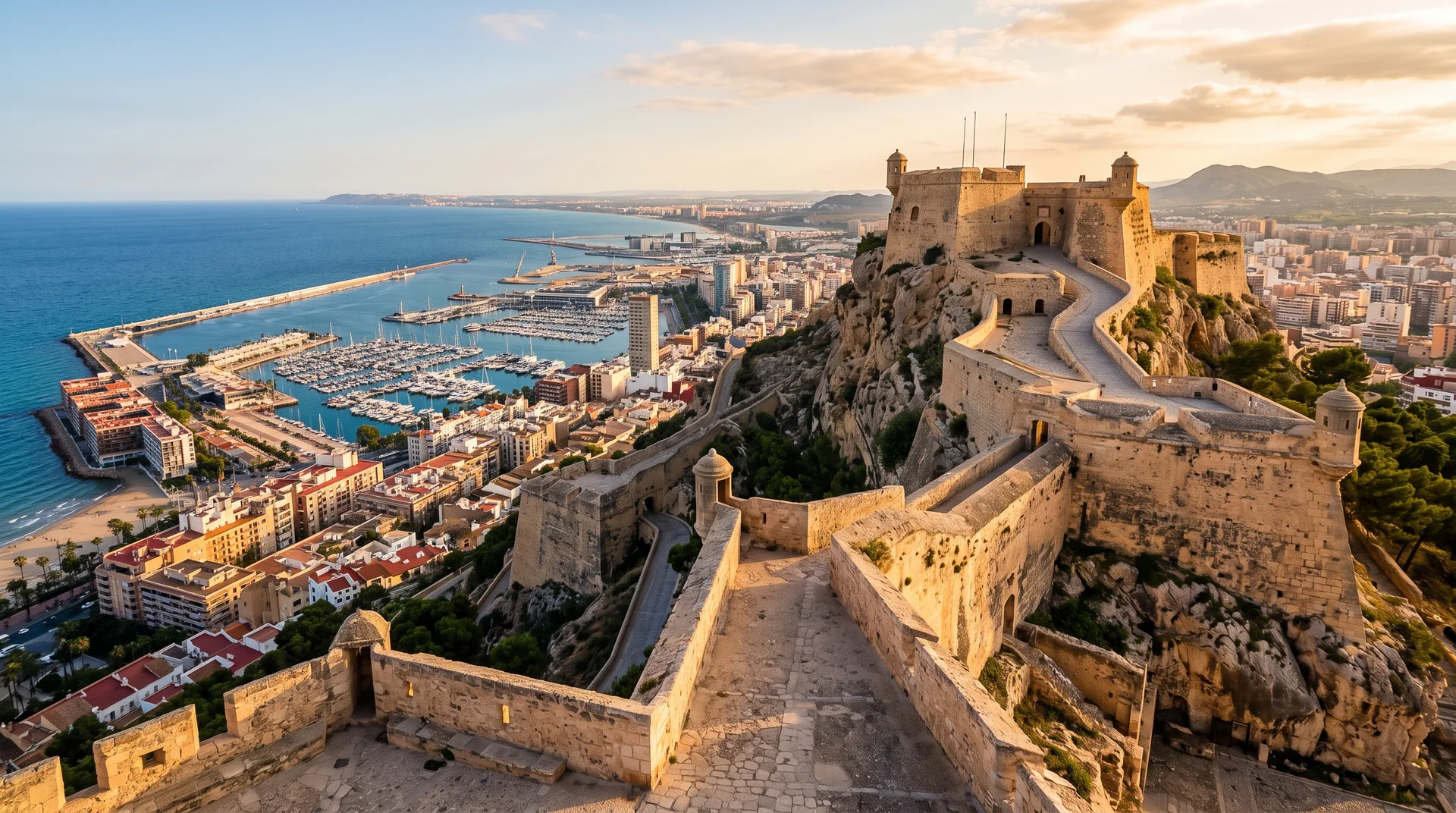
Perched 166 metres up on Mount Benacantil, this eyrie founded in the 9th century under Muslim rule, later reworked by the kings of Aragon and Philip II, is Alicante's absolute symbol. Reach it by the lift bored straight through the rock from Playa del Postiguet (around €3 return) or, for walkers, via the shaded switchbacks of Parque de la Ereta in 30 to 40 minutes. Entry to the fortress itself is free. At the top, three stepped enclosures tell a thousand years of military history, and the panorama takes in the port, the old town, the beaches and, on a clear day, Cape Santa Pola. Best time to go: late afternoon, when the low light gilds the ramparts and the heat finally drops.
2/12Barrio de Santa Cruz: Getting Lost in the Old Town's Flowered Lanes
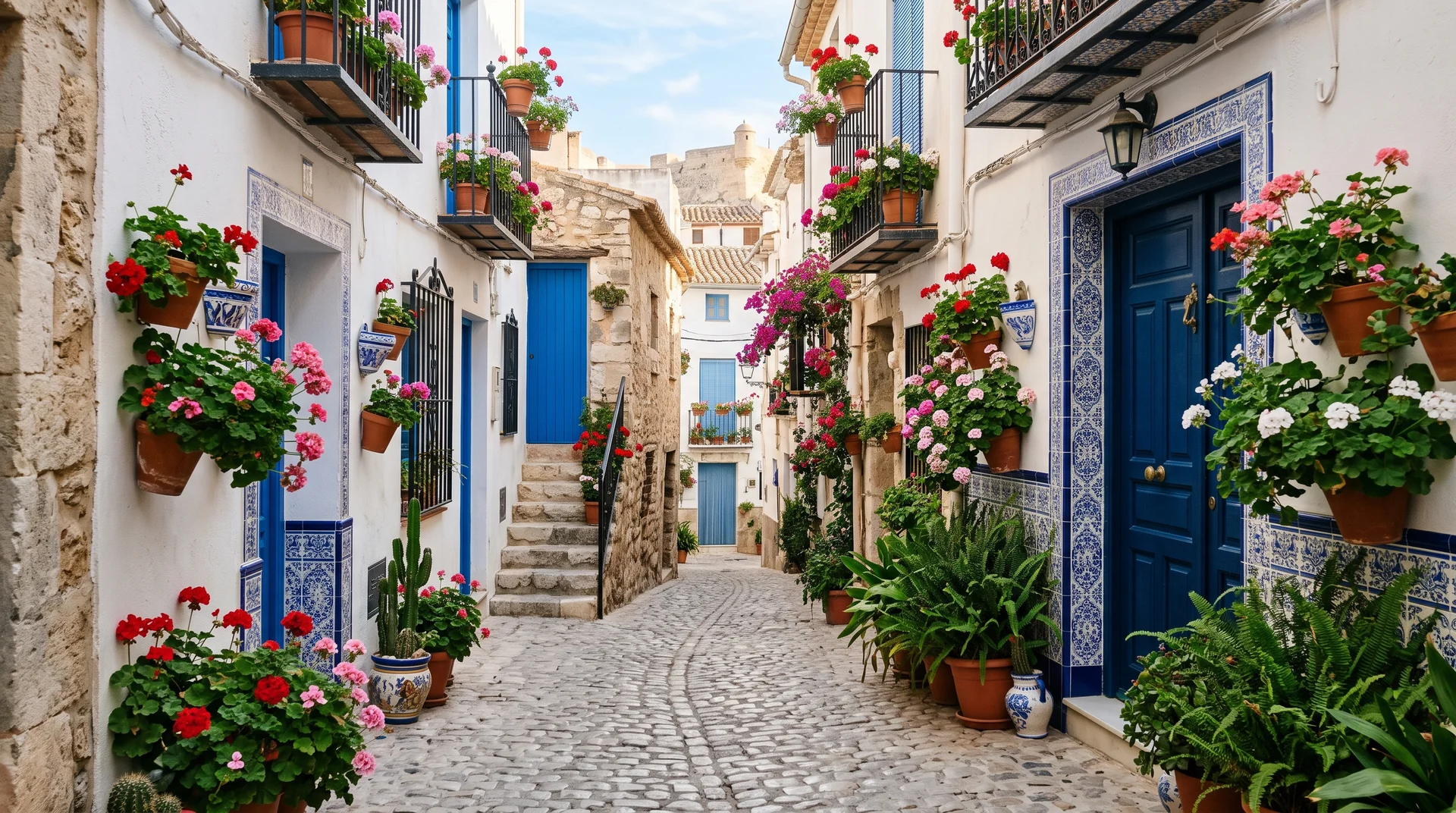
Clinging to the flank of Benacantil just below the castle, Santa Cruz is Alicante's most photogenic quarter: narrow stairways, whitewashed façades, blue doors, azulejo tiles and cascades of geraniums spilling from the balconies. Climb up from Santa María basilica, then wander at random towards the Santa Cruz hermitage and the viewpoint overlooking the tiled roofs. The district is free to explore at any hour; go before 11am for cooler air and soft light. Wear grippy soles — the cobbles are slick and the gradient is no joke. In May, during the Cruces de Mayo, every alley is decked with flowered crosses: the most spectacular moment of the year here.
3/12Explanada de España: Spain's Most Famous Marble Promenade
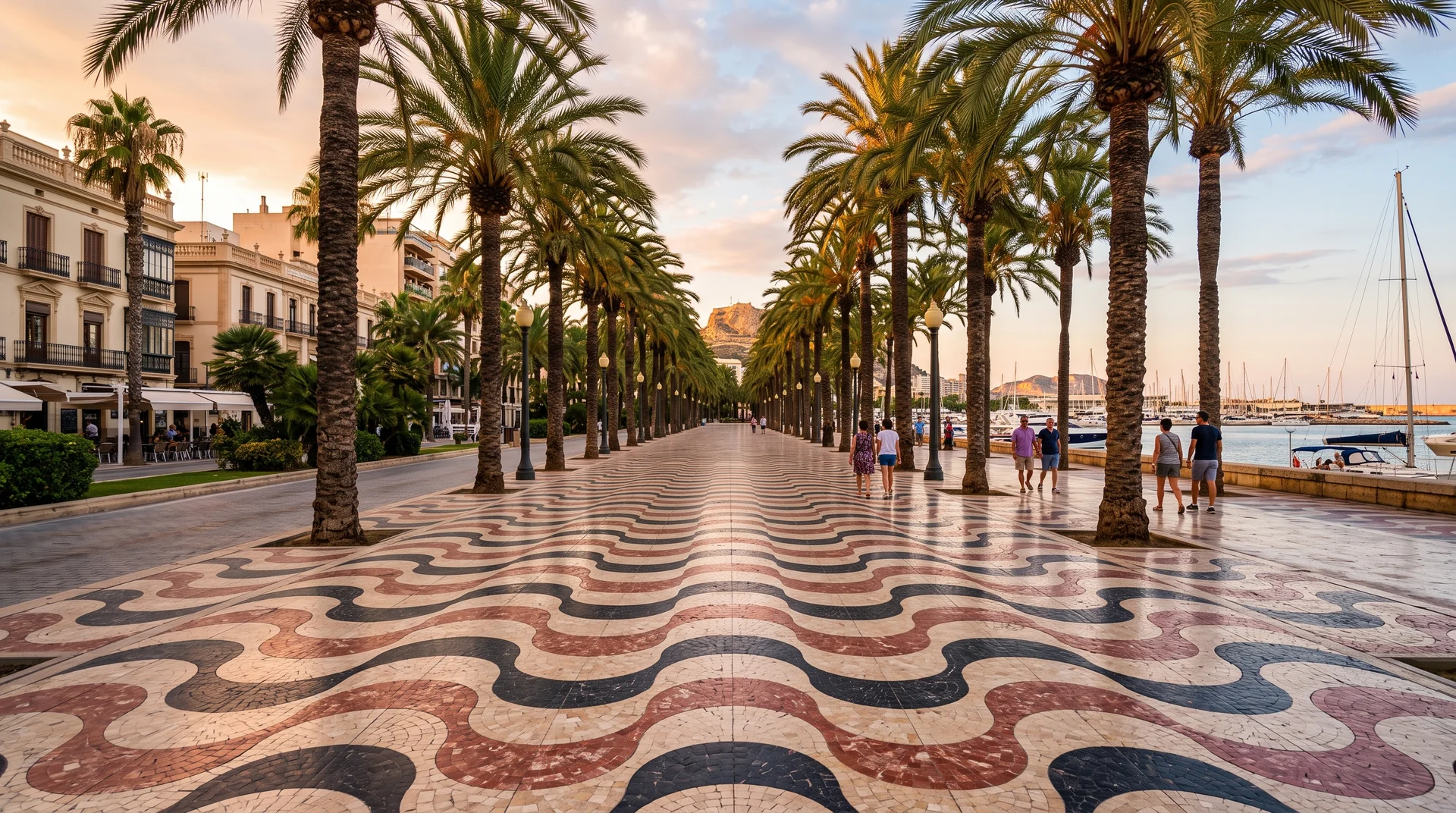
This is Alicante's open-air living room. Running 500 metres along the port, the Explanada unrolls a hypnotic mosaic of 6.5 million red, cream and black marble tesserae, drawing waves that seem to ripple underfoot. Four rows of date palms provide welcome shade, and the bandstand hosts free evening concerts through the summer. Access is free, around the clock. Craftspeople and portrait artists set up late in the day, when the promenade really comes alive. Carry on towards the Paseo de Gomiz and the marina, or treat yourself to an ice-cold horchata, the local tiger-nut drink, in one of the district's historic horchaterías.
4/12Playa del Postiguet: Fine Sand at the Foot of the Castle
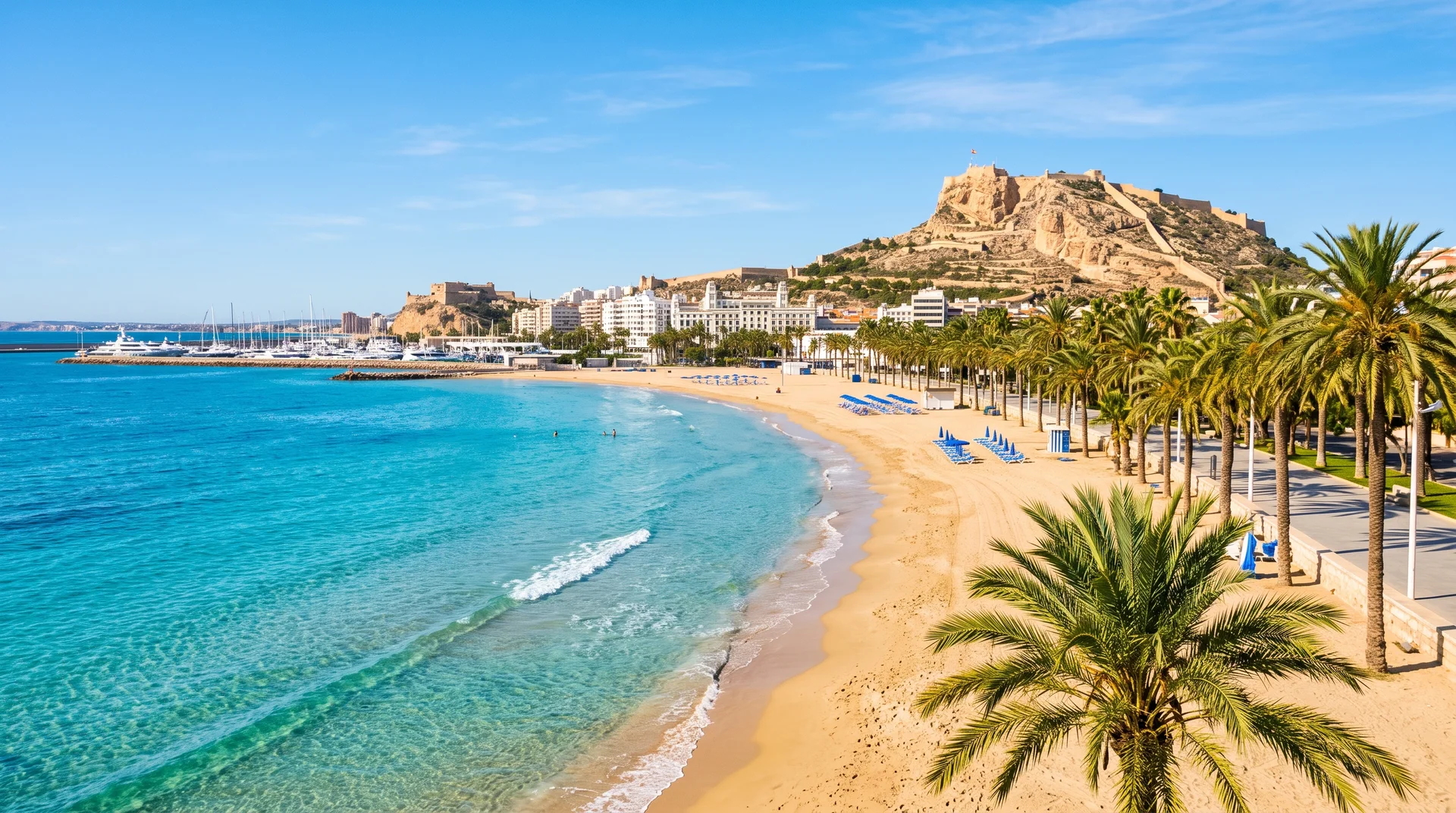
A rare urban privilege: in Alicante you can swim five minutes from the old town with the castle's silhouette as a backdrop. El Postiguet lays out 900 metres of golden sand, shallow water that reassures families, and every service you'd expect — showers, sunbed and parasol hire (roughly €6 to €8 a day), lifeguard posts, playgrounds and adapted access for visitors with reduced mobility. The tram stops a short walk away (Mercado or Luceros) and a fringe of palms offers midday shade. Come early in July and August, as the beach fills fast. Off season it turns into a magnificent morning walk, almost deserted at sunrise.
5/12Tabarca Island: A Boat Trip to a Protected Marine Reserve
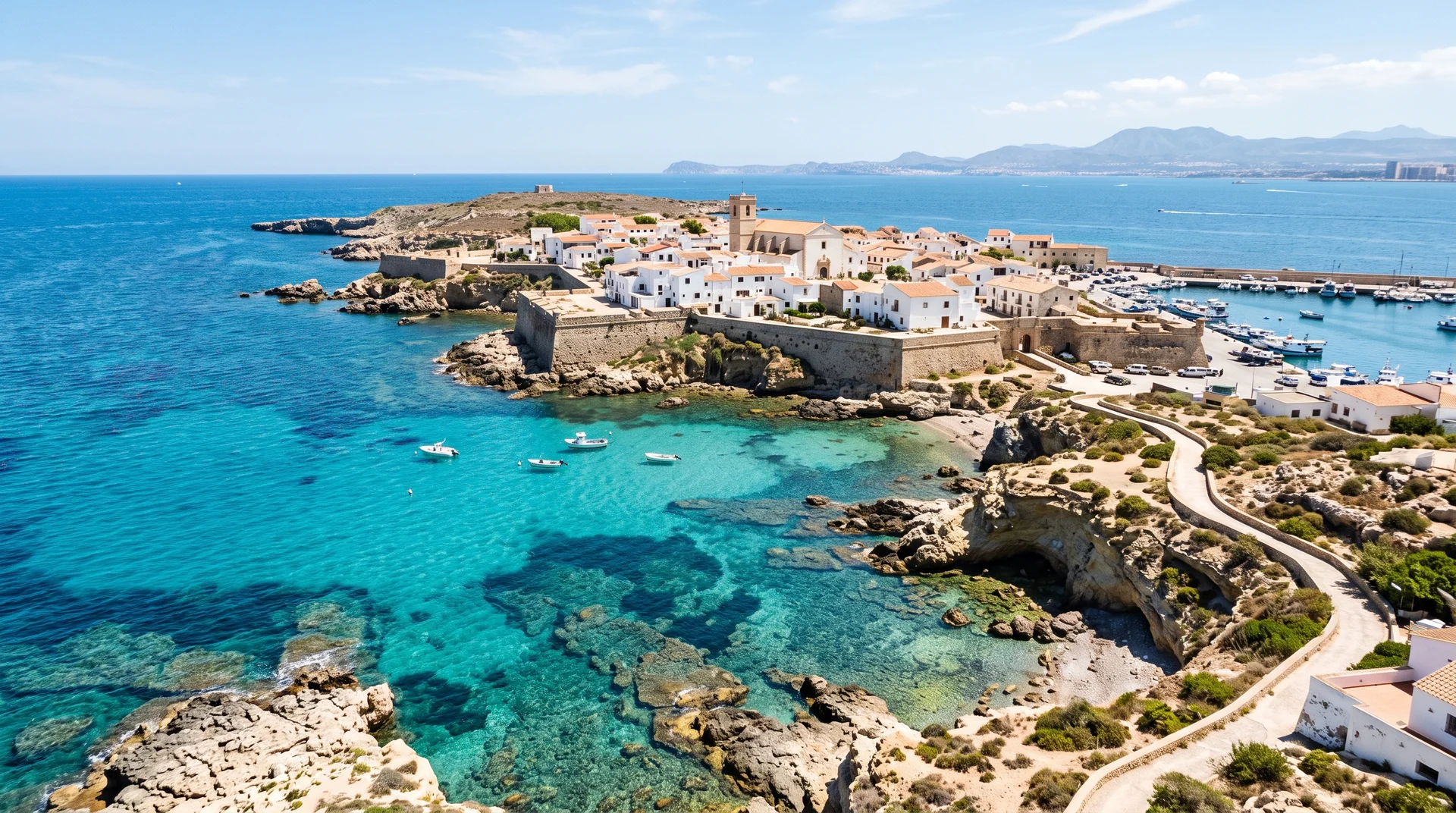
About forty minutes by catamaran from Alicante's port, Tabarca is the only inhabited island in the Valencian Community and Spain's first marine reserve, created in 1986. You'll find an 18th-century fortified village of white lanes, translucent water made for snorkelling, and rocky coves away from the main beach. Budget roughly €20 to €25 return per adult, about half that for children; departures cluster in the morning with a late-afternoon return. Pack water shoes, a hat and plenty of water — shade is scarce. The sweet spot is May-June or September, when the sea is warm and the island still quiet.
6/12The MARQ: Diving into 100,000 Years of Alicante's History
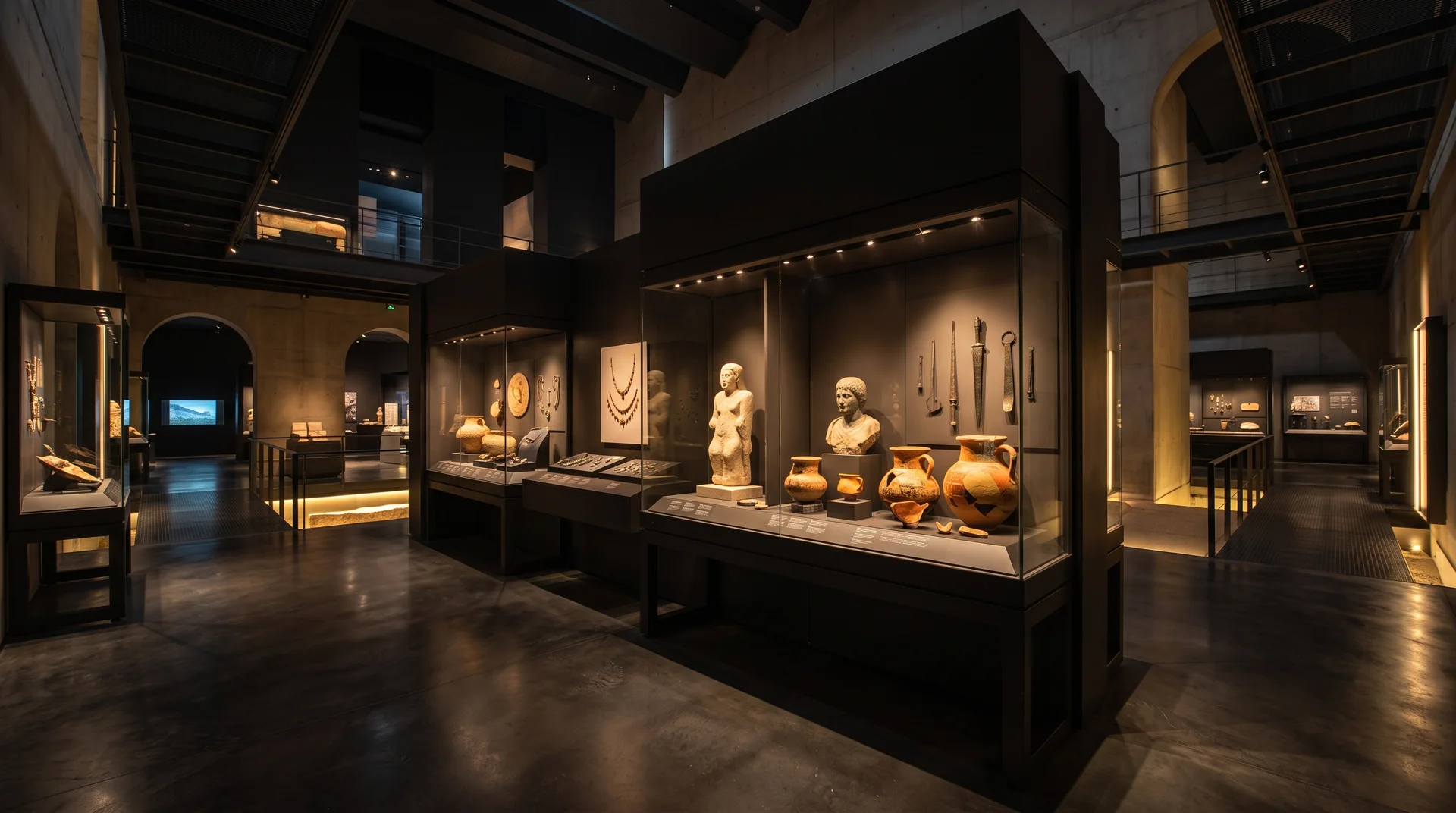
Named European Museum of the Year in 2004, Alicante's provincial archaeological museum invented a spectacular approach that lands perfectly with children: life-size reconstructions of a prehistoric cave, an Iberian temple and a medieval church, immersive projections and theatrically staged display cases. The collections span prehistory, Iberian culture, Rome and the Muslim and Christian Middle Ages. Entry is around €3 for adults and free for under-18s; allow a good two hours. The museum sits on Plaza Doctor Gómez Ulla, ten minutes' walk from the centre or one tram stop away (Marq-Castillo). Closed on Mondays, and its air conditioning makes it a perfect refuge during the hottest hours.
7/12San Nicolás and Santa María: The Historic Centre's Two Religious Jewels
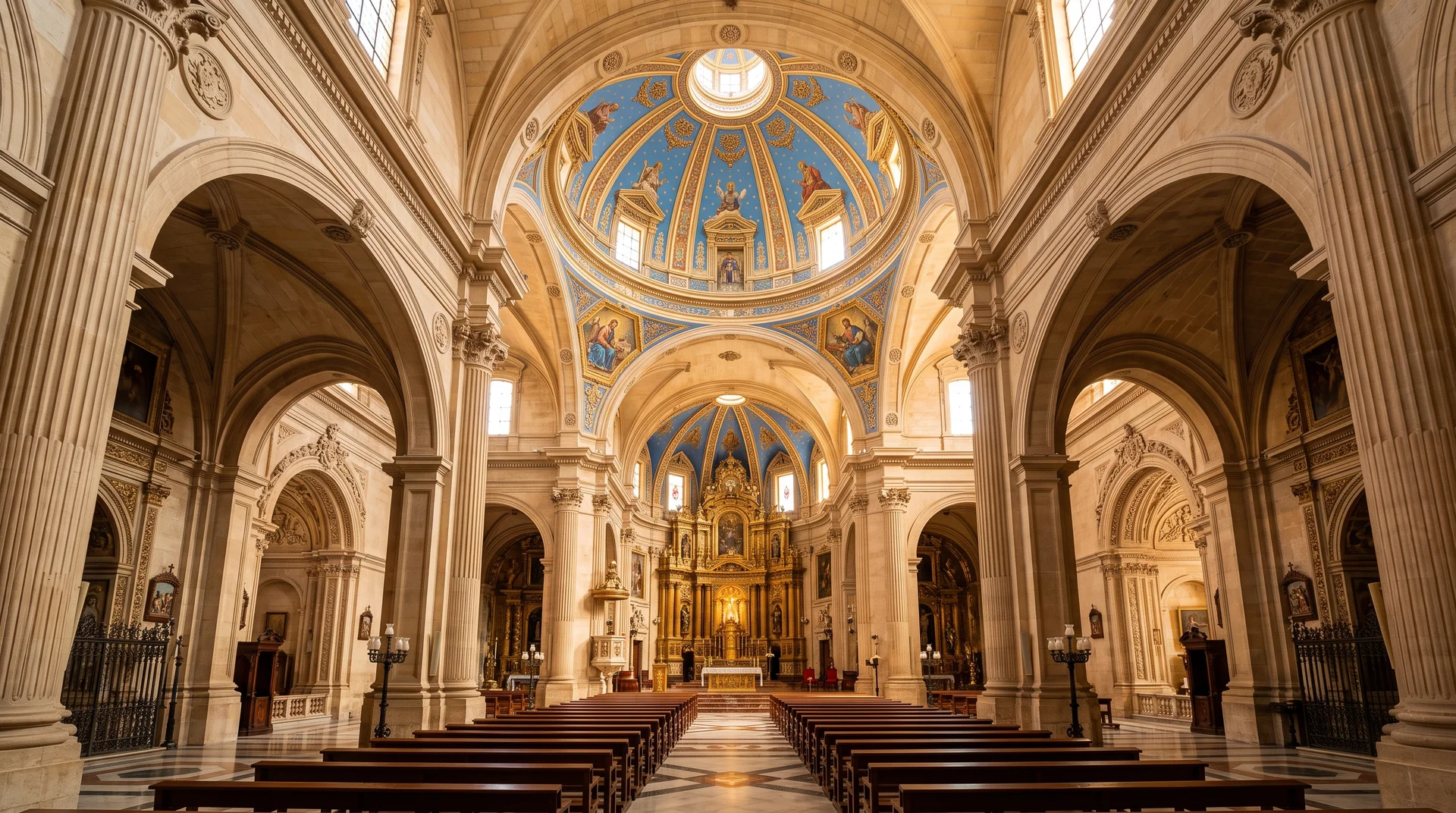
Two buildings, two centuries, two atmospheres, five minutes apart. The co-cathedral of San Nicolás de Bari, built between 1616 and 1662, imposes a striking Renaissance sobriety: a 45-metre blue dome, a silent cloister and a baroque Communion chapel that contrasts violently with everything around it. Santa María basilica, the city's oldest church, rises on the foundations of a former mosque and hides a Gothic interior and a gilded altarpiece behind its carved baroque portal. Entry is free to both, but opening hours typically close between 1.30pm and 5.30pm, so visit in the morning. Modest dress is requested, and silence is expected during services.
8/12Mercado Central: Alicante's Belly and Its Mediterranean Flavours
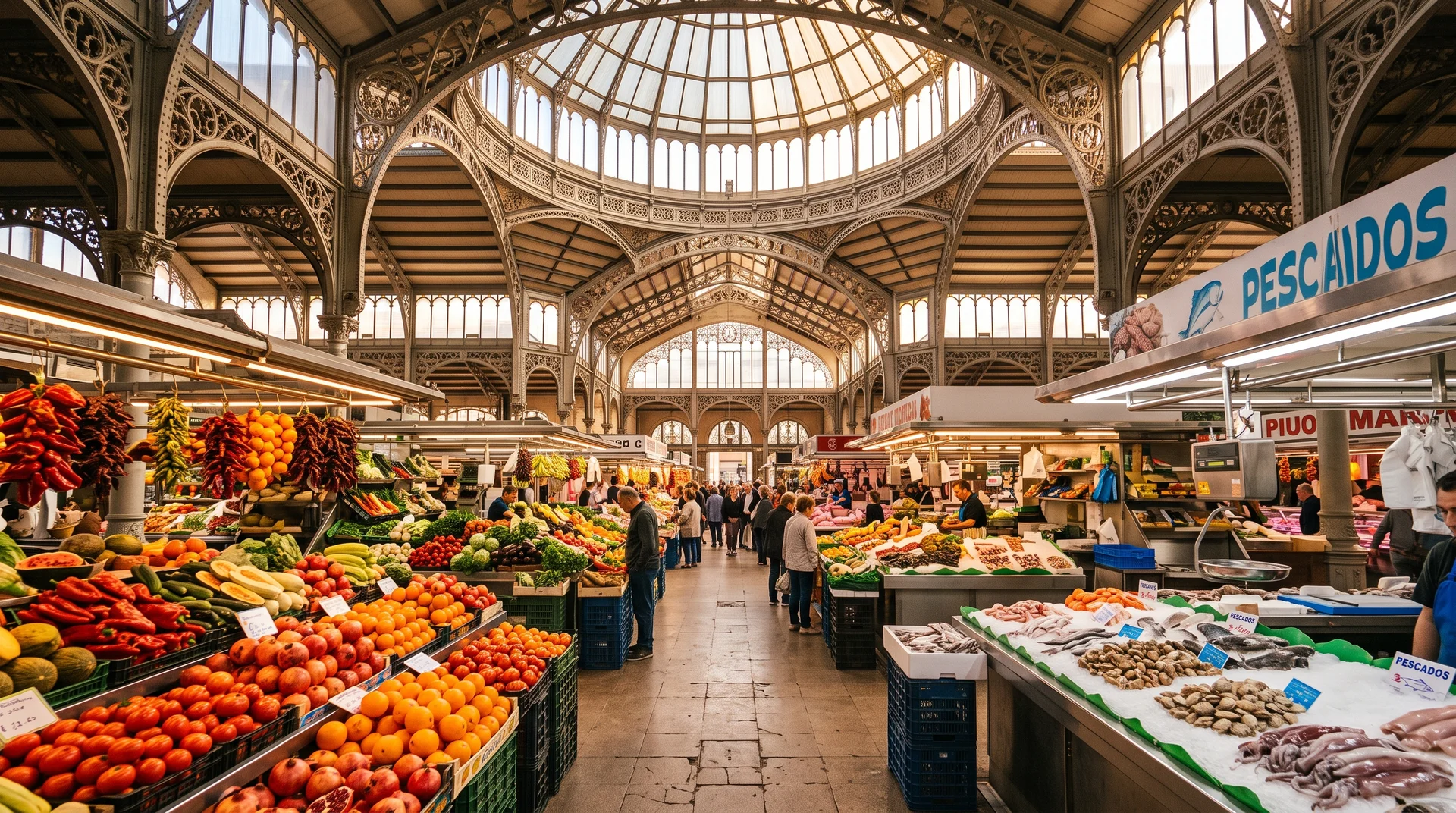
Under its 1921 modernist dome, the central market is the quickest route to local cooking. On the ground floor, stalls overflow with fruit and vegetables from the huerta, cheeses, cured meats and spices; upstairs, the fish hall lines up Dénia prawns, octopus and red mullet landed that same morning. This is where Alicante's food culture clicks into place: arroz a banda, savoury coques, Jijona turrón. Open Monday to Saturday, roughly 7.30am to 2.30pm; come before noon for peak buzz. Several counters prepare takeaway plates, perfect for a picnic on the nearby Explanada.
9/12Playa de San Juan and Cabo de las Huertas: Big Beaches and Secret Coves
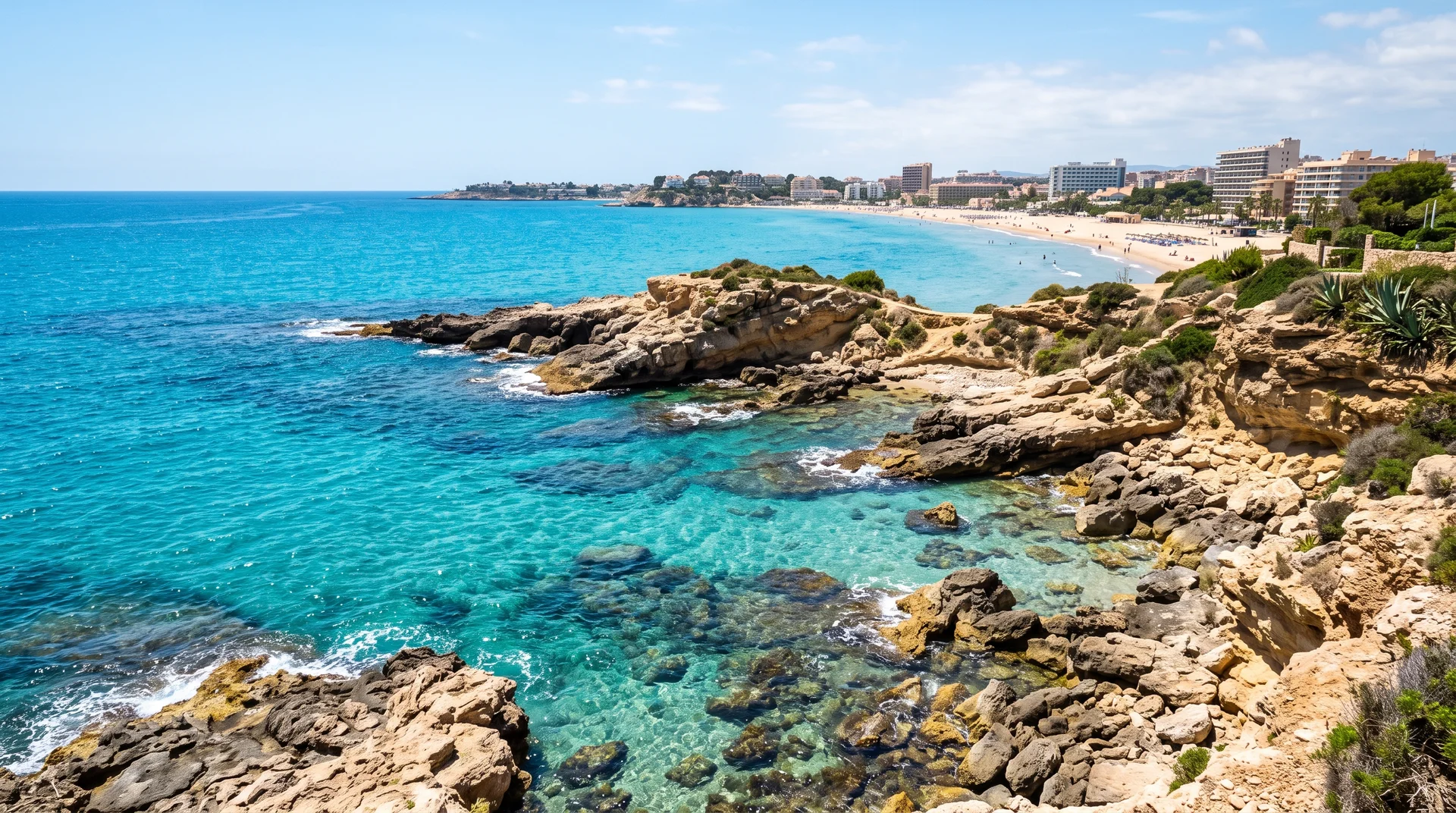
Twenty minutes from the centre by tram (lines 3 or 4, stops Costa Blanca to Sergio Cardell), San Juan rolls out nearly 7 kilometres of blond sand with a gentle slope — the city's finest family beach, with a Blue Flag, water sports and a wide cycling promenade. At its southern end, Cabo de las Huertas changes register entirely: a rocky plateau pitted with small transparent coves, Cala Cantalars or Cala Palmera, where you swim above posidonia meadows. A waymarked coastal path links the calas in an easy hour's walk. Bring water shoes, a mask and snorkel, and water: shade and shops are scarce out there.
10/12The MACA: 20th-Century Art in Alicante's Oldest House
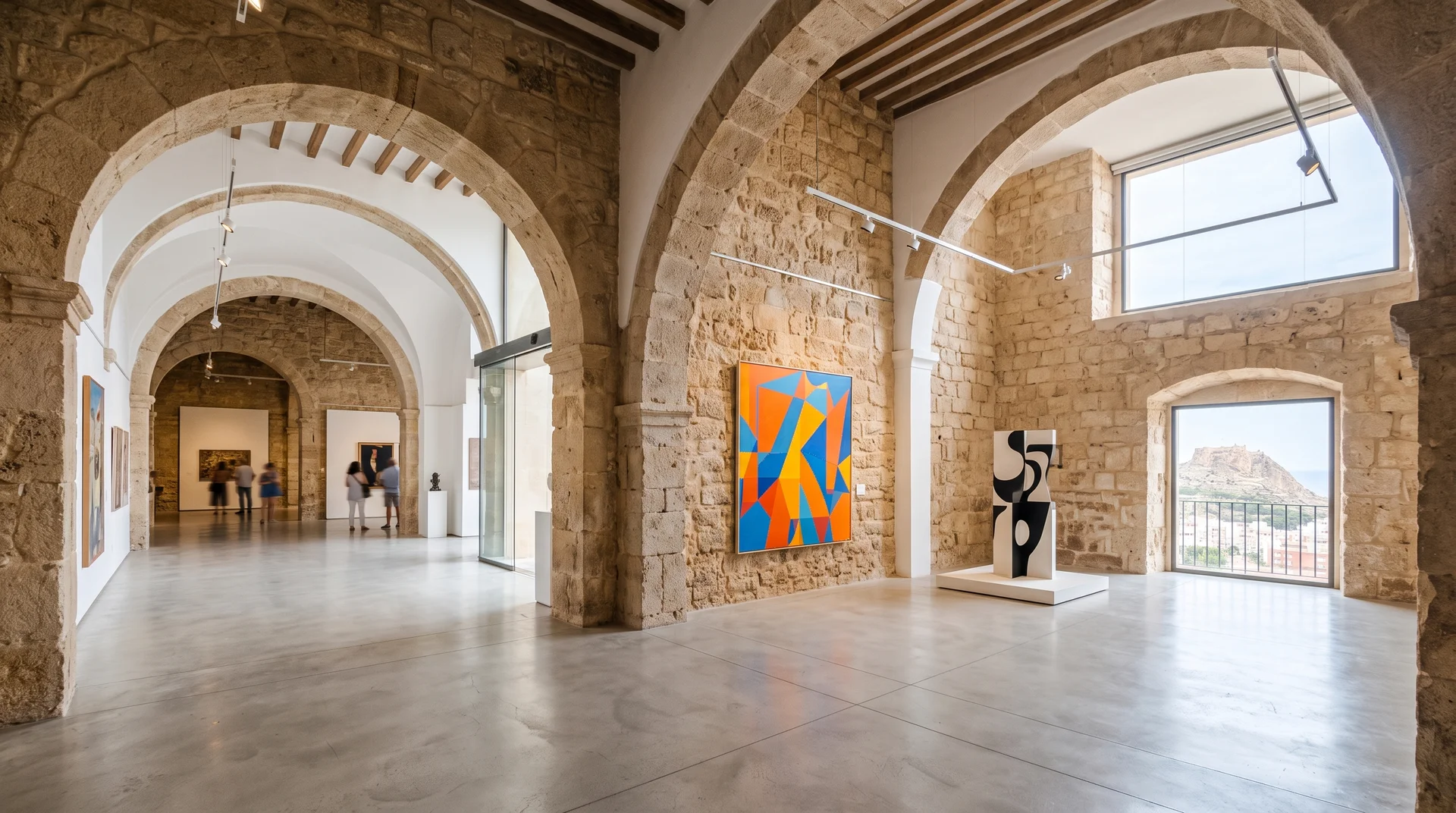
Next door to Santa María basilica, the contemporary art museum occupies the Casa de la Asegurada, a 1685 civic building that is the oldest in the city. Inside, a donation from Alicante-born artist Eusebio Sempere built an avant-garde collection remarkable for a city this size: Picasso, Miró, Dalí, Chillida, Tàpies, Kandinsky, Bacon. The spaces are bright and never overwhelming, and the visit wraps up in an hour. Entry is free and it closes on Mondays; the top-floor terrace offers a fine view of Santa María's baroque façade. An ideal stop to combine with the climb up to Santa Cruz, just above.
11/12The Hogueras Museum: Understanding Alicante's Greatest Festival
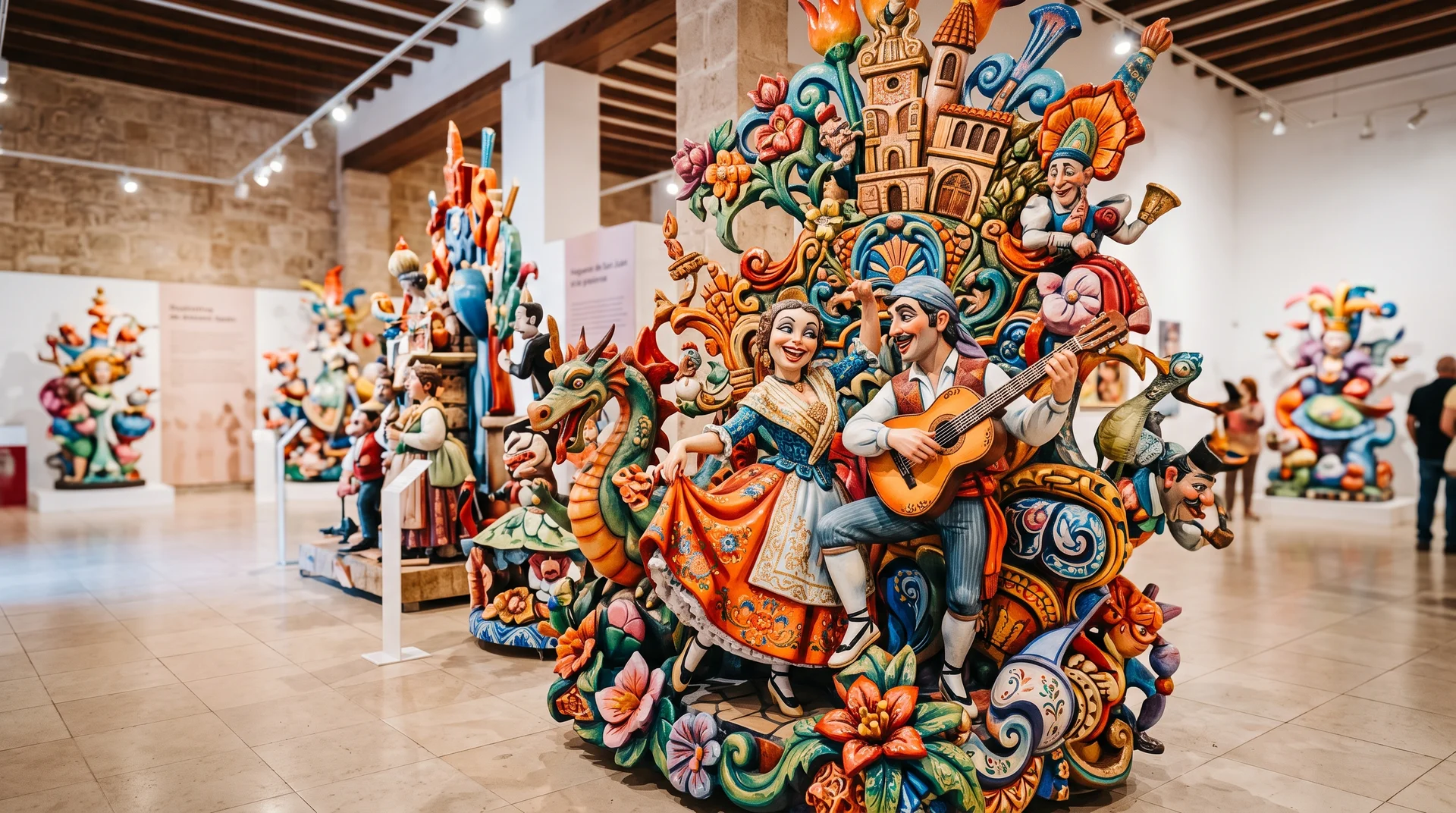
Every 24 June, Alicante burns dozens of monumental papier-mâché sculptures for the Fogueres de Sant Joan, its most spectacular festival and an event of international tourist interest. The museum preserves the ninots indultats: the figures pardoned each year by public vote and saved from the flames. Up close you can appreciate the artists' precision, and you'll find traditional costumes and filmed archives of the mascletàs. It's short — forty minutes is plenty — free, air-conditioned, and children love these giant characters with their caricatured expressions. The museum sits on Rambla de Méndez Núñez, right in the centre. Closed on Mondays.
12/12Guadalest and the Algar Springs: The Hinterland Day Trip
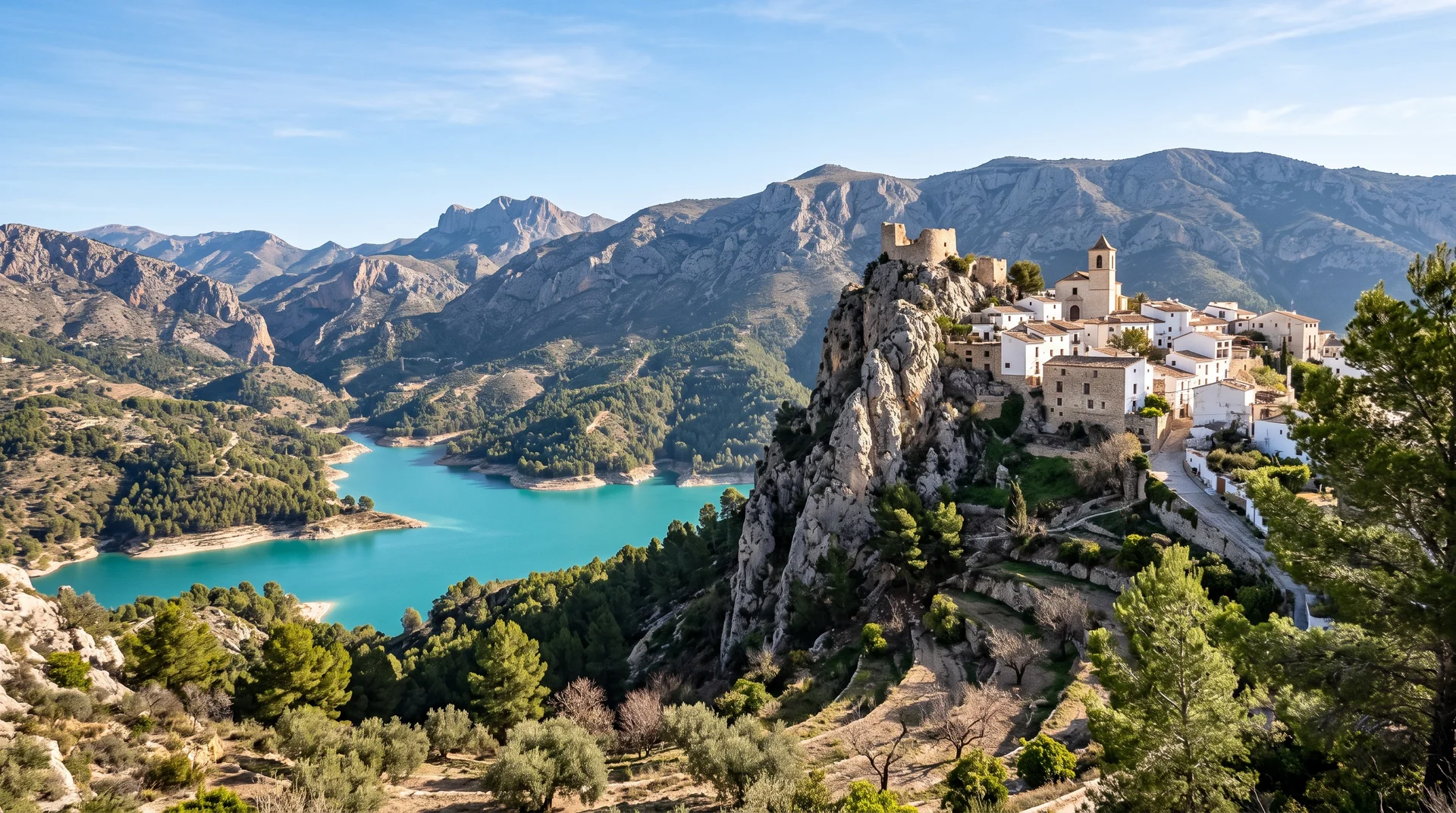
An hour's drive north, the mountainous hinterland offers the sharpest possible contrast with the coast. El Castell de Guadalest, a village of 200 inhabitants clinging to a rocky spur, is reached through a tunnel cut into the stone and overlooks a turquoise lake of unreal intensity; its medieval castle and small museums fill half a day. Twenty minutes away, the Fuentes del Algar string together waterfalls and natural pools set up for swimming along a roughly 1.5-kilometre route (entry around €5, mainly open April to October). The water is genuinely cold, even in August: bring a thick towel and non-slip shoes. A rental car remains the simplest way to do it.