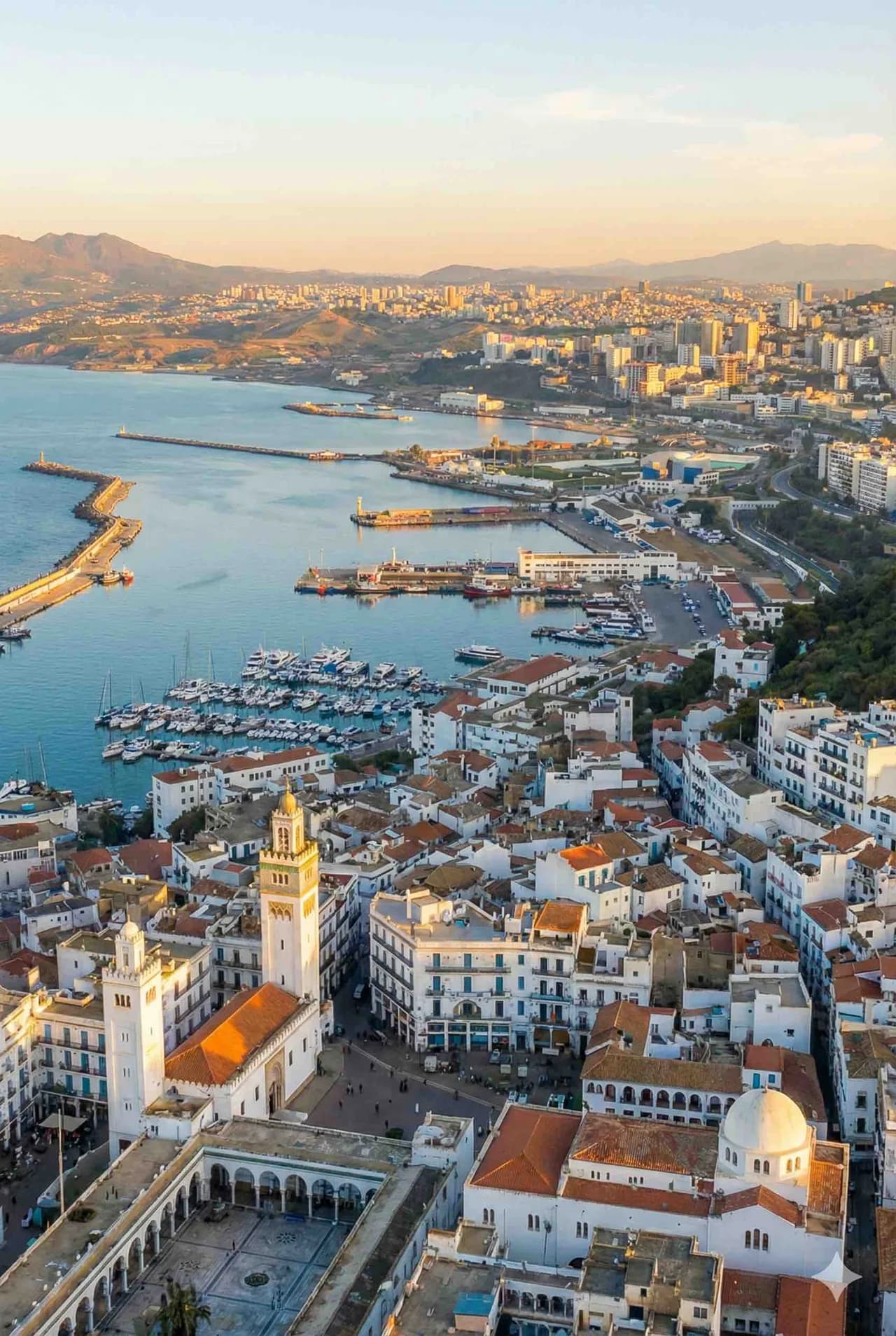
They call it Algiers the White, and the nickname makes sense the moment your plane banks over the coast: an amphitheatre of dazzling façades tumbling down the hillsides to a deep blue bay. Few Mediterranean capitals stack up so many visible layers of history. An Ottoman Casbah listed by UNESCO, arcaded nineteenth-century boulevards, a basilica perched on its cliff, a contemporary mosque holding a world record, and forty minutes down the coast, Roman ruins with their feet in the sea. Add generous cooking, buzzing markets, a mild climate eight months a year, and a warmth of welcome that catches travellers off guard. Algiers asks a little effort, but repays you many times over. Here are the twelve experiences not to miss.
✈️ Flights right now to Algiers on Yoosky
Complete guide
In this article
- The Casbah of Algiers: getting lost in the UNESCO-listed labyrinth
- Djamaa el Djazair: climbing the world's tallest minaret
- Notre-Dame d'Afrique: the clifftop basilica facing the bay
- Maqam Echahid: the Martyrs' Memorial and its 360-degree panorama
- Jardin d'Essai du Hamma: the green lung made for families
- Tipasa: Roman ruins with their feet in the Mediterranean
- The Grande Poste and downtown: a lesson in neo-Moorish architecture
- Bastion 23: the Palace of the Rais, last witness of the Ottoman seafront
- The Bardo National Museum: understanding Algeria from prehistory to the Tuareg
- The Sablettes promenade: the family seafront of Algiers
- The National Museum of Fine Arts: the largest art collection in Africa
- Markets and pastry shops: tasting Algiers, from chorba to makrout
1/12The Casbah of Algiers: getting lost in the UNESCO-listed labyrinth
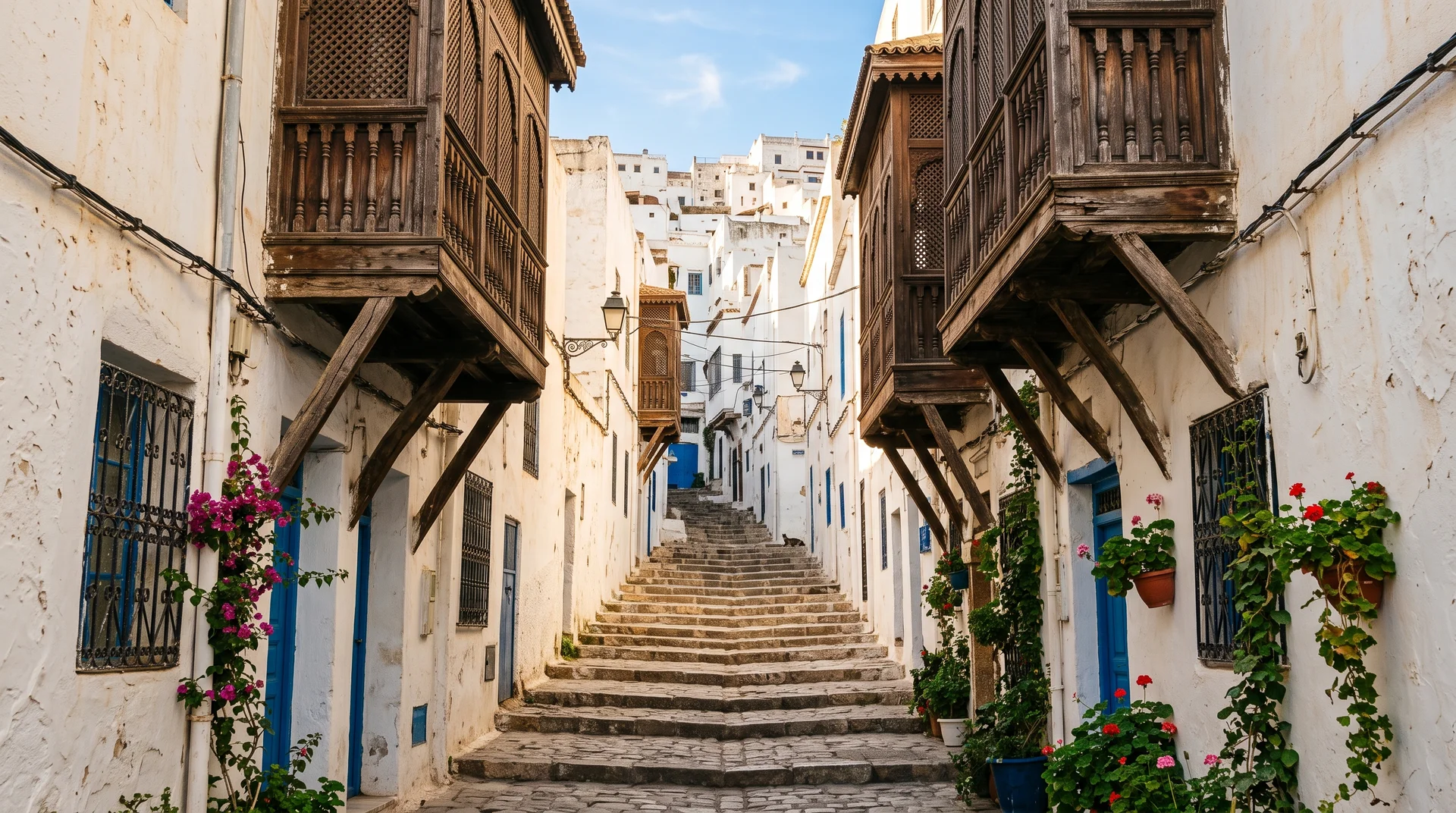
Clinging to the hillside above the bay, the Casbah unfurls a maze of stepped alleys, vaulted passageways and Ottoman houses built around tiled courtyards. UNESCO-listed since 1992, it compresses five centuries of history, from the citadel of the deys to the memory of the independence war. Do not wander in blind: landmarks are scarce and dead ends plentiful. Hire an accredited local guide — around 2,000 to 3,000 DA for two to three hours — who can open restored palaces such as Dar Hassan Pacha or Dar Aziza. Wear grippy soles, as the cobbles are polished smooth and the gradients steep. Mornings between 9am and noon are the sweet spot: raking light on the white façades and the quarter waking up around you. Exit via Place des Martyrs, which has its own metro station.
2/12Djamaa el Djazair: climbing the world's tallest minaret
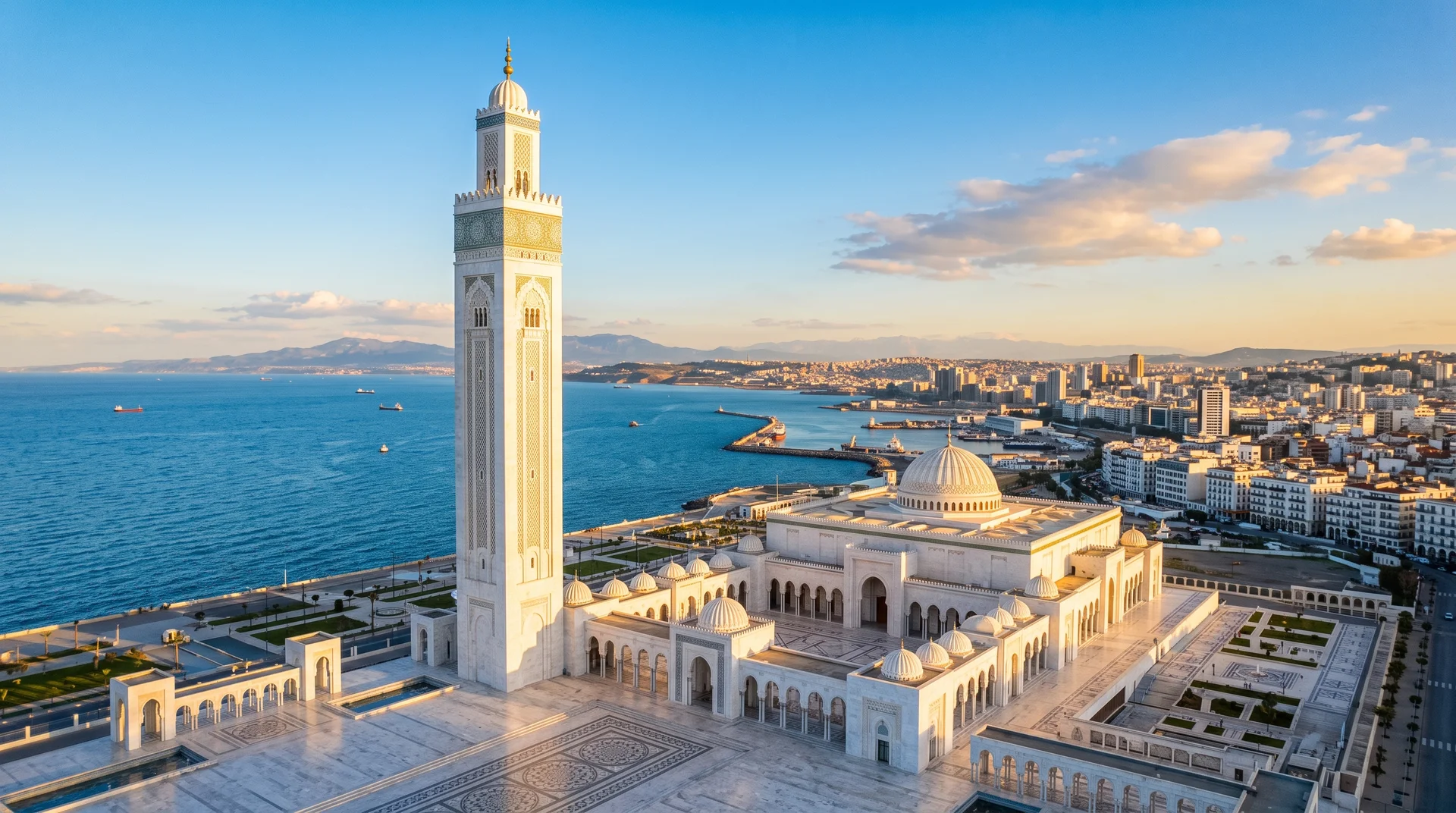
Inaugurated in 2020 on the Mohammadia seafront, the Great Mosque of Algiers astonishes with its numbers as much as its lines: a 265-metre minaret, the tallest in the world, a two-hectare prayer hall and an esplanade opening onto the bay. Designed by German practice KSP Engel, it marries contemporary geometry with Andalusian motifs, coffered ceilings and a fifty-metre dome. Non-Muslim visitors are welcomed outside prayer times; modest dress is required and shoes come off at the door. A lift inside the minaret serves a viewing deck and a small museum of art and history, offering the widest panorama over Algiers and the Mediterranean anywhere in the city. Allow an hour and a half, and come in late afternoon when golden light washes across the white marble.
3/12Notre-Dame d'Afrique: the clifftop basilica facing the bay
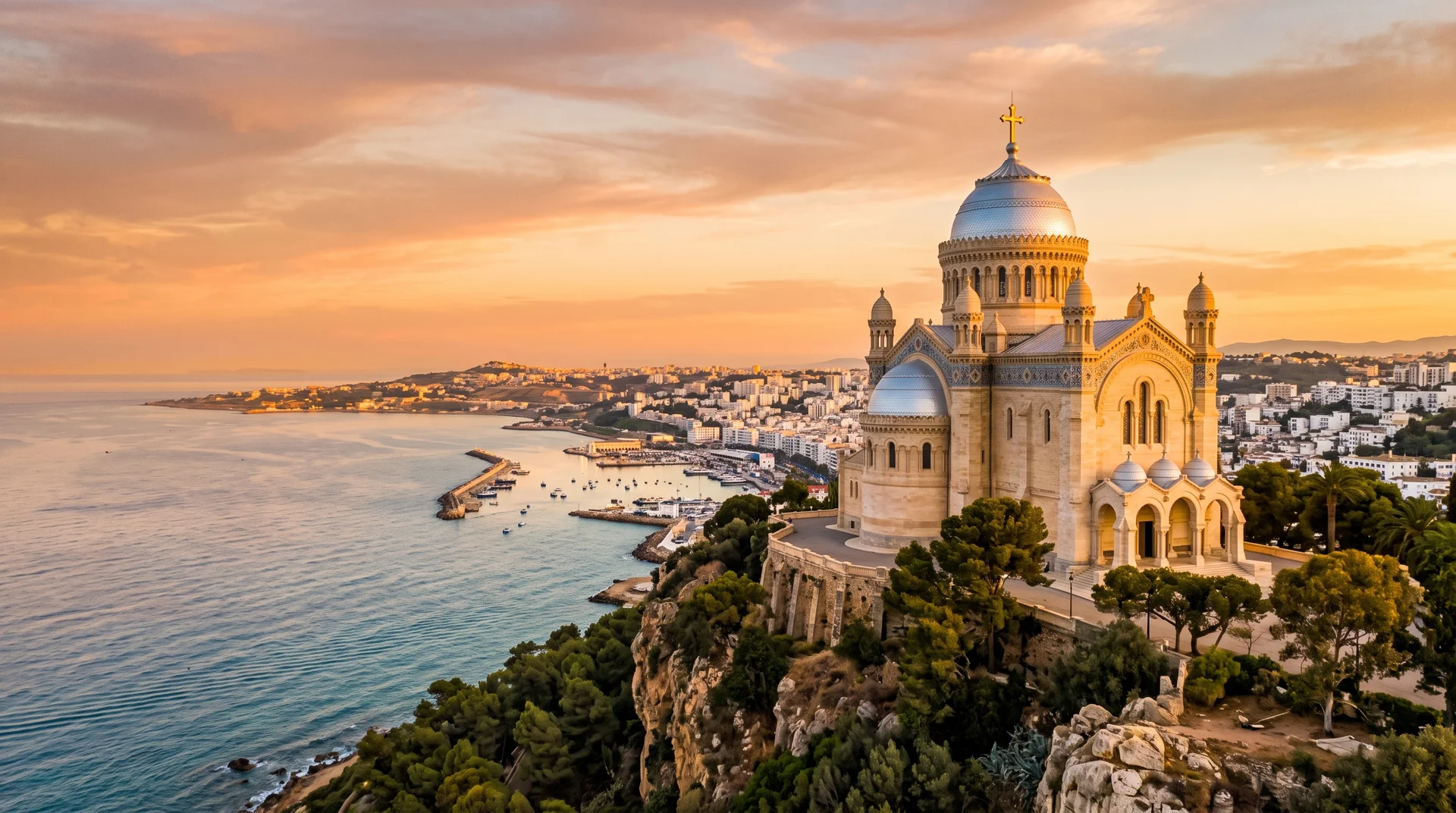
Perched on a 124-metre cliff above the Bologhine district, this neo-Byzantine basilica, completed in 1872, commands one of the most spectacular viewpoints in Algiers. Its architecture blends a silvered dome, Moorish arches and gilded mosaics; inside, the famous apse inscription — "Our Lady of Africa, pray for us and for the Muslims" — captures the building's singular history in a single line. Restored over five years and reopened in 2010, it can be visited free of charge, usually 8am to noon and 2.30pm to 5.30pm, with modest dress requested. From the centre, allow around twenty minutes by taxi along the corniche, or take the more scenic Bologhine cable car. Come at the end of the day, when the sun drops behind the sea and the whole bay catches fire.
4/12Maqam Echahid: the Martyrs' Memorial and its 360-degree panorama
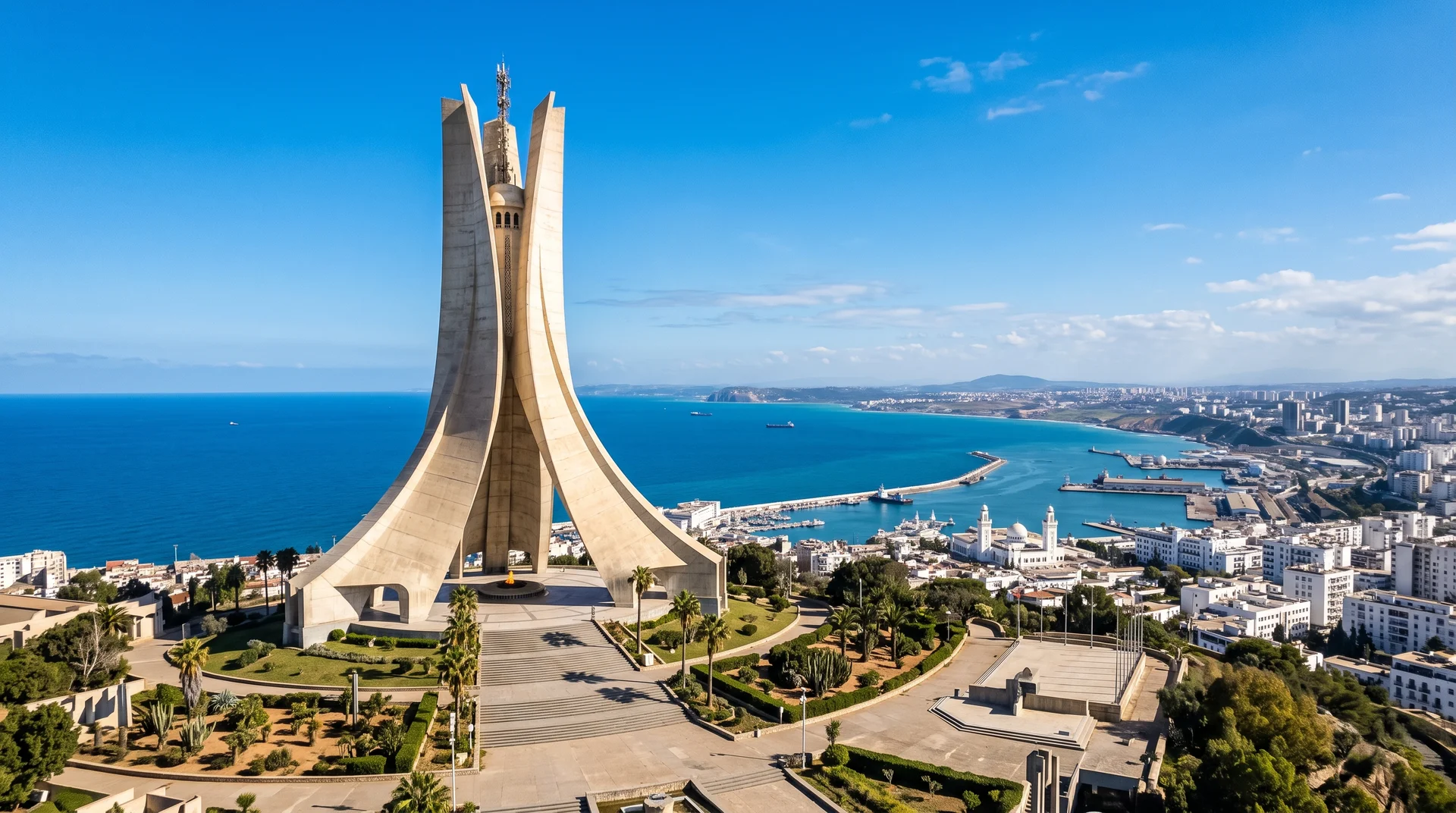
You cannot miss this 92-metre concrete silhouette towering over Algiers from the heights of El Madania: three stylised palm fronds meeting at the summit, raised in 1982 for the twentieth anniversary of independence. A statue of a fighter stands guard at the foot of each, and an eternal flame burns beneath the vault. The site opens daily and the esplanade is free to enter, taking in the bay, the port, the distant Casbah and the surrounding hills in a single sweep. Beneath the monument, the National Mujahid Museum retraces the independence war through photographs, weapons and documents for a modest entry fee. Then link the site to the Jardin d'Essai below via the Hamma cable car, a short ride down that is worth the detour in itself.
5/12Jardin d'Essai du Hamma: the green lung made for families
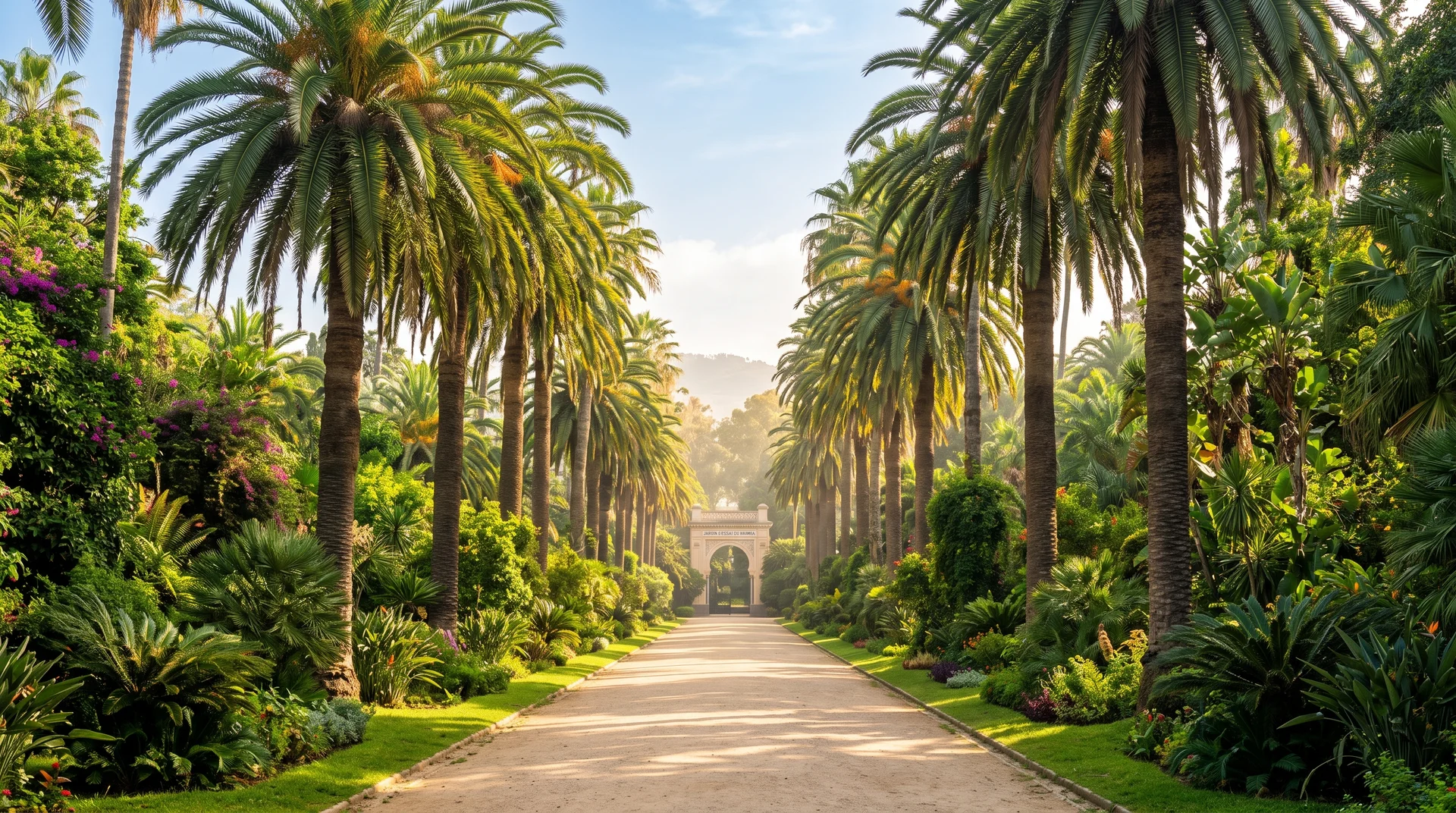
Founded in 1832, this 58-hectare botanical garden is among the richest in Africa, with some 1,200 species from five continents. People come for the dracaena walk and the celebrated palm avenue, so photogenic it doubled as a backdrop for Tarzan scenes in the 1930s. Children love it: flat shaded paths, lily ponds, playgrounds, a small zoo on the upper terrace and sweeping views over the bay from the top of the park. Entry is very affordable, around 150 DA with a reduced rate for children, and the garden generally opens 9am to 5pm, later in summer. Allow two hours, and bring water and a hat: shade is plentiful but summer middays are fierce. The Museum of Fine Arts sits directly above the garden.
6/12Tipasa: Roman ruins with their feet in the Mediterranean
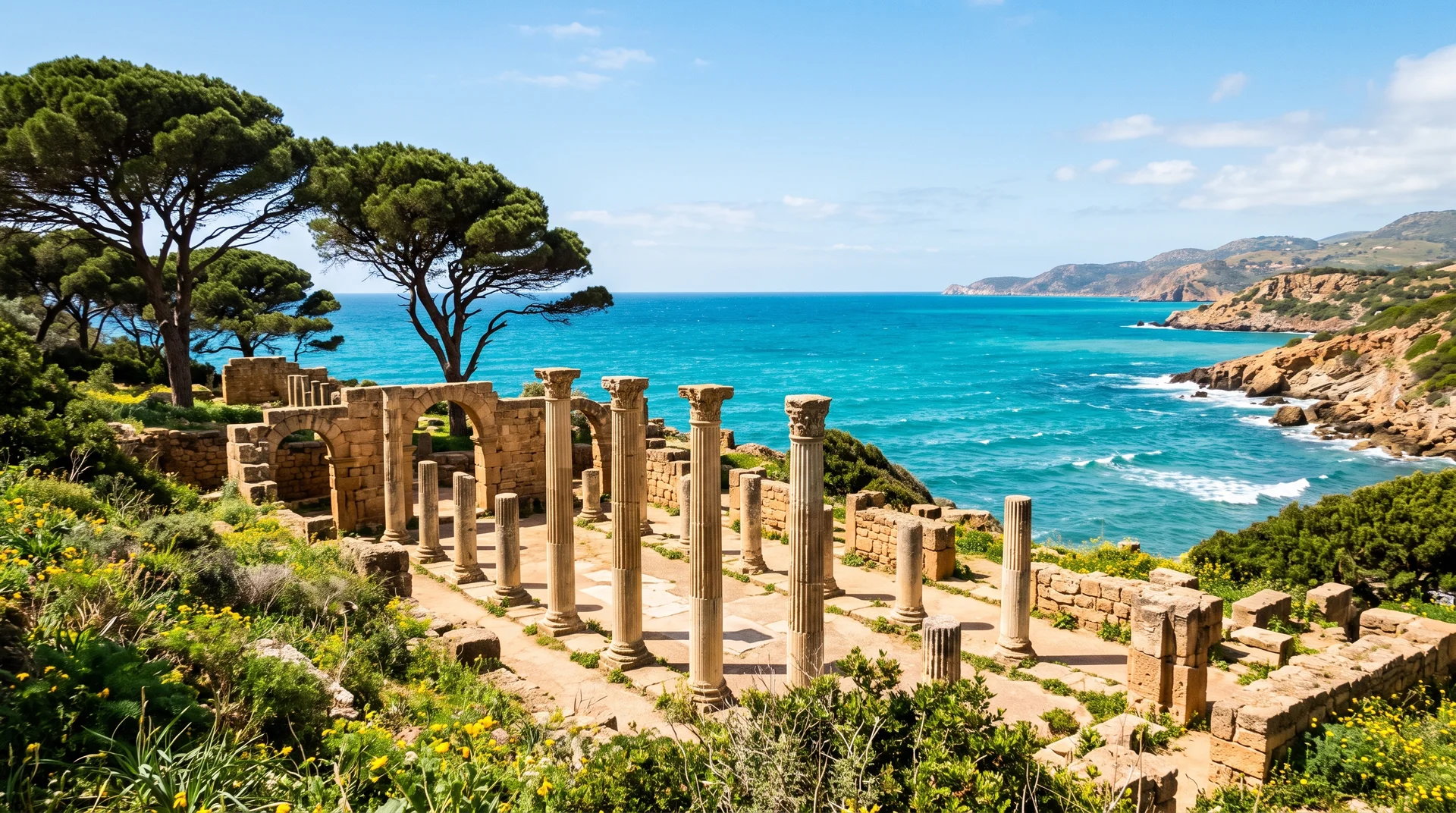
Seventy kilometres west of Algiers, Tipasa offers one of the finest day trips anywhere on the Mediterranean: a UNESCO-listed archaeological site where basilicas, baths, villas and a Roman theatre string along the shoreline between umbrella pines and low cliffs. Albert Camus wrote some of his most luminous pages here, and you understand why within a few steps along the decumanus. Pair it with the Royal Mausoleum of Mauretania, a colossal stone tumulus fifteen kilometres away. Allow an hour and a quarter by motorway, roughly 300 DA for entry, and opening hours of 9am to 5pm. Spring is the best season, when wildflowers swallow the ruins. Bring a hat, water and sunscreen — there is almost no shade on site.
7/12The Grande Poste and downtown: a lesson in neo-Moorish architecture
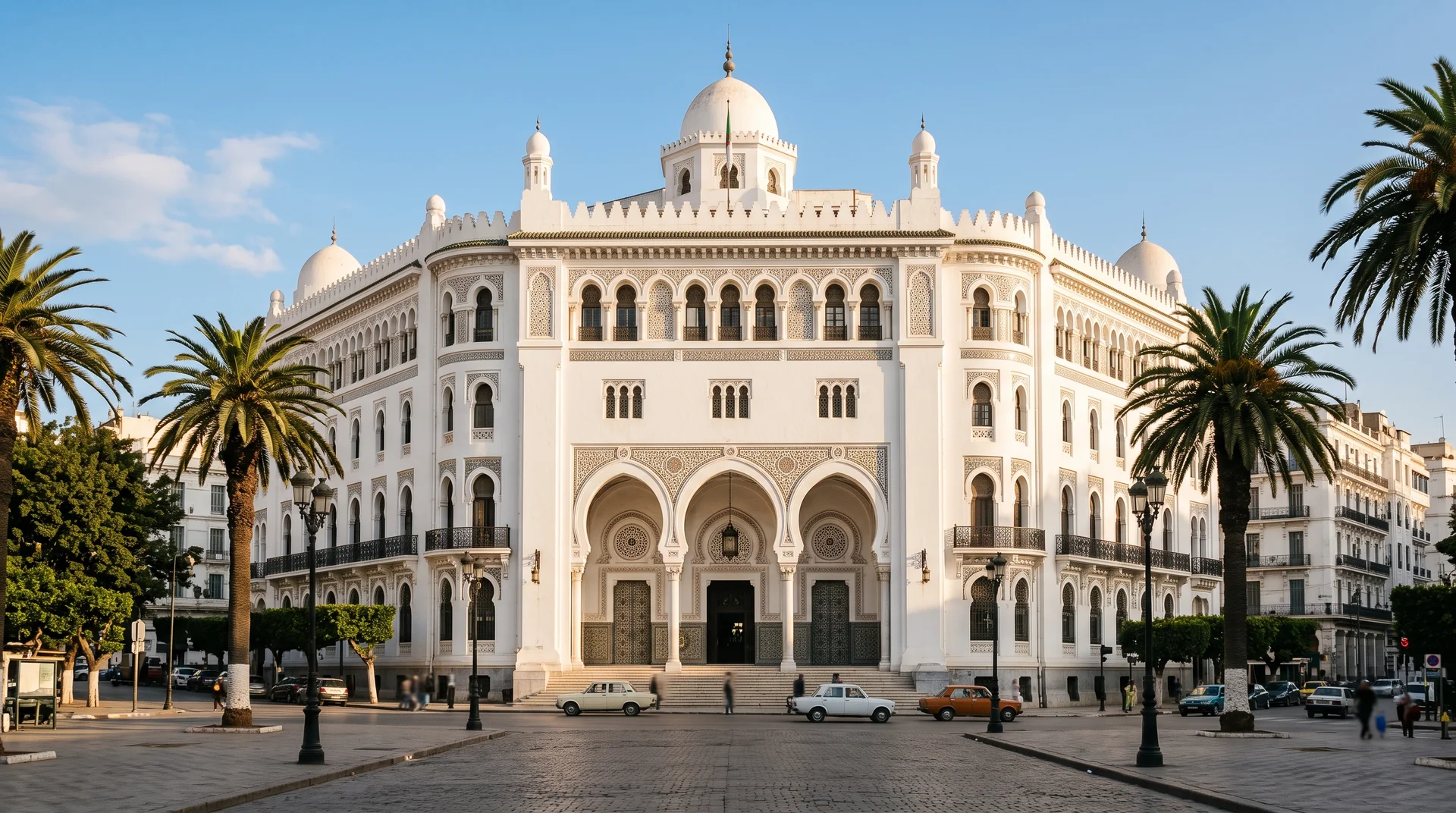
Modern Algiers is best explored on foot, and it begins outside the Grande Poste, a neo-Moorish masterpiece of 1910 whose horseshoe-arched façade and vast domed hall are worth stepping inside for — the interior, with its carved stucco and original counters, is still a working post office. From there, walk up Rue Larbi Ben M'hidi and Boulevard Zighoud Youcef, whose white arcades run for nearly two kilometres above the port. Along the way you will pass the Algerian National Theatre, the Hotel Safir and a parade of Haussmann-style buildings reinterpreted under North African sun. The district is made for late-afternoon strolling, when the heat eases and the pastry-shop terraces fill up. The metro, clean and efficient, serves Place Emir Abdelkader nearby; tickets cost around 50 DA.
8/12Bastion 23: the Palace of the Rais, last witness of the Ottoman seafront
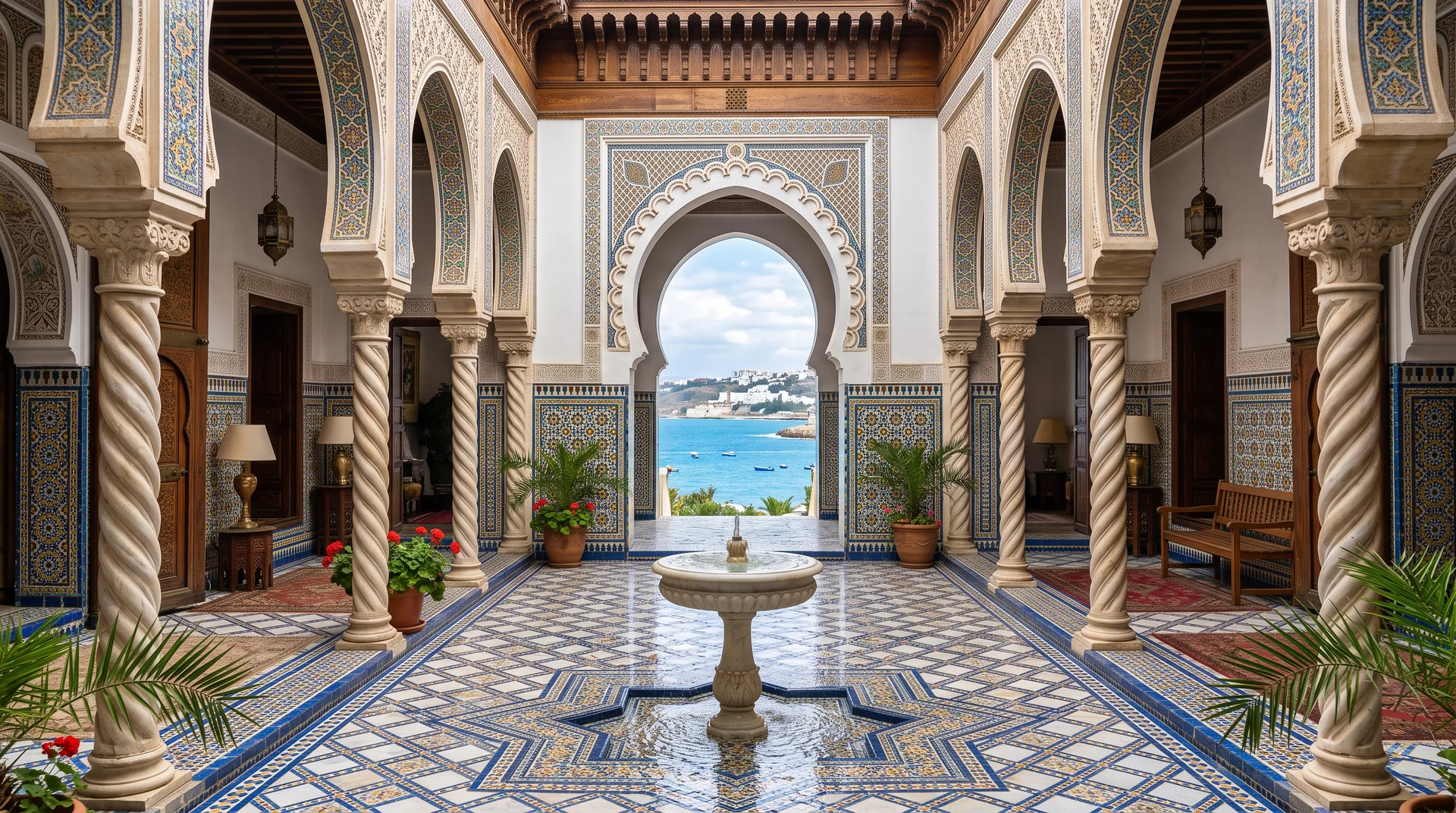
Below the Casbah, facing the port, Bastion 23 is the last surviving fragment of the Marine quarter demolished in the nineteenth century. This complex of three Ottoman palaces and six fishermen's houses, built from 1576 onwards, has been patiently restored and turned into a centre for arts and culture. You move through courtyards with twisted columns, galleries of blue-and-white tilework and rooms under painted cedar ceilings, the sea appearing through low windows. Temporary exhibitions of contemporary art and Algerian craft here are often excellent. Entry is nominal at under 200 DA, a visit takes about an hour, and the site opens Saturday to Thursday, generally 9am to 4.30pm. It is the calmest spot in the centre: few visitors, plenty of shade, and a rare view over the harbour.
9/12The Bardo National Museum: understanding Algeria from prehistory to the Tuareg
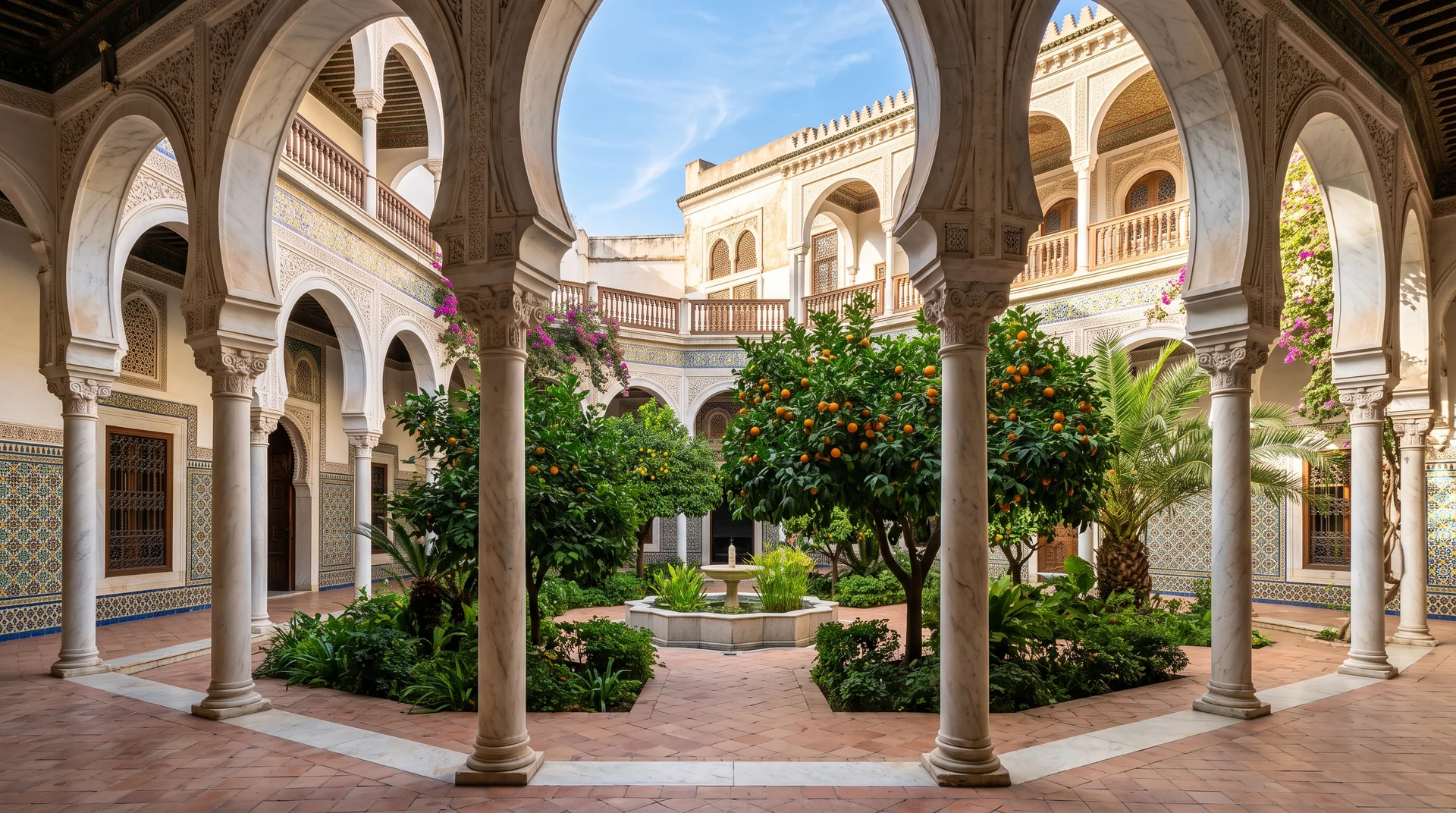
Housed in an eighteenth-century Ottoman villa surrounded by an orange-tree garden, the Bardo is the most endearing museum in Algiers — and the most useful for making sense of everything else. Its collections cover Saharan prehistory, with tools, casts of Tassili n'Ajjer rock engravings and skeletal remains, then the ethnography of the country's great regions: Kabyle silver jewellery, carpets, costumes, instruments and Tuareg objects. The building itself justifies the visit, with its galleried courtyard, marble columns and painted ceilings. The museum sits in the Mustapha district, a ten-minute walk from the Grande Poste. Allow an hour and a half, around 200 DA for entry, and opening hours of 9am to 5pm, Sunday to Thursday. Ideally, do it early in your stay.
10/12The Sablettes promenade: the family seafront of Algiers
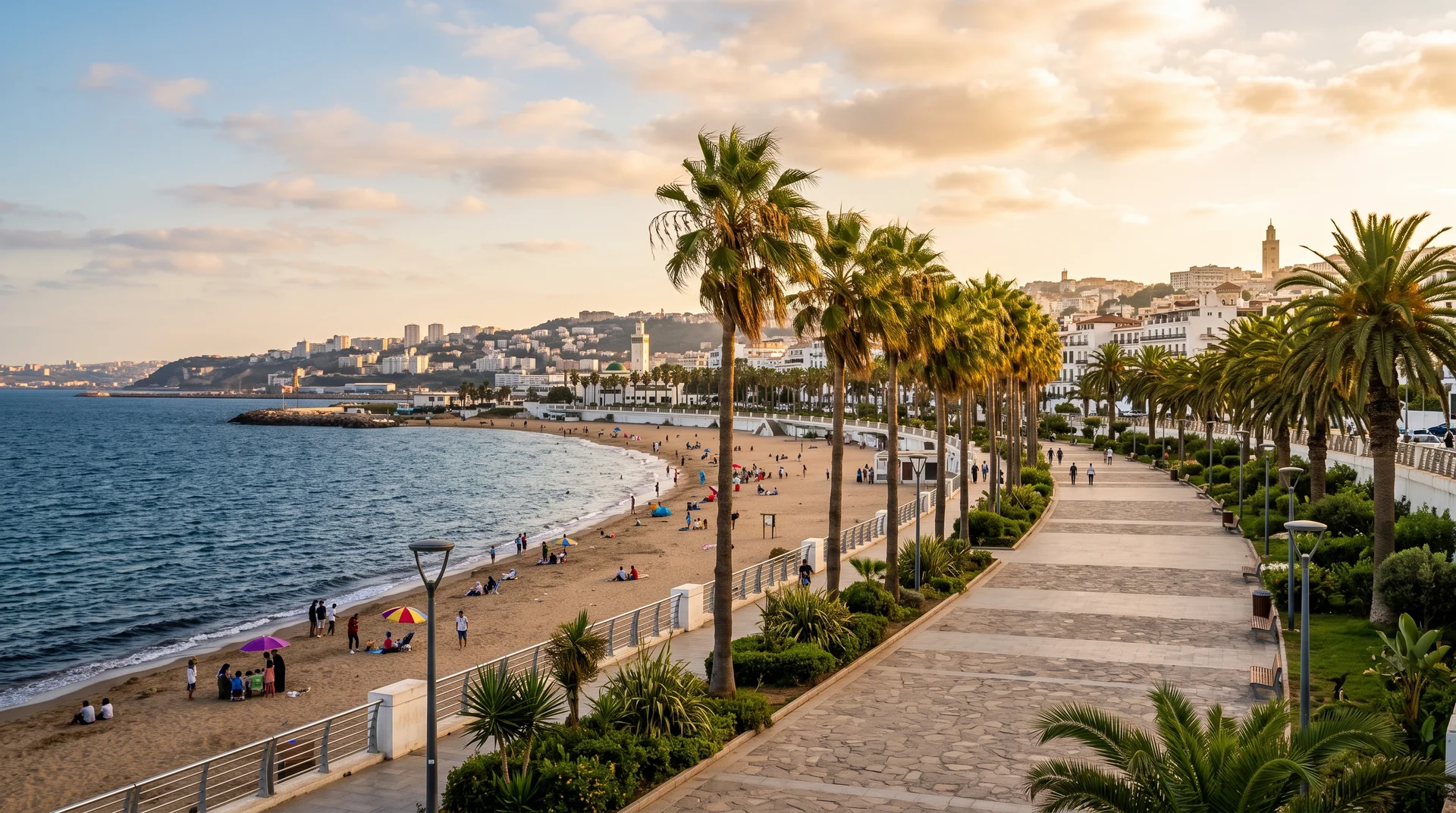
Redeveloped along nearly seven kilometres between Hussein Dey and the Great Mosque, the Sablettes promenade has become the meeting point of Algiers families. It offers a long sandy beach with lifeguards in season, lawns, playgrounds, cycle paths, a small amusement park and kiosks selling ice cream and sandwiches. The promenade is flat, pushchair-friendly and perfectly suited to children. Late afternoon is the moment: the heat drops, the kites come out and the sun slides behind the bay. One health caveat: water quality varies by stretch and season, and currents can catch you out. Swim only in supervised, marked zones, and check with the lifeguards first. Access is free and the tramway stops right beside it.
11/12The National Museum of Fine Arts: the largest art collection in Africa
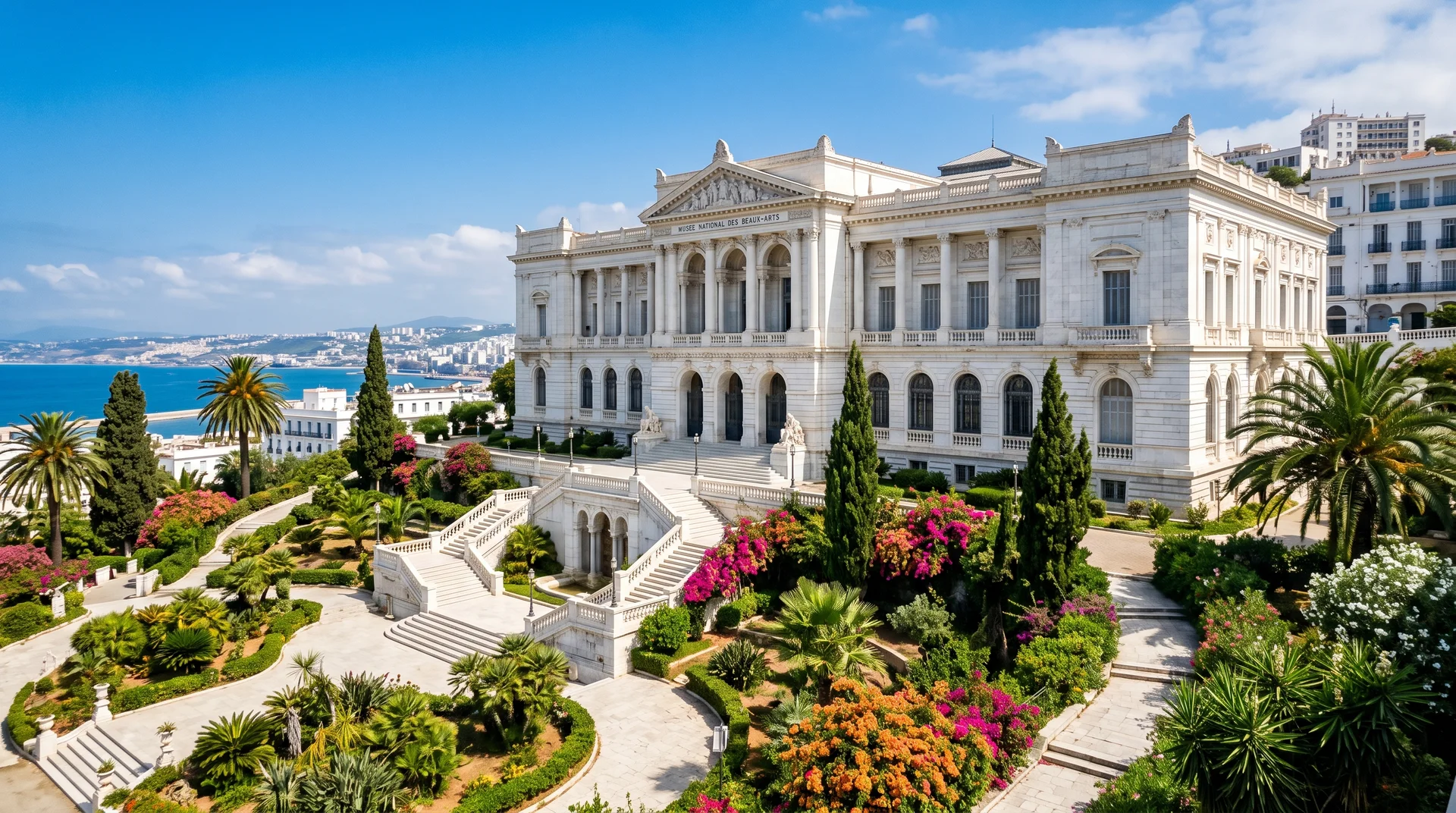
Overlooking the Jardin d'Essai since 1930, this great white building holds nearly 8,000 works, making it the largest art collection on the African continent. The route runs from European masters — Renoir, Monet, Corot, Delacroix, Fragonard — through the Orientalists who painted Algeria, to major Algerian modernists such as Mohammed Racim, master of the miniature, Baya and M'hamed Issiakhem. Sculpture halls and a print room round out the collection. The spaces are vast, quiet, often almost empty, and the monumental staircase frames the bay. Allow an hour and a half, around 200 DA for entry, and opening hours of 9am to 5pm, Sunday to Thursday. Combine it with the garden below: a short flight of steps links the two.
12/12Markets and pastry shops: tasting Algiers, from chorba to makrout
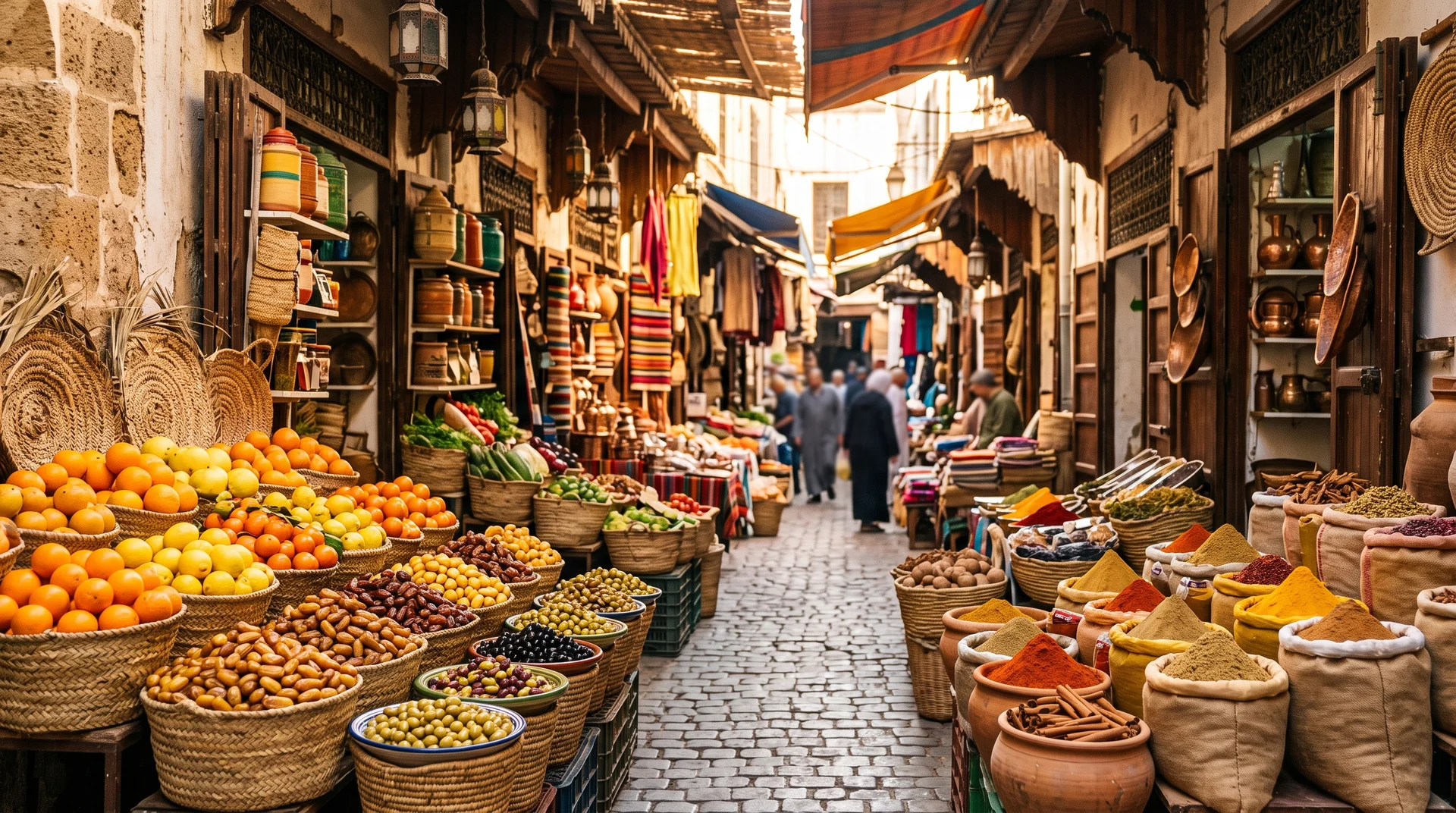
No visit is complete without diving into the markets. Ali Mellah market, known as Marché Clauzel, piles up citrus, olives, deglet nour dates, spices and fresh herbs in a joyful din; the Bab El Oued market overflows with fish from the bay at first light. Around them, small eateries serve chorba frik, chakhchoukha, crisp bourek and the famous sandwich garanti — chips, egg and harissa — for barely 200 DA. Then take a sweet break: city-centre pastry shops line up honeyed makrout, kalb el louz, baklawa and zlabia, best paired with mint tea or a strong coffee. Come in the morning for the markets, when they are liveliest and best stocked, and keep cash on you: cards are rarely accepted outside larger establishments.