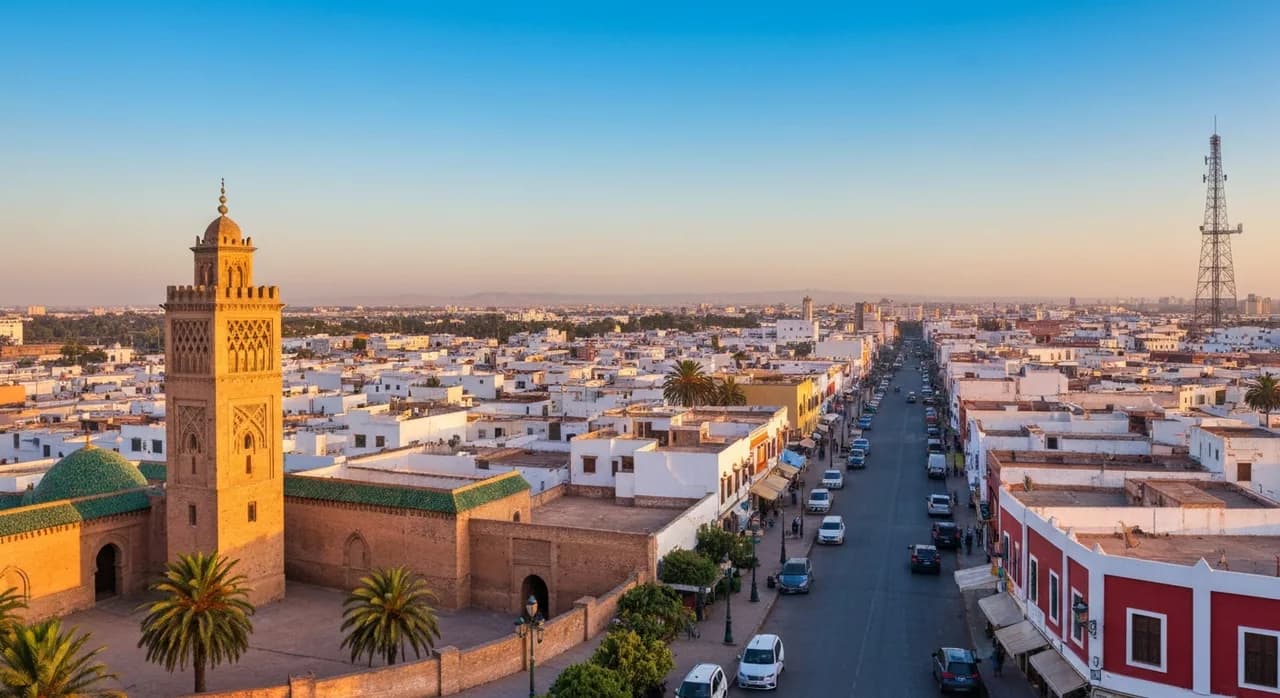
Backed by the Atlantic and framed by the foothills of the Anti-Atlas, Agadir is unlike any other Moroccan city. Flattened by the 1960 earthquake, it rose again as a bright, generously planned seaside resort where the avenues breathe and the ocean is never out of sight. Most travellers come for the ten kilometres of golden sand and the roughly three hundred days of sunshine a year, but the city rewards anyone willing to look further: one of the largest souks in the kingdom, a hilltop kasbah that sums up its history in a single inscription, and above all a spectacular hinterland of palm-filled gorges, surf villages and honey oases. Here are the twelve experiences that together reveal the real Agadir.
✈️ Flights right now to Agadir on Yoosky
Complete guide
In this article
- Agadir's great beach: ten kilometres of golden sand facing the Atlantic
- Agadir Oufella kasbah: the viewpoint that tells the city's whole story
- Souk El Had: diving into southern Morocco's largest market
- Agadir Marina: the evening stroll among sailboats and fishing boats
- Paradise Valley: the natural rock pools of the High Atlas, an hour from Agadir
- Taghazout: learning to surf in Morocco's most laid-back village
- Crocoparc: the botanical garden that captivates children
- Agadir's medina: Moroccan craftsmanship rebuilt stone by stone
- Olhão Garden and Mémoire d'Agadir: understanding the 1960 earthquake
- The Amazigh Heritage Museum: understanding the Berber soul of the Souss
- Souss-Massa National Park: watching the bald ibis in its last refuge
- Imouzzer des Ida Outanane: waterfalls and honey at the end of a mountain road
1/12Agadir's great beach: ten kilometres of golden sand facing the Atlantic
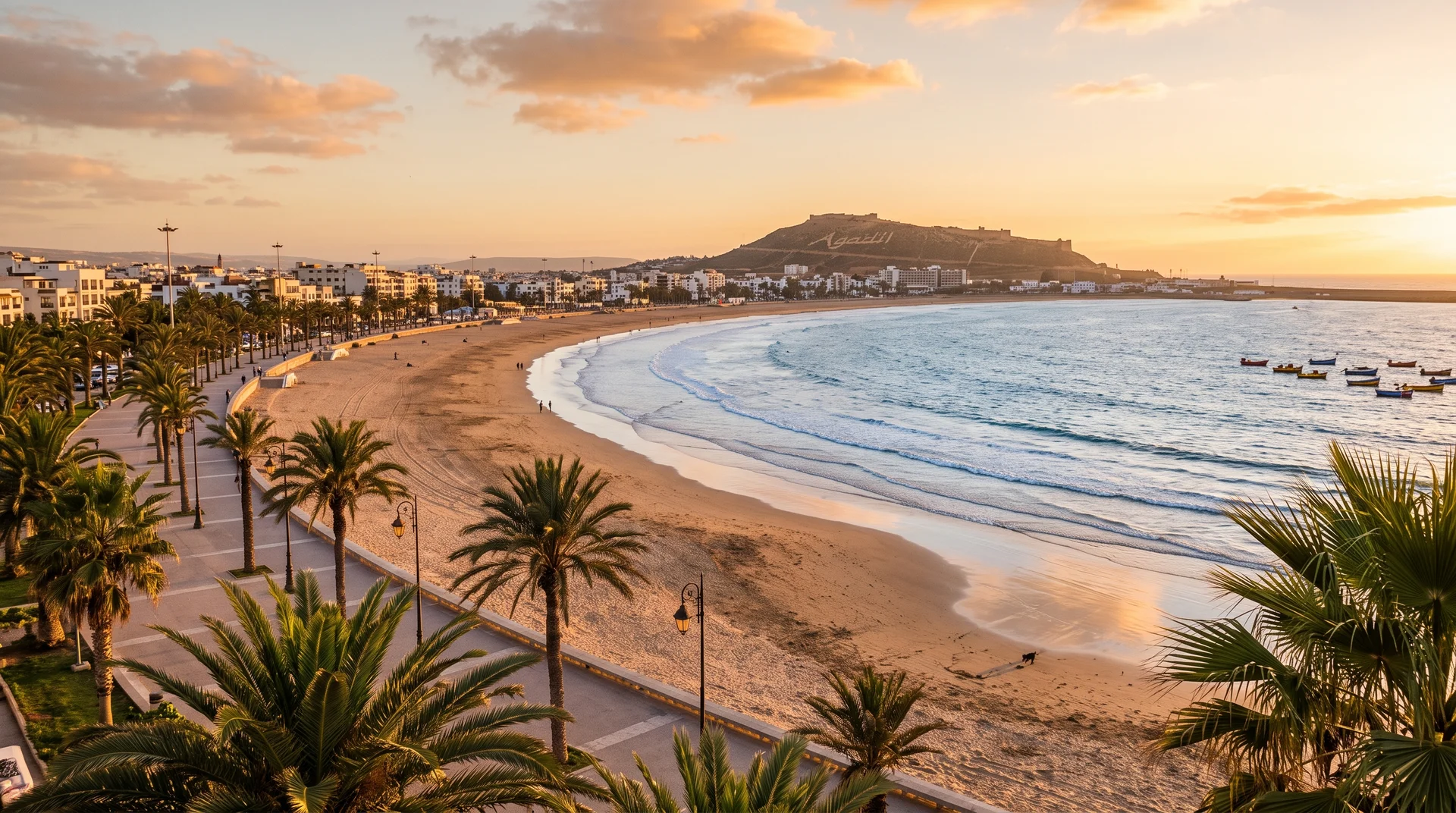
This is the city's calling card, and it delivers: a perfect arc of a bay, ten kilometres of fine sand, and water that stays cool all year — around 18 °C in winter, 21 to 22 °C in late summer. The sand shelves gently, making this one of the few Atlantic beaches in Morocco genuinely suited to young children. The promenade running alongside can be walked or cycled from end to end, between palm trees and lawns.
Lifeguarded zones are flagged from May to September: stick to them, as rip currents do occur elsewhere. Late afternoon is the sweet spot, when the wind drops and the light turns the kasbah cliff golden. Free access; sunbeds and parasols cost around 50 dirhams a day.
2/12Agadir Oufella kasbah: the viewpoint that tells the city's whole story
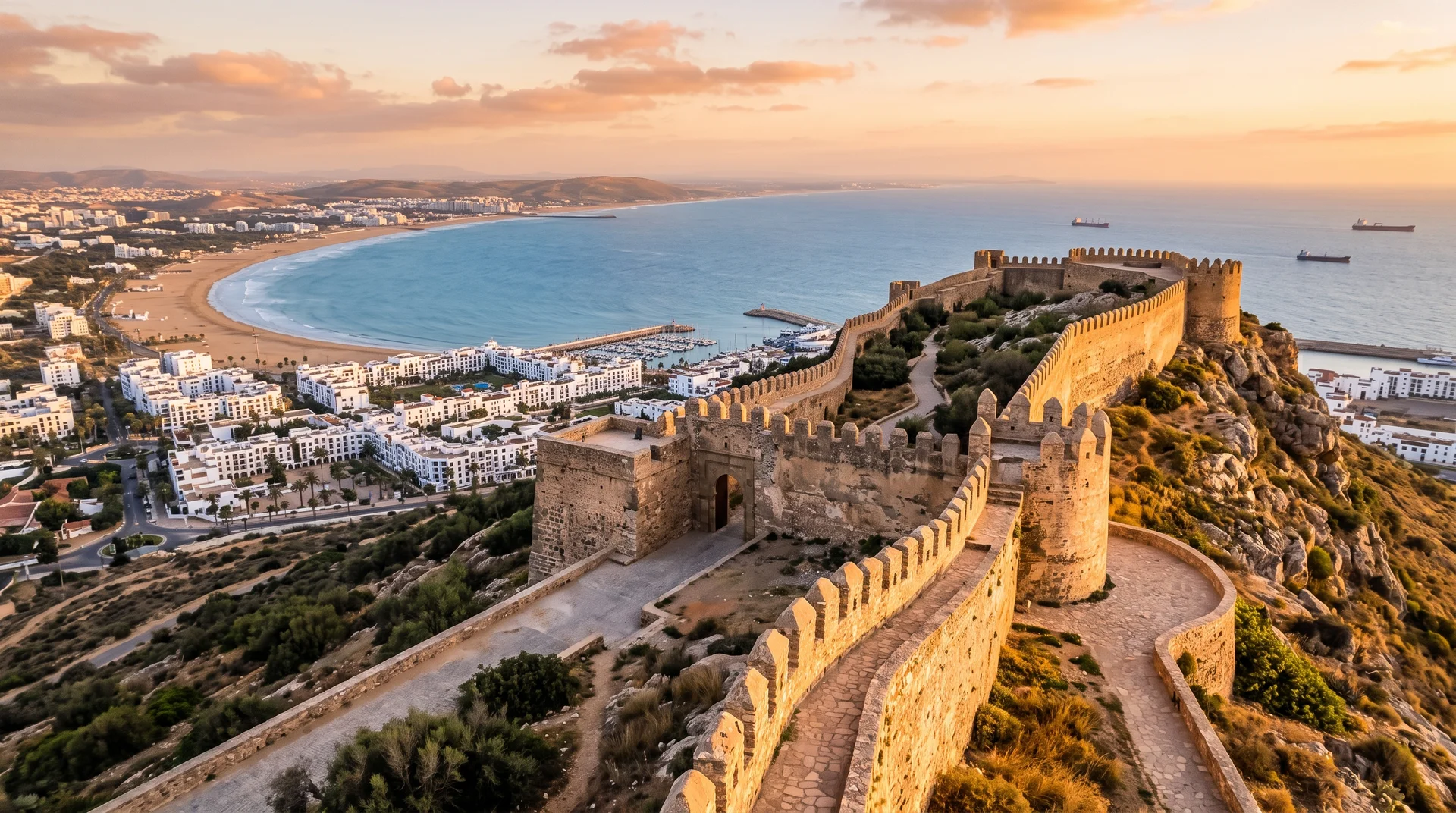
Perched 236 metres above the bay, this fortress built in 1540 once watched over old Agadir. The earthquake of 29 February 1960 erased it all in fifteen seconds: the hill is now both viewpoint and memorial, the buried old town resting beneath the grassy slope. On the hillside, three words in Arabic and Tifinagh — God, Country, King — light up every night and can be seen from across the city.
Since 2023 a cable car links the foot of the cliff to the summit in five minutes; budget around a hundred dirhams return, with cabins every few minutes from roughly 10 am to 10 pm. The restored ramparts are free to walk. Come an hour before sunset, when the entire bay turns orange.
3/12Souk El Had: diving into southern Morocco's largest market
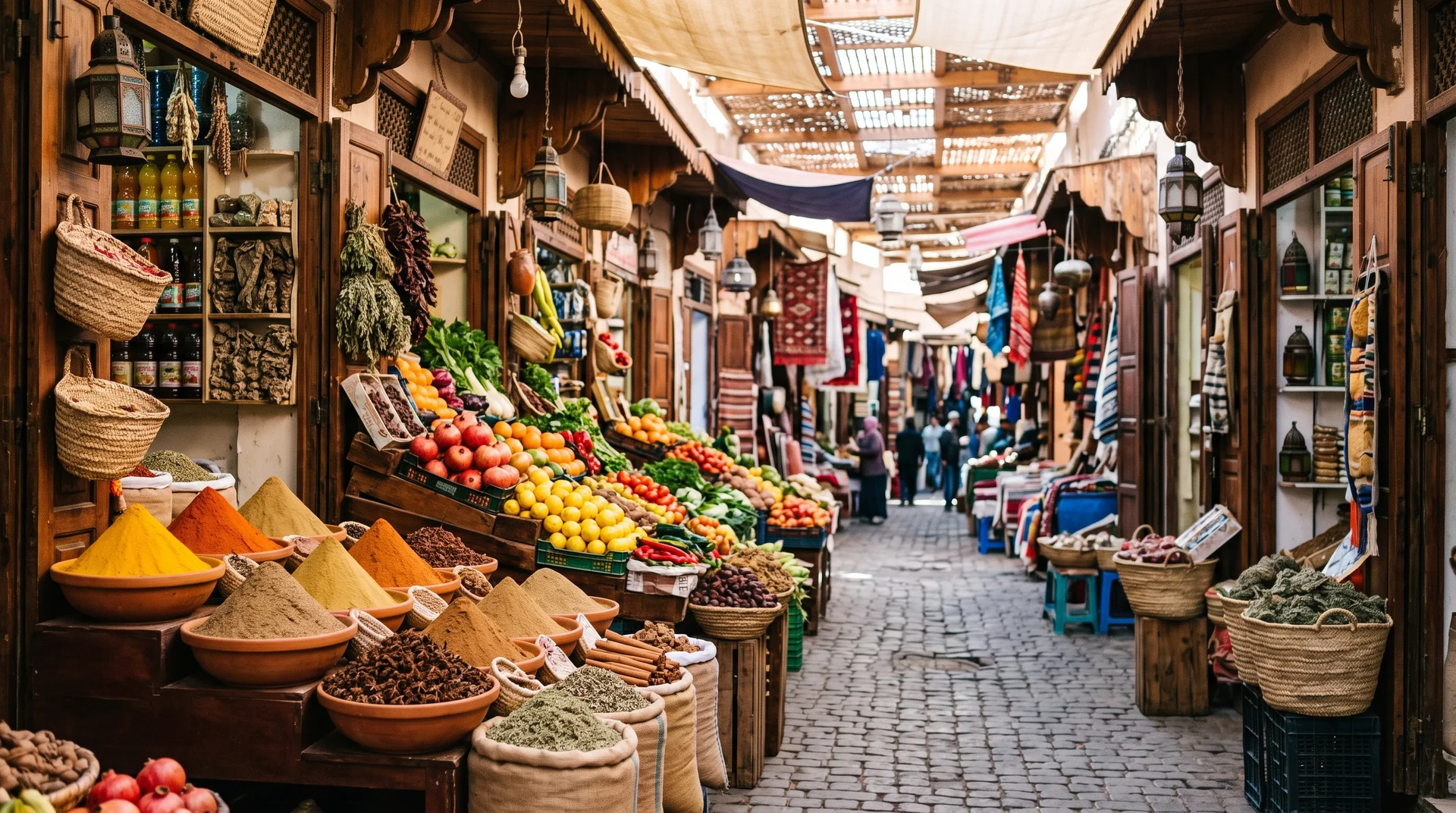
Six thousand stalls behind ochre walls pierced by numbered gates: Souk El Had is Agadir's beating heart, and it is no tourist set-piece. You move through it by sector — pyramids of olives and dates, mountains of spices, Tamegroute pottery, babouches, argan oil, ironwork, second-hand clothes. Your nose guides you as much as your eyes.
It opens Tuesday to Sunday, roughly 9 am to 8 pm, and closes on Mondays: don't plan your visit then. Use gate 6 for food, gate 9 or 13 for crafts. Haggling is the norm: counter at around half the first price quoted, smile, and be ready to walk away. Come in the morning, when the fruit stalls are full and the heat still bearable.
4/12Agadir Marina: the evening stroll among sailboats and fishing boats
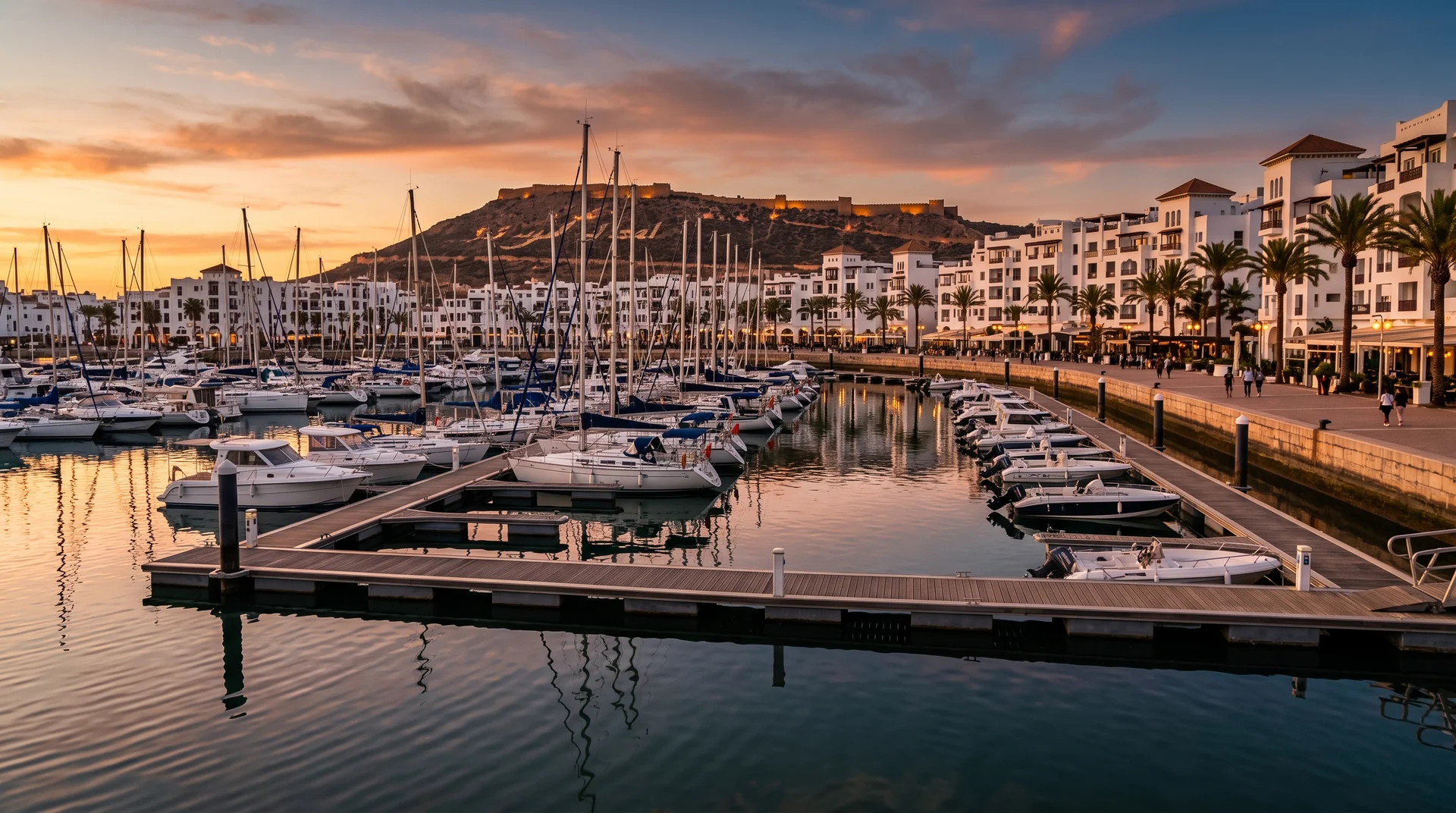
At the northern end of the bay, the marina closes off the beach with a calm basin lined with white buildings and blue shutters. It makes for the city's most pleasant late-day walk: the quay is flat, entirely pedestrian, and children can run freely. There are hundreds of moorings, a few yachts and, best of all, a view over the blue boats of the neighbouring fishing port — one of Morocco's busiest for sardines.
Access is free and unrestricted. Extend the walk to the fishing port, ten minutes away, where the day's catch is grilled and served at communal tables for around thirty dirhams. Best window: between 6 pm and 8 pm, as the boats come in.
5/12Paradise Valley: the natural rock pools of the High Atlas, an hour from Agadir
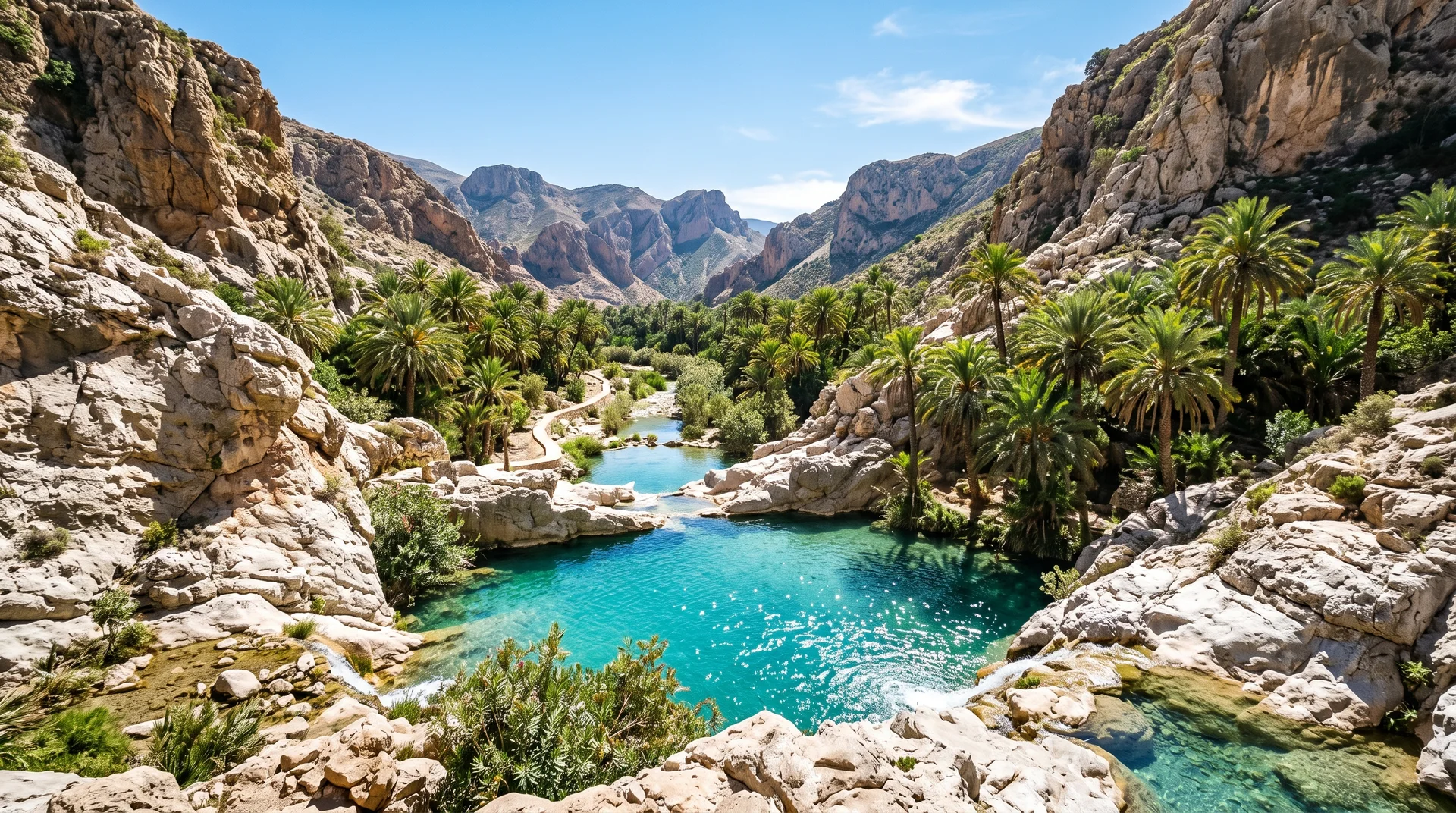
Some sixty kilometres to the north-east, the Imouzzer road plunges into a white limestone gorge carved by the Tamraght river. Palm trees grow straight out of the rock, the water gathers in turquoise basins, and you drop from pool to pool along a marked path — an easy forty-minute walk from the car park, partly over pebbles, so wear closed shoes.
Season matters enormously. From February to May the pools are full and swimming is superb; by late summer levels can be very low, or dry altogether in some years. Set off early, around 8 am, to have the place to yourself. Organised trips from Agadir cost 250 to 400 dirhams per person, or rent a car: the road is scenic and well surfaced.
6/12Taghazout: learning to surf in Morocco's most laid-back village
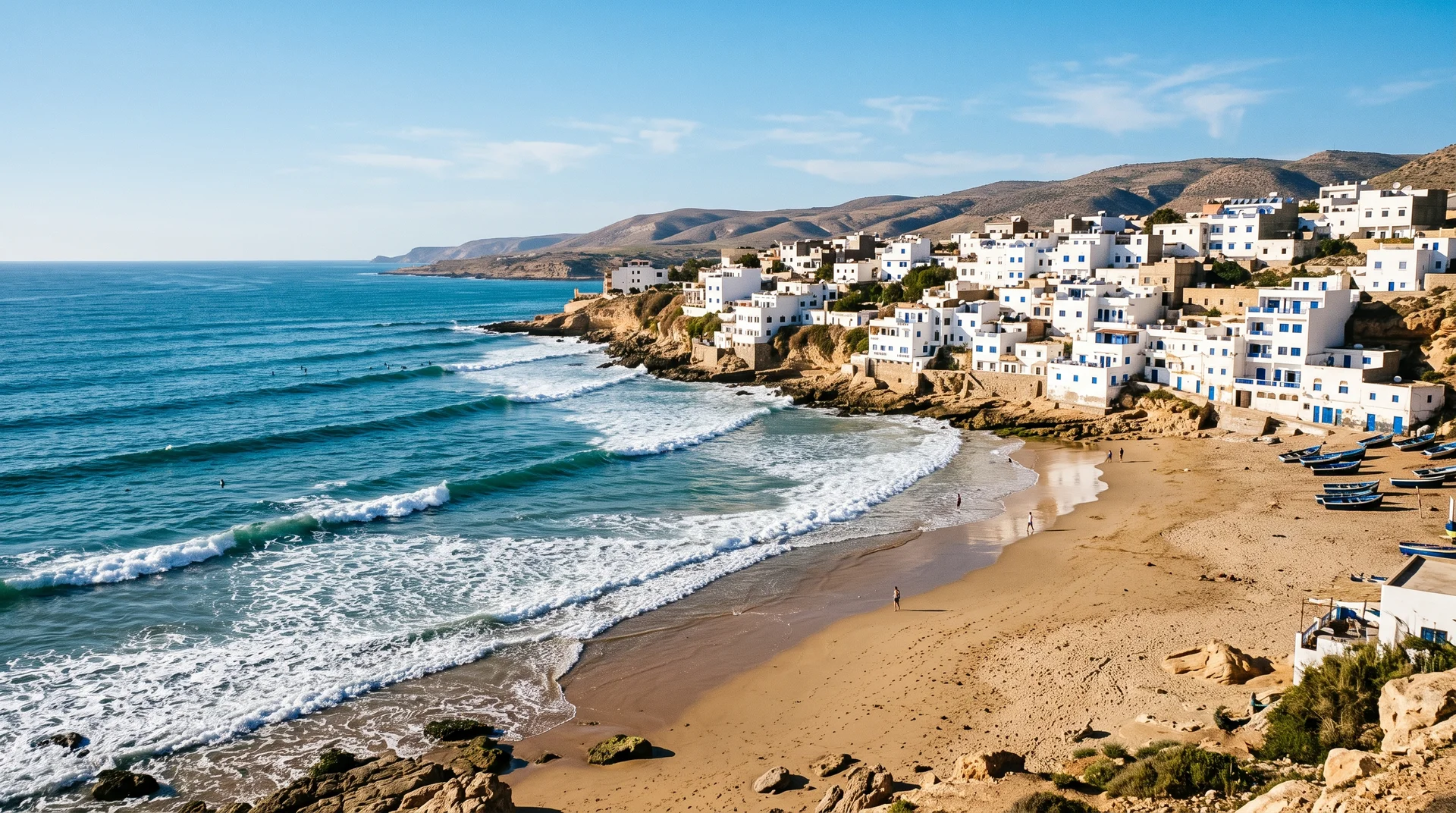
A former fishing village twenty kilometres north of Agadir, Taghazout has become Morocco's surf capital without losing the white houses stacked above its cove. The breaks line the coast: Panorama and Croco for gentle beginner waves, Anchor Point for the legendary right-hander that peels for hundreds of metres on a winter swell.
Surf schools abound: expect 250 to 400 dirhams for a two-hour lesson, board and wetsuit included, with children's sessions from age six. October to March brings the biggest swell, April to September the mellower waves. Take bus 32 or 33 from Agadir for a few dirhams, or a grand taxi in twenty-five minutes.
7/12Crocoparc: the botanical garden that captivates children
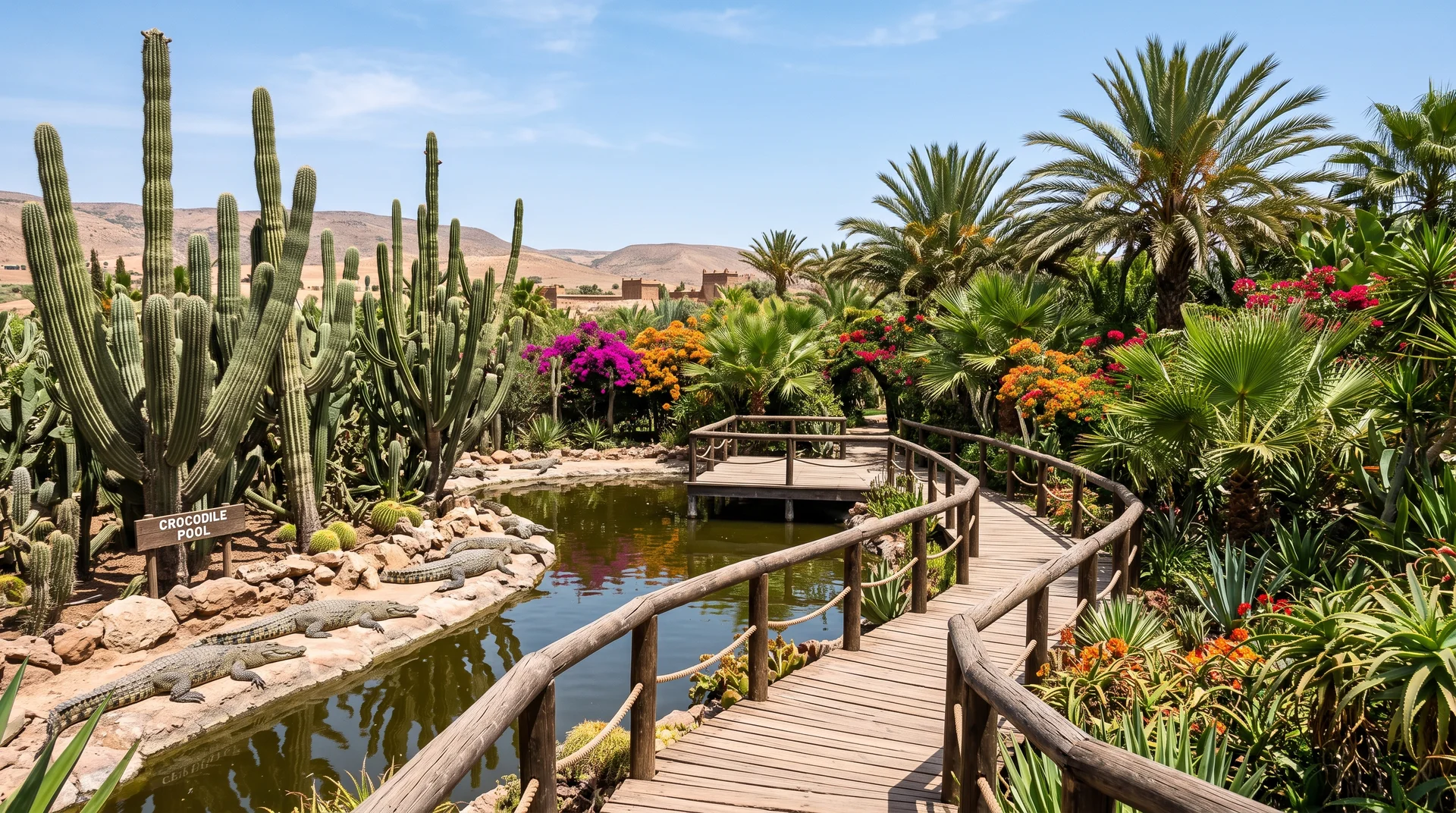
On the Taroudant road at Drarga, four hectares of dry garden are home to more than three hundred Nile crocodiles in large pools, alongside a fine botanical collection: giant cacti, baobabs, aloes, bamboo and a rose garden. Wooden walkways run above the enclosures, making the viewing both safe and spectacular for younger visitors.
The park opens daily, roughly 10 am to 6 pm. Budget around a hundred dirhams for an adult and roughly half that for a child. Allow a good hour and a half; mid-morning is best, when the animals move into the sun. Bring a hat and water, as shade is scarce. A shuttle serves the park from the main hotels.
8/12Agadir's medina: Moroccan craftsmanship rebuilt stone by stone
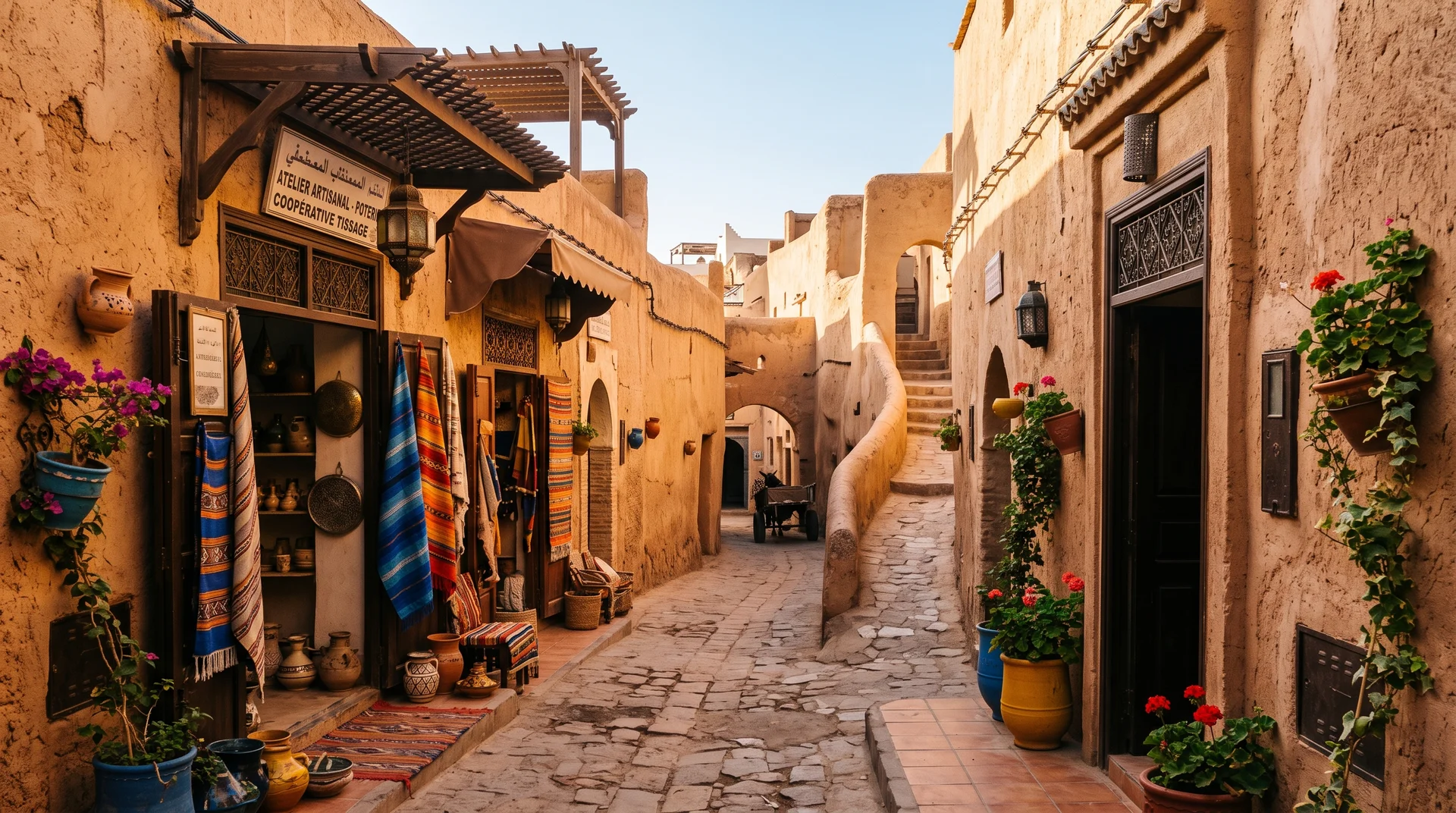
The 1960 earthquake wiped out the old town. To give the city a historic core again, architect Coco Polizzi began building an entire medina from 1992 using traditional techniques: rammed earth, dry stone, thuya wood, hand-laid zellige tiles. The result, at Ben Sergao five kilometres south, is not a theme park but a genuine village of workshops where jewellers, potters, wood carvers and weavers work in front of you.
Open daily, generally 9.30 am to 6 pm; entry is around 60 dirhams. Allow an hour and a half to two hours. Mornings bring better light into the narrow lanes and the craftspeople are at their benches. A taxi from the centre costs about twenty dirhams.
9/12Olhão Garden and Mémoire d'Agadir: understanding the 1960 earthquake
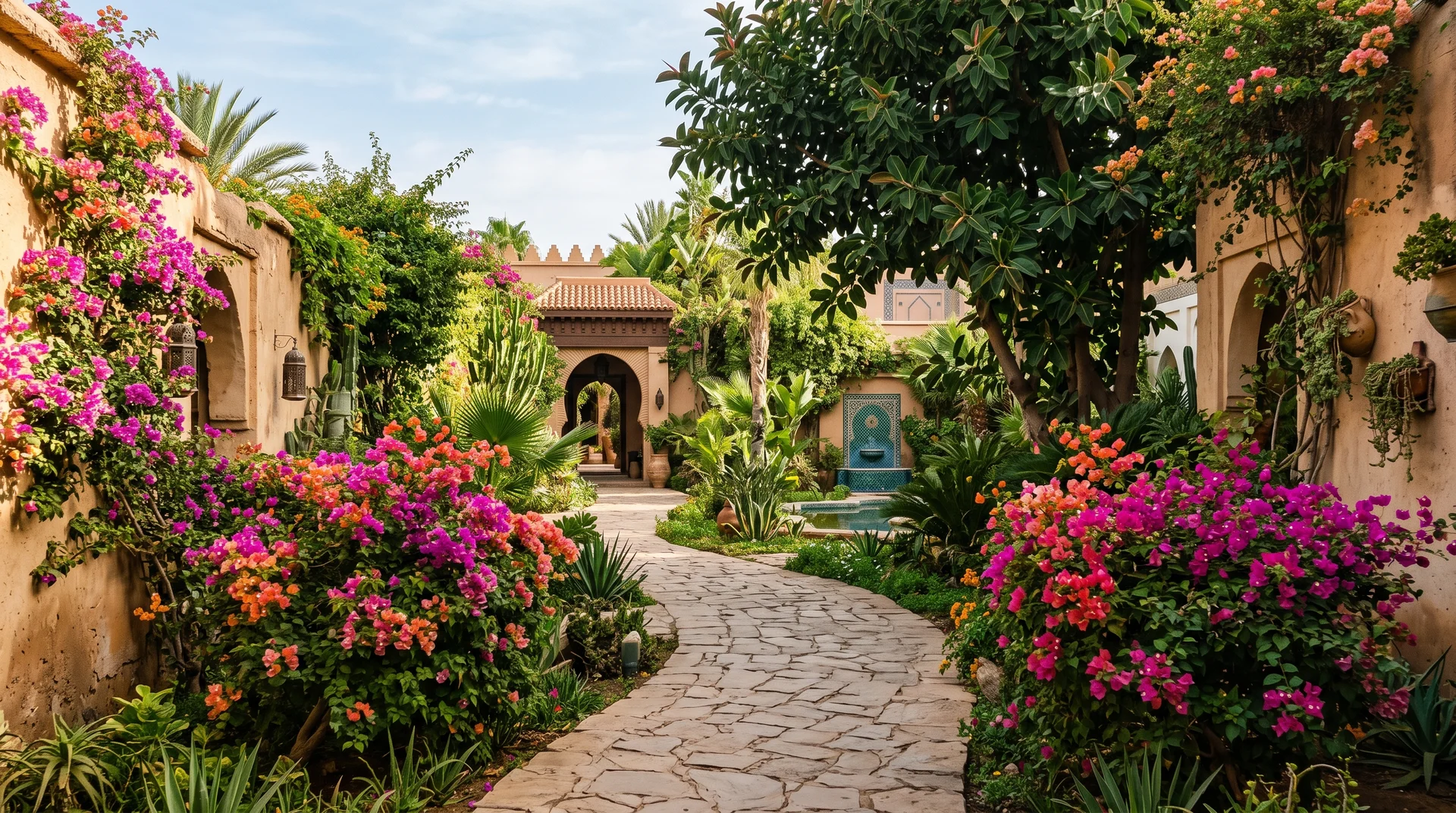
This walled garden, a gift from the Portuguese town of Olhão twinned with Agadir, is one of the few shaded, quiet spots downtown: bougainvillea walkways, ornamental pools and benches under the ficus trees. People come here to catch their breath, but above all for the small Mémoire d'Agadir museum inside the grounds, which gathers photographs of the pre-1960 city and images of the hours that followed the earthquake.
The visit is short — thirty to forty-five minutes — yet it completely changes how you read the city: you finally understand why Agadir has such an airy layout. The garden is free, the museum charges a few dirhams; both close on Sundays and early in the week depending on the season. Go mid-morning.
10/12The Amazigh Heritage Museum: understanding the Berber soul of the Souss
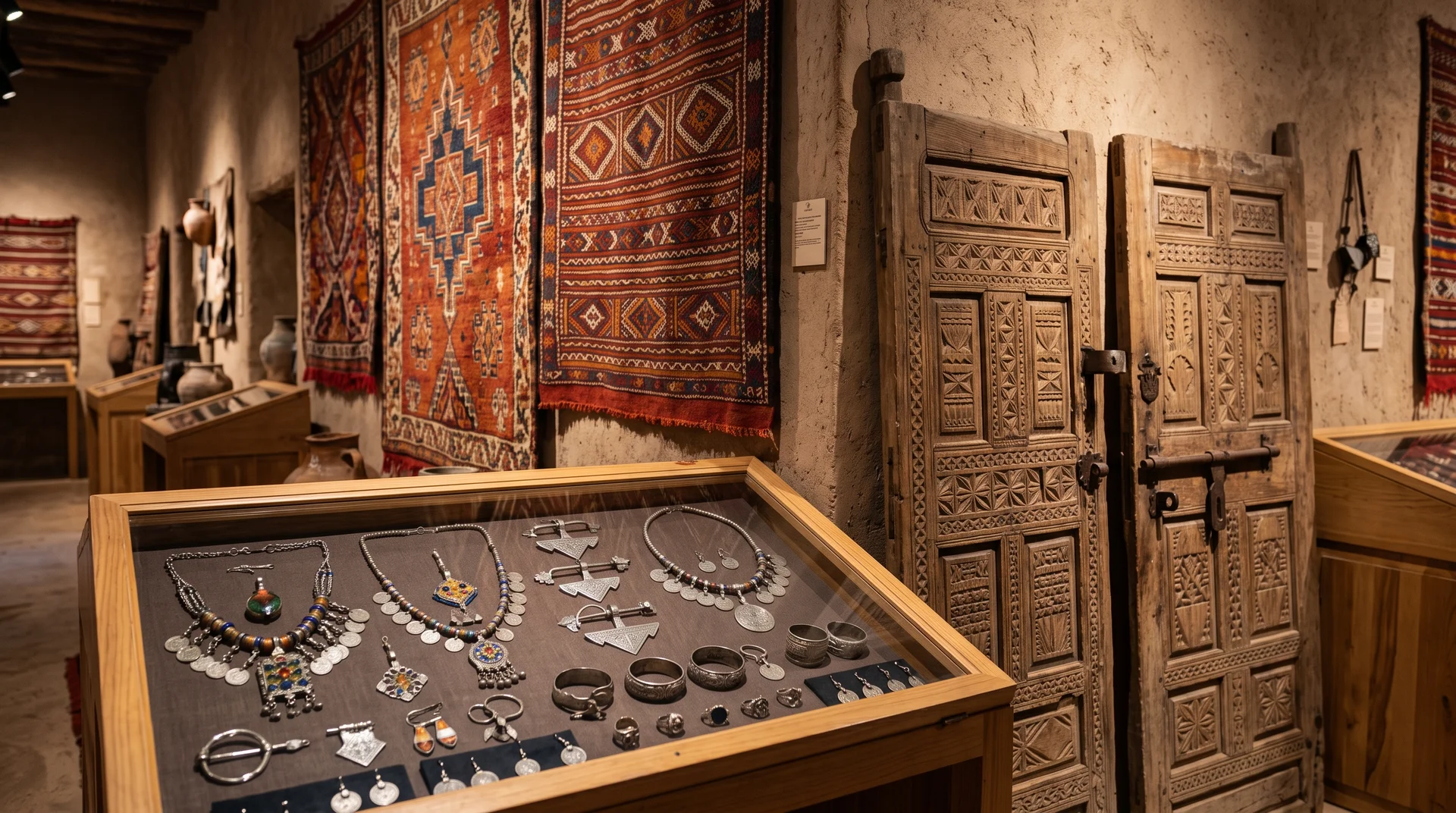
Set on Avenue Hassan II, this compact museum holds the collection assembled by ethnologist Bert Flint: silver jewellery from the Souss and Anti-Atlas, fibulae, amber necklaces, woven rugs, carved granary doors, pottery and wedding chests. Every piece is precisely labelled, making it the best possible introduction to Amazigh culture before you head inland.
The visit takes forty-five minutes to an hour. Open Monday to Saturday, generally 9.30 am to 5.30 pm, closed Sundays; entry is around twenty dirhams. It is also one of the few fully air-conditioned sights in Agadir: save it for the middle of the day, when the sun beats down on the seafront.
11/12Souss-Massa National Park: watching the bald ibis in its last refuge
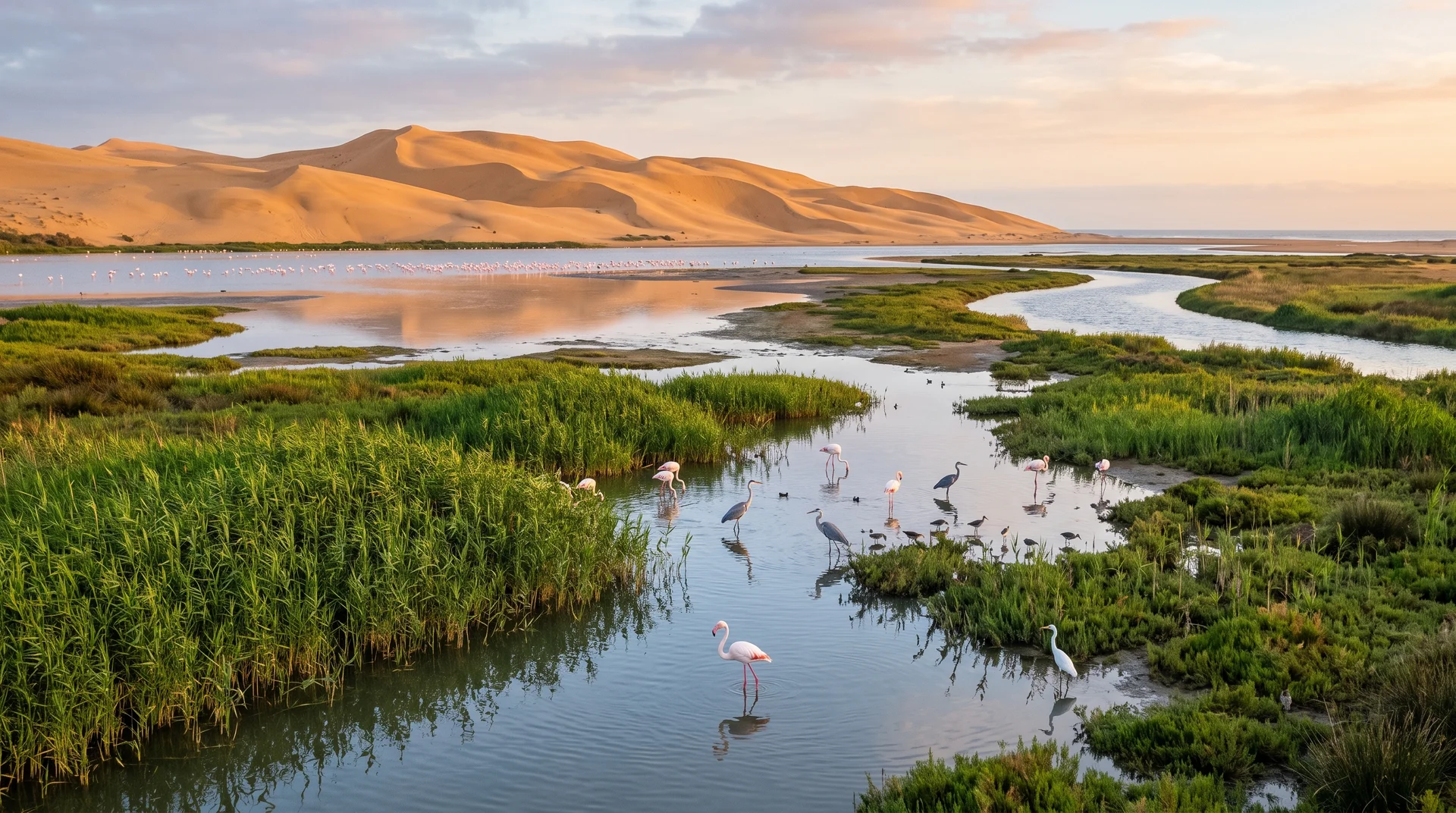
Sixty kilometres south of Agadir, the mouth of the Massa river forms a lagoon fringed with dunes and reed beds, protected since 1991. It is one of the world's last sanctuaries for the northern bald ibis, a black bird with a curved red bill once thought extinct in the wild. Flamingos, spoonbills, herons and stilts complete the picture; in the Rokein reserve, gazelles and oryx graze in semi-freedom.
Come early in the morning between October and April, binoculars around your neck: that is when activity peaks and the light is softest. Park access is free, but a local guide — 200 to 300 dirhams for a half day — transforms your chances of spotting birds. You will need a car; public transport does not reach the lagoon.
12/12Imouzzer des Ida Outanane: waterfalls and honey at the end of a mountain road
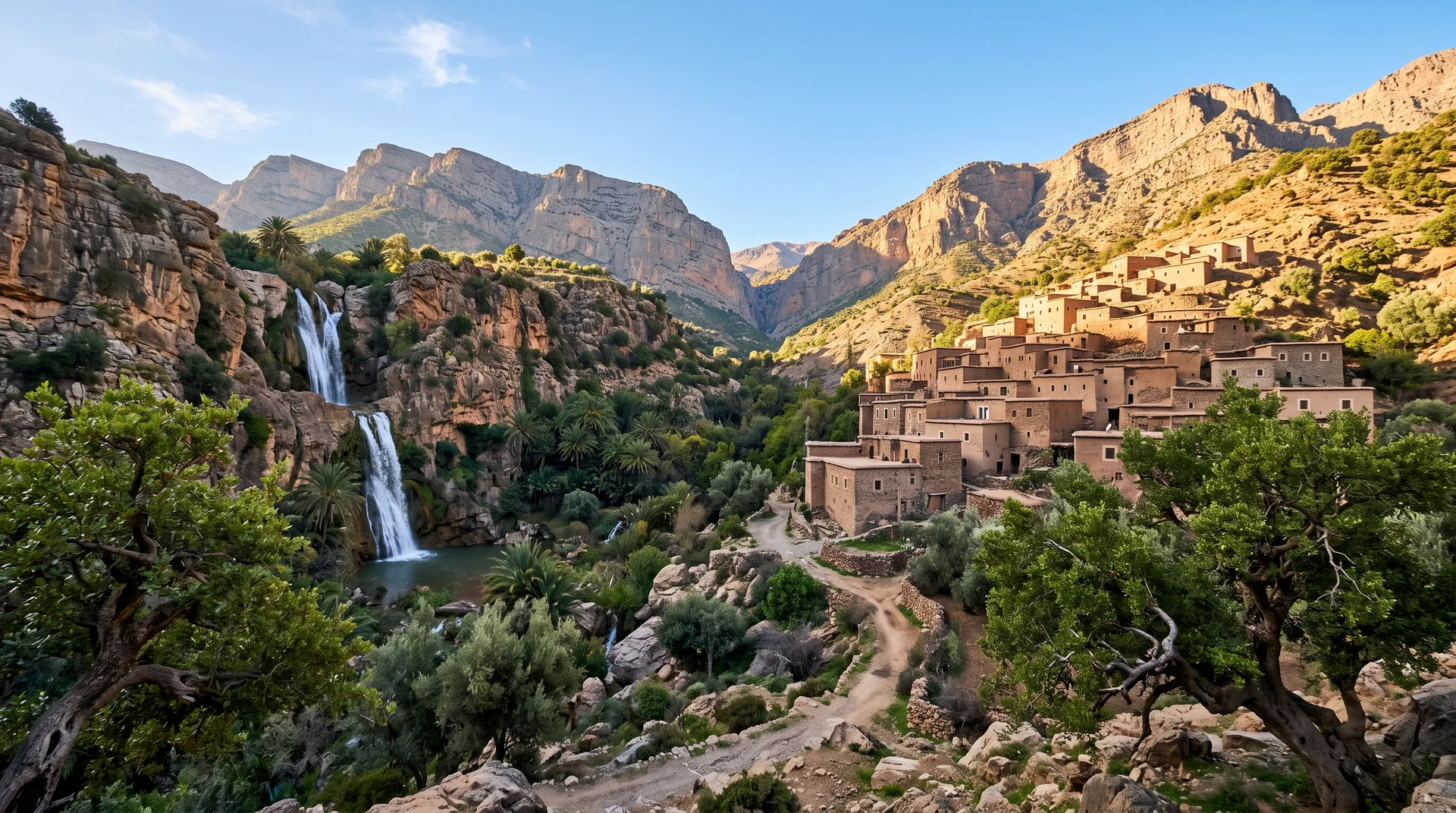
This is the region's best-kept escape, and its finest drive: eighty kilometres of hairpins climbing into the western High Atlas through argan groves to a plateau at 1,200 metres. At the end lies the village of Imouzzer, its waterfalls dropping into a rocky amphitheatre and its terraced olive groves. The area lives on honey — thyme, euphorbia, argan — sold straight by the producers.
Don't come at the height of summer: the falls are often dry between July and October. The ideal window is February to April, after the rains. The weekly souk is held on Thursdays and is worth the trip on its own. Allow an hour and a half's drive from Agadir, a car is essential, and fill up before you leave: there are no petrol stations en route.