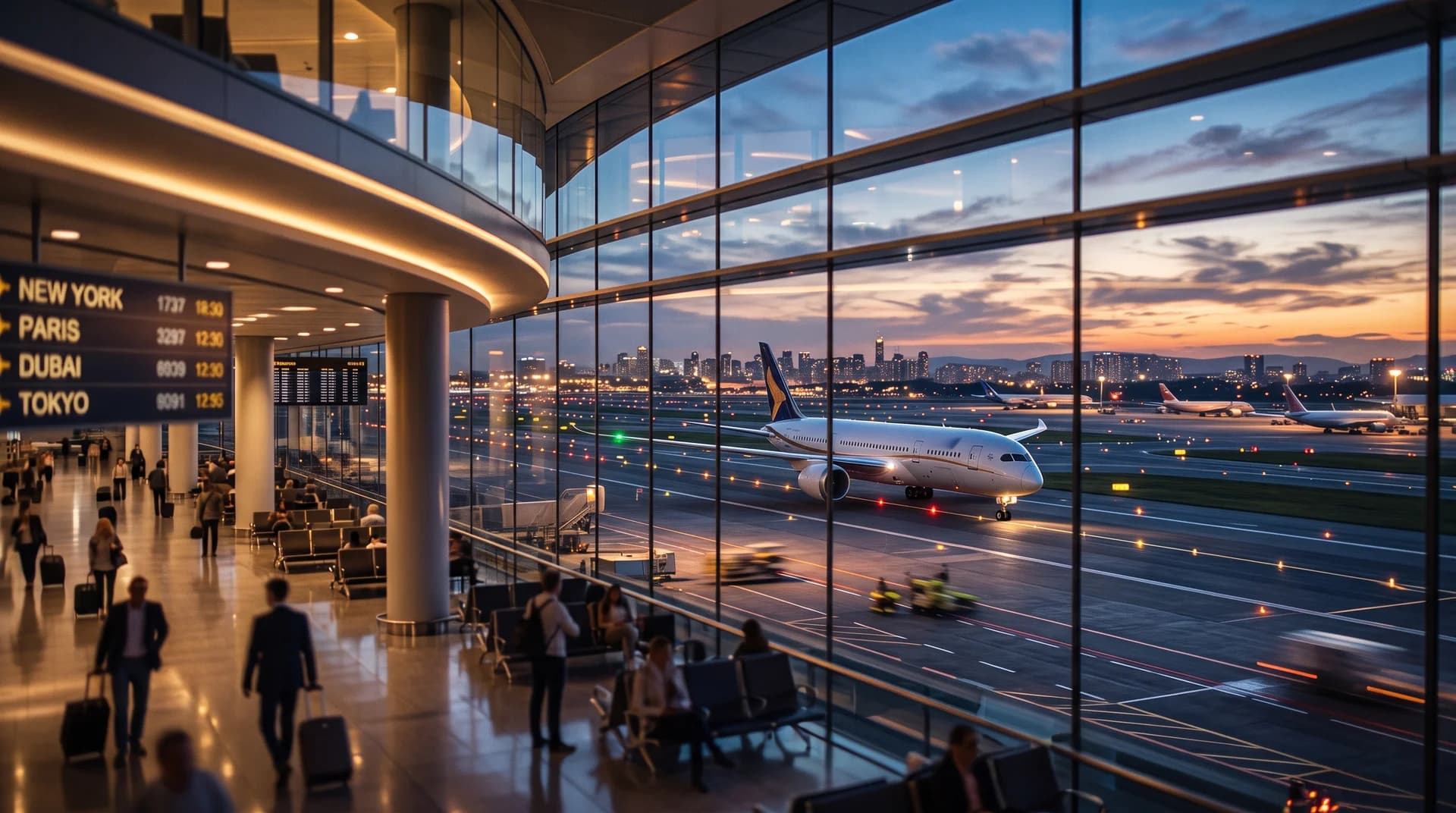
On 8 September, Flying Blue split its award tickets in three
Since 8 September 2026, every new Miles booking on an Air France or KLM operated flight comes in one of three fares: Light, Standard and Flex. The programme left the floor price alone — the Light fare still costs the number of Miles you were used to. What changed is what that floor now includes.
Getting back the award ticket as it used to be, checked bag and change flexibility included, now costs 20 to 30% more Miles. On Paris-CDG to New York in business class, figures published as the new chart went live put Light at around 60,000 Miles and Standard at 75,000 Miles, with identical taxes and carrier charges. The premium does not buy a better seat: it buys back conditions that were bundled in the week before.
What the Light fare actually strips out
Light awards cannot be changed or refunded, and advance seat selection is gone — in economy, premium economy and business alike. On top of that, economy and premium Light awards carry no checked baggage allowance. That is the line to read twice before booking for a family: four Light awards mean four cabin bags to keep under control, or four supplements to pay at the desk.
Status thresholds, on the other hand, did not move
One detail went largely unnoticed in the announcement: the new fare split does not affect XP earning. Light, Standard and Flex all credit the full table value. Booking the cheapest option therefore does not slow you down in the status race — a rare asymmetry, and one worth using.
Flying Blue and SkyTeam elites also keep baggage, seat selection, lounge access and flexibility across all three fare bands, Light included. For them the devaluation is largely neutralised: Light simply becomes the old award ticket.
Two 2026 adjustments not to miss
Since February 2026, Air France and KLM Basic fares have credited a flat 2 XP and 2 UXP per segment, regardless of distance — after a 2025 trial that had removed XP from Basic fares altogether. And since 15 April, Platinum and Ultimate members pick their own reward at each milestone reached, from four families: a status card, a Miles overdraft (an advance of 20,000 to 40,000 Miles), extra Miles (15,000 to 30,000) or bonus XP (20 to 30). With more than 30 million members claimed in 2026, these trade-offs no longer concern a handful of insiders.
Miles & More: the chart is gone, the price follows the cash fare
On Lufthansa, SWISS, Austrian and Lufthansa City, the Miles price of an award is no longer read off a table: it has been priced dynamically since June 2025, based on the fare bucket of the seat released, the cabin, the route and demand. A Light / Basic / Basic Plus / Flex overlay sets the final cost. Cheaper off-peak, dearer on peak dates: the logic is now that of a paid ticket.
Why the end of Mileage Bargains changes the maths
Mileage Bargains — the promotions that went as low as 55,000 Miles for a round trip in business between Europe and the United States — have been permanently withdrawn. The Star Alliance partner chart survives, but with higher bands across most premium cabins. For a traveller departing Europe the calculation flips: the partner is often more legible than the airline itself.
On the status side, 1 January 2026 brought the first change to the earning table since January 2024: first class now credits 400 points instead of 300 per intercontinental segment.
British Airways Club: the fare matters more than the distance
Since April 2026, ticket type determines how many Tier Points you collect: in the same cabin, a flexible or semi-flexible fare earns more than a basic one. The spread is wide — from 75 to 275 points per segment in short-haul economy, and from 150 to 450 in long-haul economy.
Two side levers have doubled: sustainable aviation fuel contributions earn 2 points per pound spent, capped at 2,000 points per membership year, and the same rate applies to seat and baggage purchases. The qualification year runs from 1 April to 31 March, with thresholds of 3,500 points for Bronze, 7,500 for Silver and 20,000 for Gold.
What to do with your Miles this week
The 2026 rule fits in one sentence: a stored Mile is a Mile losing value. Programmes are switching one after another to earning indexed on how much you spend rather than how far you fly, and fixed charts are fading out. Three trade-offs follow.
Three habits before you book
- Burn before you earn. This year's moves all point the same way: Flying Blue in September, Aeroplan in June with a chart raised on transatlantic and transpacific routes. A trip twelve months out should be booked now, not next year.
- Choose Light with your eyes open. On a short round trip with no hold luggage and cabin bags kept in check, Light remains the best use of your Miles. For three weeks with children, Standard is not a luxury: it is the price of the bag, and it deserves a comparison with the airport desk rate before you decide.
- Do not chase status by spending. Concentrating your flights on a single programme still pays; paying more for a ticket just to clear a threshold almost never does, especially when those thresholds shift from one year to the next.
One consolation in this landscape: Flying Blue XP ignore the new fare split entirely. It is currently the only line in the table working squarely in the traveller's favour — so put it to work.