
Set between the Mediterranean and the Collserola hills, Barcelona has the rare gift of being easy to explore: you move from a Gothic cathedral to a mosaic façade, from a covered market to four kilometres of sand, all within a few metro stops. It is Gaudí's city, of course, whose rippling roofs and ceramic spires redrew the skyline, but it is also a medieval labyrinth, a hillside covered in gardens, and a century-old funfair perched 512 metres above the sea. The mild climate makes it a year-round destination, with a clear preference for May to June and September to October, when the heat eases and the queues shorten. Here are the thirteen experiences that genuinely matter, from the most iconic to the most discreet, the ones locals rather keep to themselves.
✈️ Flights right now to Barcelona on Yoosky
Complete guide
In this article
- Sagrada Família: stepping inside Gaudí's unfinished masterpiece
- Park Güell: Gaudí's mosaics with Barcelona at your feet
- The Barri Gòtic: getting lost in Barcelona's medieval lanes
- Casa Batlló: the dragon house on Passeig de Gràcia
- La Boqueria market and La Rambla: hungry Barcelona at first light
- La Pedrera (Casa Milà): walking Europe's strangest rooftop
- Montjuïc hill: castle, cable car and the magic fountain
- Barceloneta and the seafront: a beach at the end of the metro line
- Museu Picasso: watching a genius take shape
- Palau de la Música Catalana: a concert hall under a glass skylight
- Tibidabo: the century-old funfair above the city
- Recinte Modernista de Sant Pau: the most beautiful hospital in the world
- Bunkers del Carmel: the 360-degree view locals keep for themselves
1/13Sagrada Família: stepping inside Gaudí's unfinished masterpiece
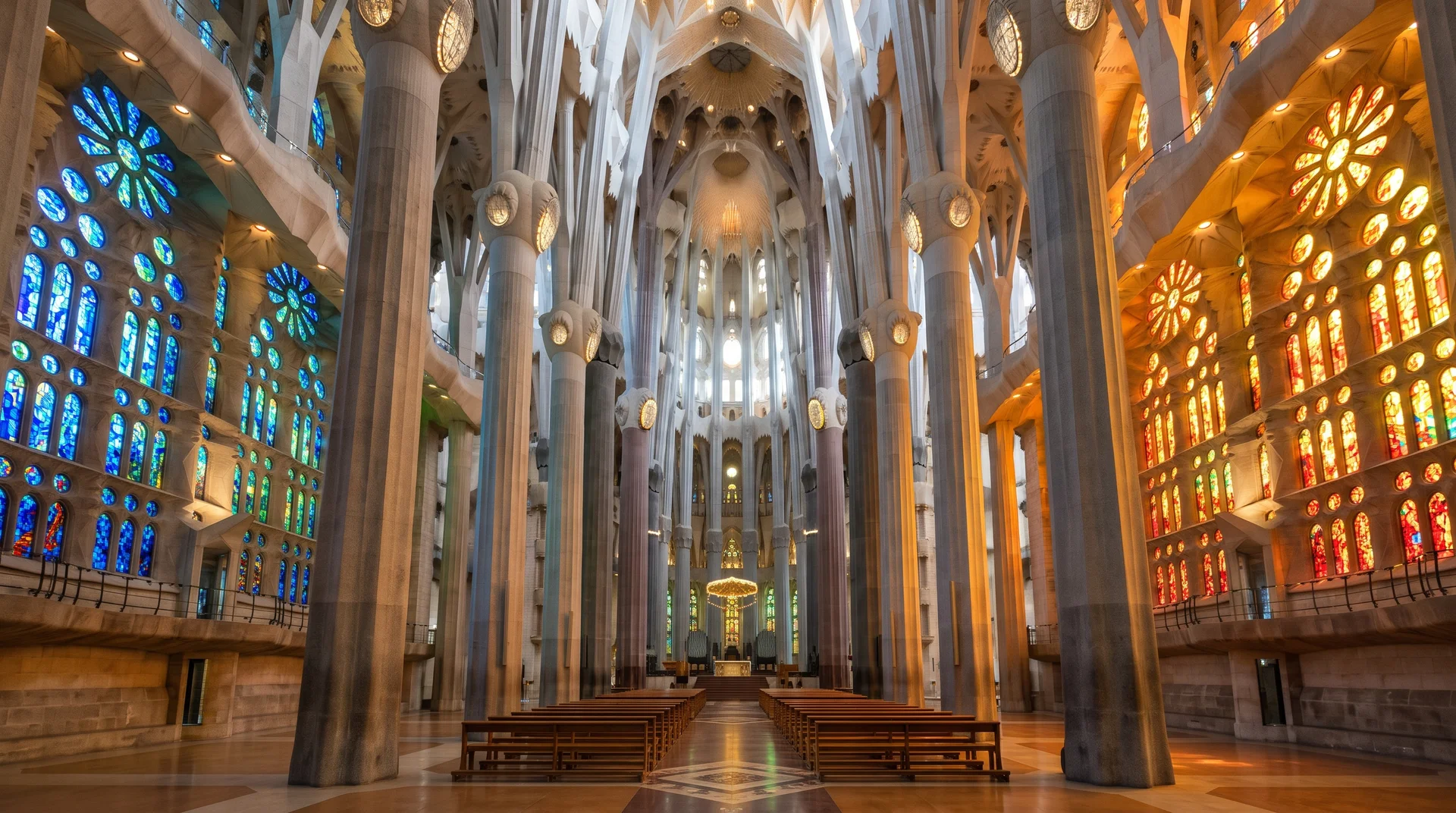
You think you know it from photographs, and then you step through the door. Inside, the columns branch like a stone forest and the stained glass pours cold blue across the eastern nave in the morning, molten orange and red in the west by late afternoon: aim for opening, around 9am, for quiet and cool light, or the final hour for the blaze. Under construction since 1882, the basilica is finally nearing completion, with the Tower of Jesus Christ now rising above the city skyline. Budget from roughly twenty euros for standard entry, with a supplement to take the lift up one of the towers (spectacular views, and a narrow spiral staircase back down). Book online several days ahead with a timed slot: walk-up queues are punishing. Metro Sagrada Família, lines L2 and L5.
2/13Park Güell: Gaudí's mosaics with Barcelona at your feet
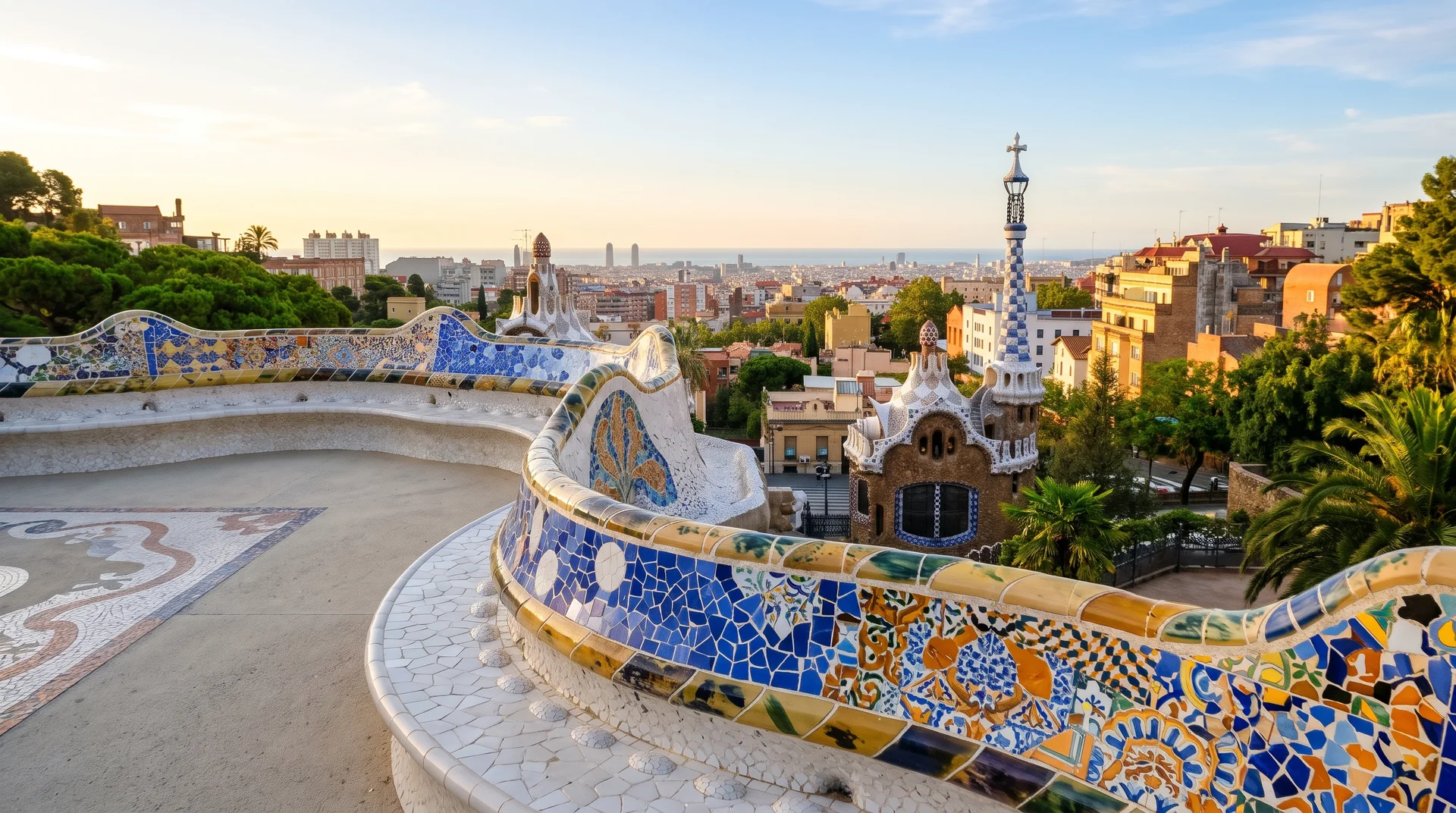
Conceived as a luxury housing estate that never found its buyers, Park Güell became the most photographed garden in Spain. The ticketed heart, the Monumental Zone, gathers the ceramic dragon staircase, the Hypostyle Room with its leaning columns, and the undulating bench of the Nature Square, where the city unrolls all the way to the sea. Expect around €18 with a compulsory timed slot booked online: same-day tickets sell out routinely. The rest of the park, vast and free, deserves another hour for its paths, raw stone viaducts and umbrella pines. Come early, before 9.30am, to dodge both crowds and heat: there is almost no shade on the terrace. Take metro Vallcarca (L3) and the outdoor escalators, a gentler approach than the climb from Lesseps.
3/13The Barri Gòtic: getting lost in Barcelona's medieval lanes
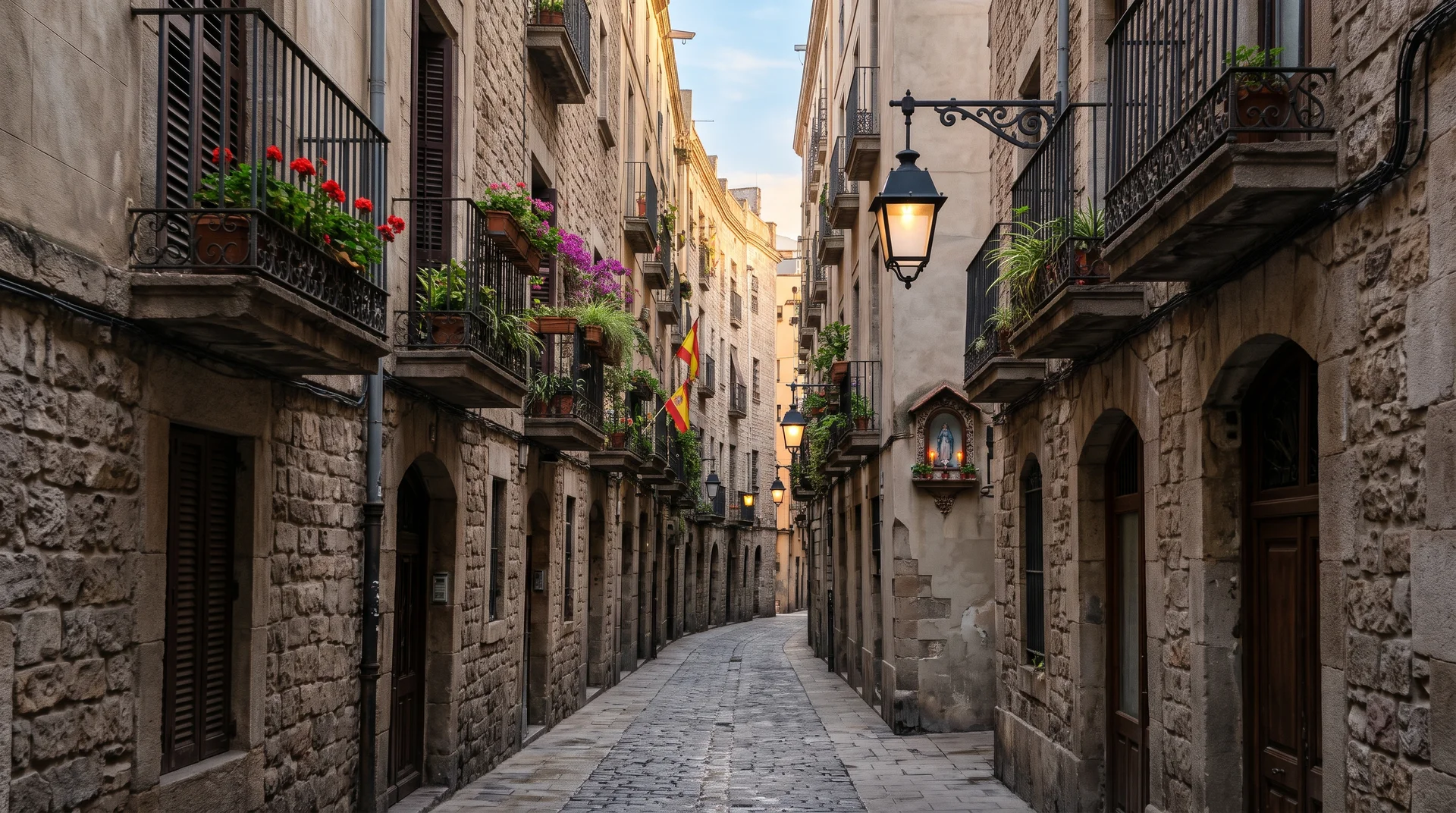
This is Barcelona before Gaudí: a maze of narrow lanes where the stone holds its coolness, built on the foundations of Roman Barcino. Start at Santa Eulàlia cathedral, whose neo-Gothic façade presides over a square often filled with street musicians, then slip down to Plaça Sant Felip Neri and its fountain, the walls still scarred by civil war shrapnel. Carry on to Plaça del Rei, the much-photographed Pont del Bisbe, and the Roman remains preserved underground at the MUHBA (entry around €7, free on the first Sunday of the month). Wandering costs nothing and takes two to three hours on foot: wear proper shoes, the cobbles are uneven. Early morning leaves the lanes almost empty and the low light is superb. Metro Jaume I (L4) or Liceu (L3).
4/13Casa Batlló: the dragon house on Passeig de Gràcia
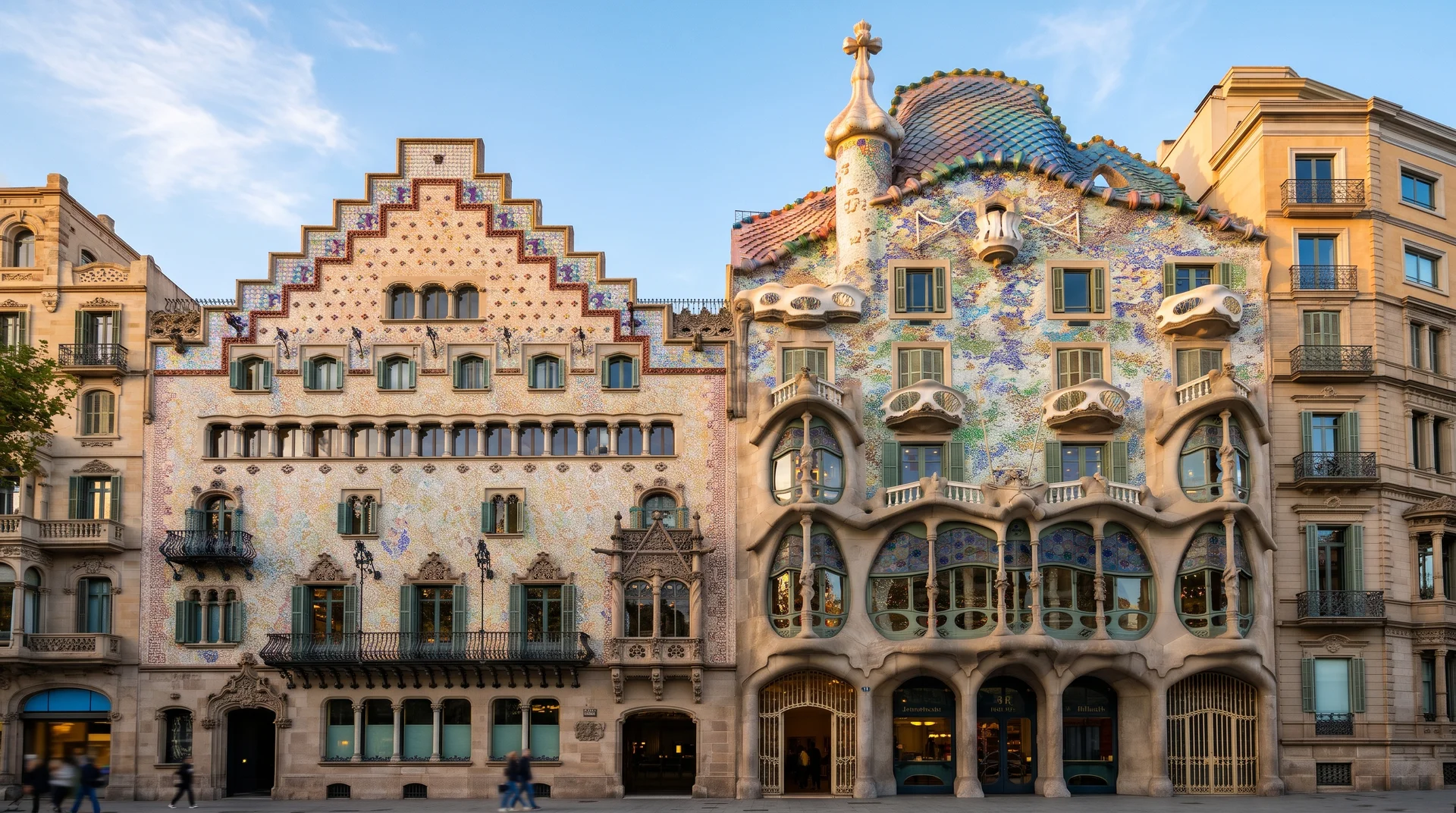
Scaled façade, balconies shaped like masks, a roof arched like a dragon's back: Casa Batlló is Gaudí's most joyful flight of fancy, and arguably his finest remodelling of a bourgeois apartment block. Inside, everything curves: handles moulded to the grip of a hand, a lightwell graded from deep to pale blue to spread daylight evenly, a terrace bristling with trencadís chimneys. The tour uses an immersive augmented-reality guide that children genuinely enjoy, and takes about an hour. Budget from around thirty euros, with prices climbing according to the route you choose: book online and aim for the first slot of the day. Next door, Casa Amatller and Casa Lleó Morera complete the Illa de la Discòrdia, free to admire from the pavement. Metro Passeig de Gràcia (L2, L3, L4).
5/13La Boqueria market and La Rambla: hungry Barcelona at first light
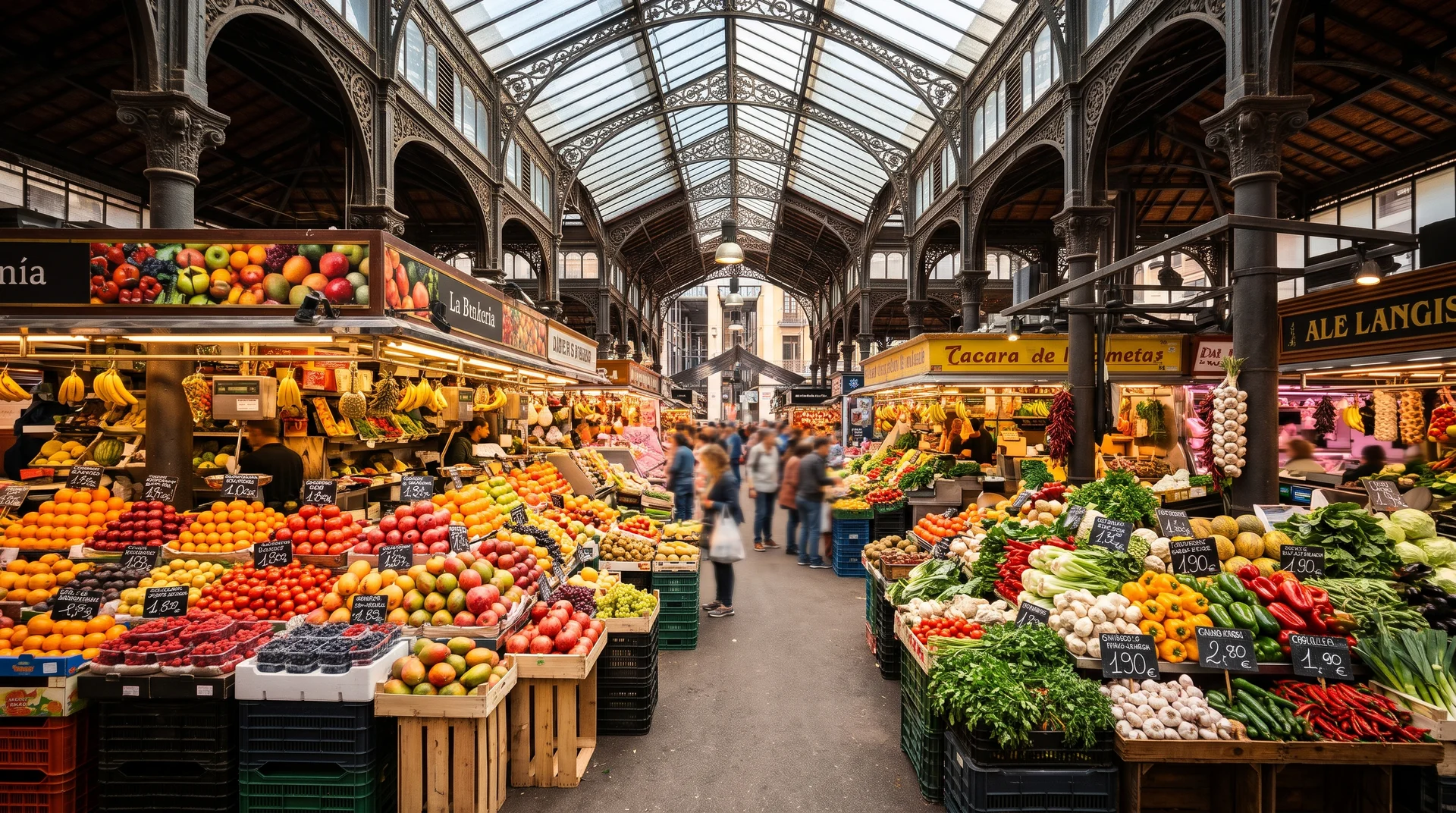
Under the iron canopy of La Boqueria, the stalls rise in pyramids of sliced fruit, hanging hams, fish on ice and paper cones of nuts. It is the most famous market in Spain, and it is still a working one: come between 8am and 10am, when locals are shopping and the aisles can still breathe. Open Monday to Saturday, usually 8am to 8pm, closed Sunday. The counters at the back, less touristy than those by the entrance, serve generous plates of the day at fair prices. Continue down La Rambla, the pedestrian avenue sloping to the sea beneath its plane trees: keep a hand on your pockets, this is the city's prime pickpocket territory. On the way, look down for the Miró mosaic set into the pavement near the Liceu. Metro Liceu (L3).
6/13La Pedrera (Casa Milà): walking Europe's strangest rooftop
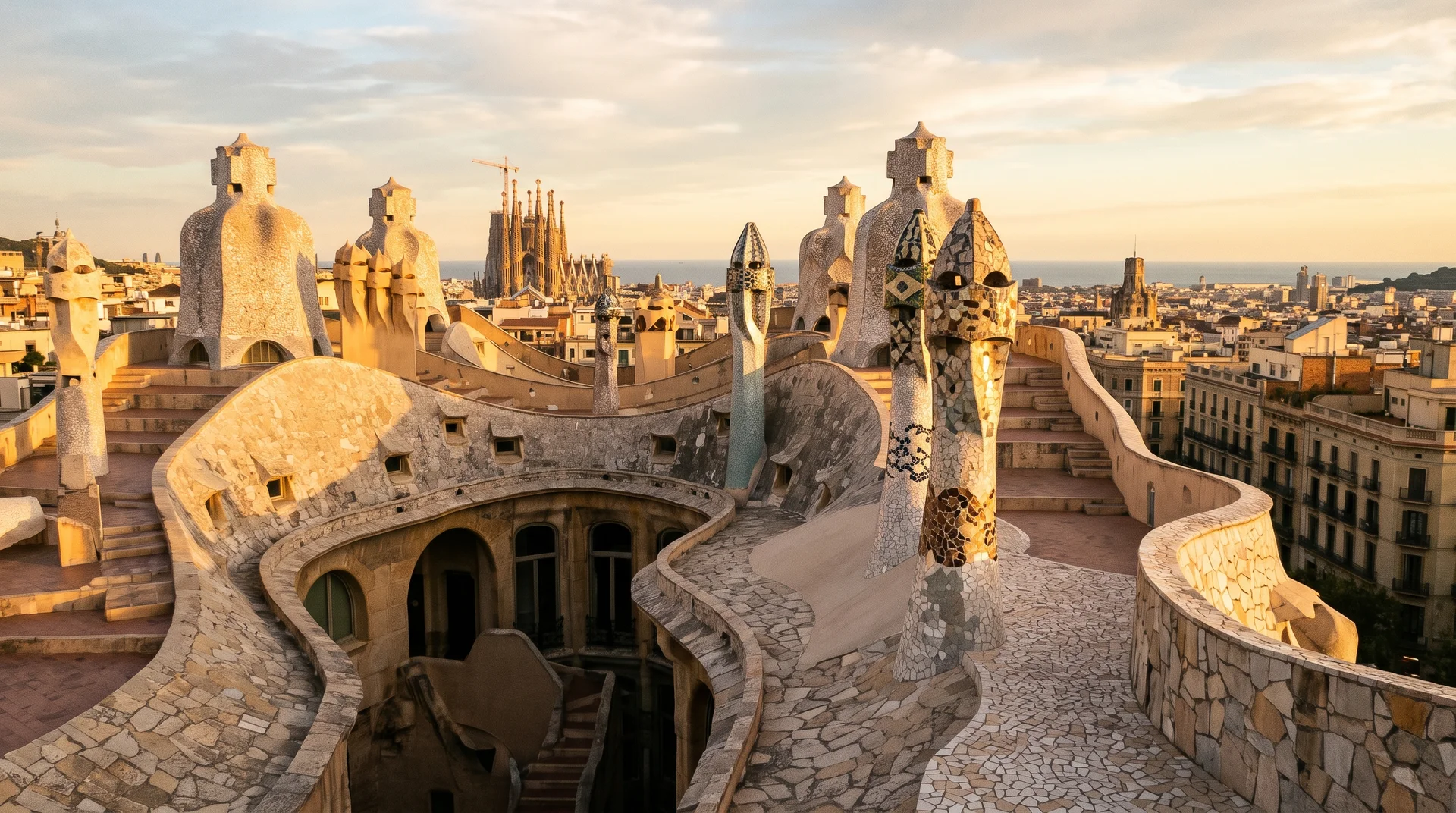
Locals nicknamed it "the quarry" for its rippling stone façade, which contains not one right angle, and its wrought-iron balconies like tangles of seaweed. The visit climbs to the Espai Gaudí, an extraordinary attic of 270 brick arches shaped like a ribcage, then opens onto the roof terrace: helmeted chimneys that reportedly inspired Star Wars stormtroopers, with the Sagrada Família spiking the skyline beyond. Budget around €28 for the daytime visit, about ninety minutes, and book online. An evening route with projections runs year-round: pricier, but the lit terrace is worth it and children love it. The reconstructed period apartment, often rushed through, tells the story of bourgeois life in the 1910s remarkably well. Metro Diagonal (L3, L5).
7/13Montjuïc hill: castle, cable car and the magic fountain
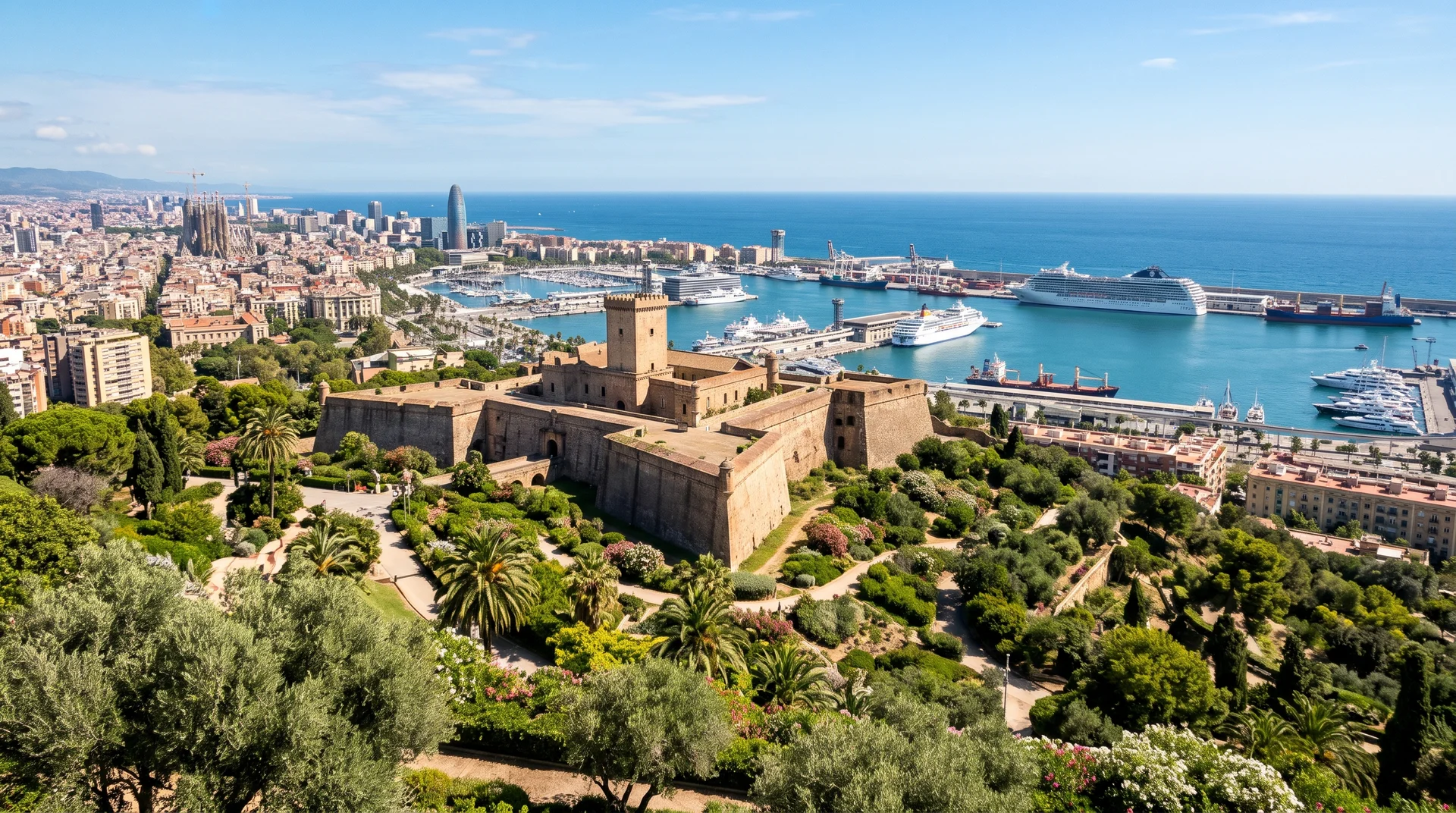
The hill that closes the city to the south holds a full day of sightseeing on its own. Ride the cable car up from Parc de Montjuïc (about €14 one way) to the castle, a seventeenth-century military fortress turned 360-degree lookout over the port and the sea: entry around €12, free on Sundays after 3pm. Walk back down through the Mossèn Cinto Verdaguer and Mirador gardens, free and beautifully planted. At the bottom, the Magic Fountain comes alive with free displays of water, light and music several evenings a week depending on the season: check the calendar, as schedules shift considerably between winter and summer. Families picnic on the steps of the Palau Nacional. Metro Paral·lel (L2, L3) for the funicular, or Espanya (L1, L3).
8/13Barceloneta and the seafront: a beach at the end of the metro line
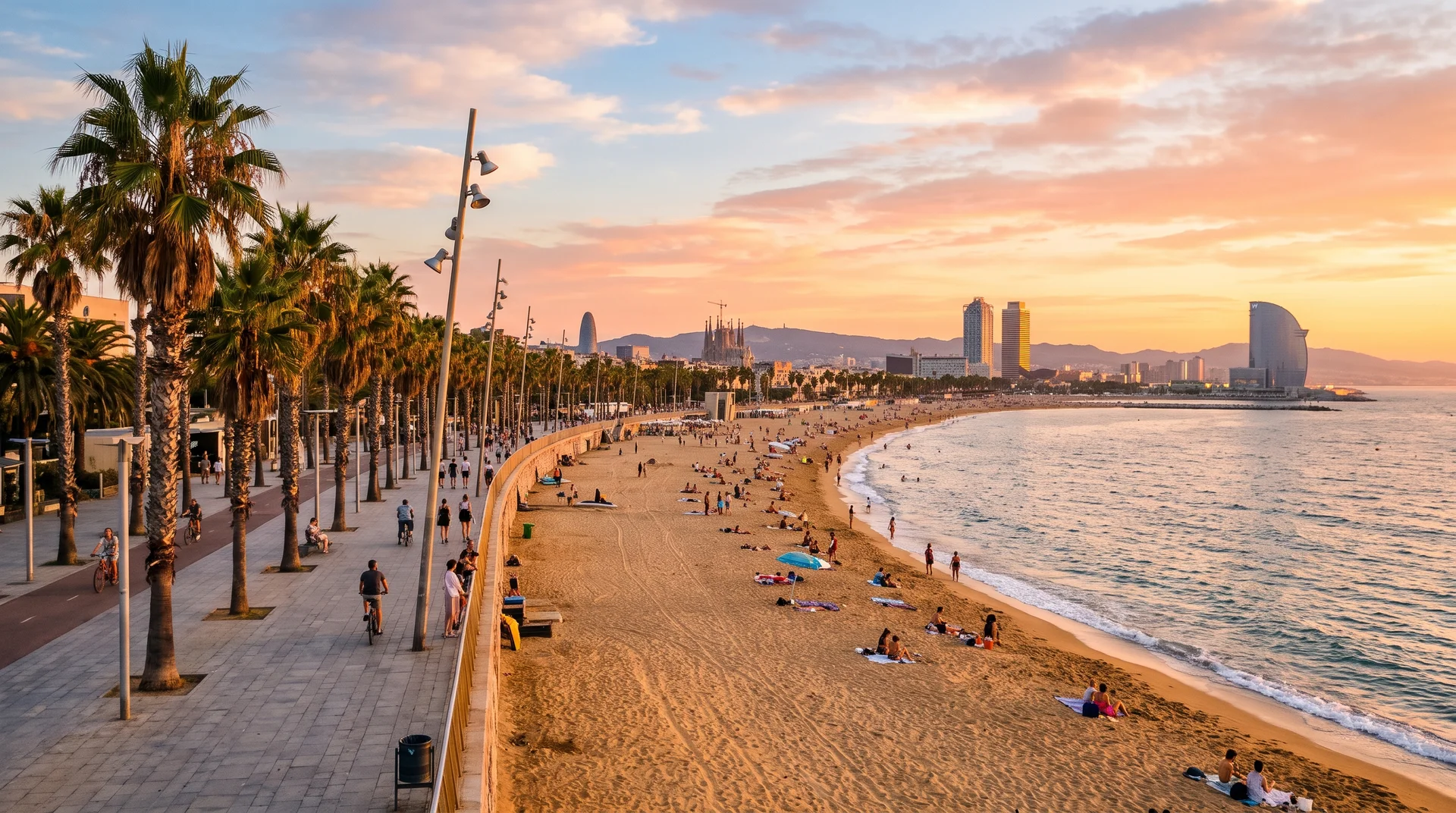
Few major cities offer four kilometres of sand ten minutes from their historic centre. The old fishermen's quarter, with its grid of streets and laundry strung across the windows, leads straight onto Barceloneta beach, lifeguarded in season and fitted with showers and access ramps. For more space and fewer people, walk twenty minutes north-east to Nova Icària or Bogatell, far more breathable in August. A cycle promenade runs the length of the coast, with bike-share docks and hourly rentals everywhere. At the western end, Port Vell and its wooden footbridge, the Rambla de Mar, make a lovely walk at sunset, with the Aquarium on hand to fill a late afternoon with children. Free access, metro Barceloneta (L4) or Ciutadella-Vila Olímpica (L4).
9/13Museu Picasso: watching a genius take shape
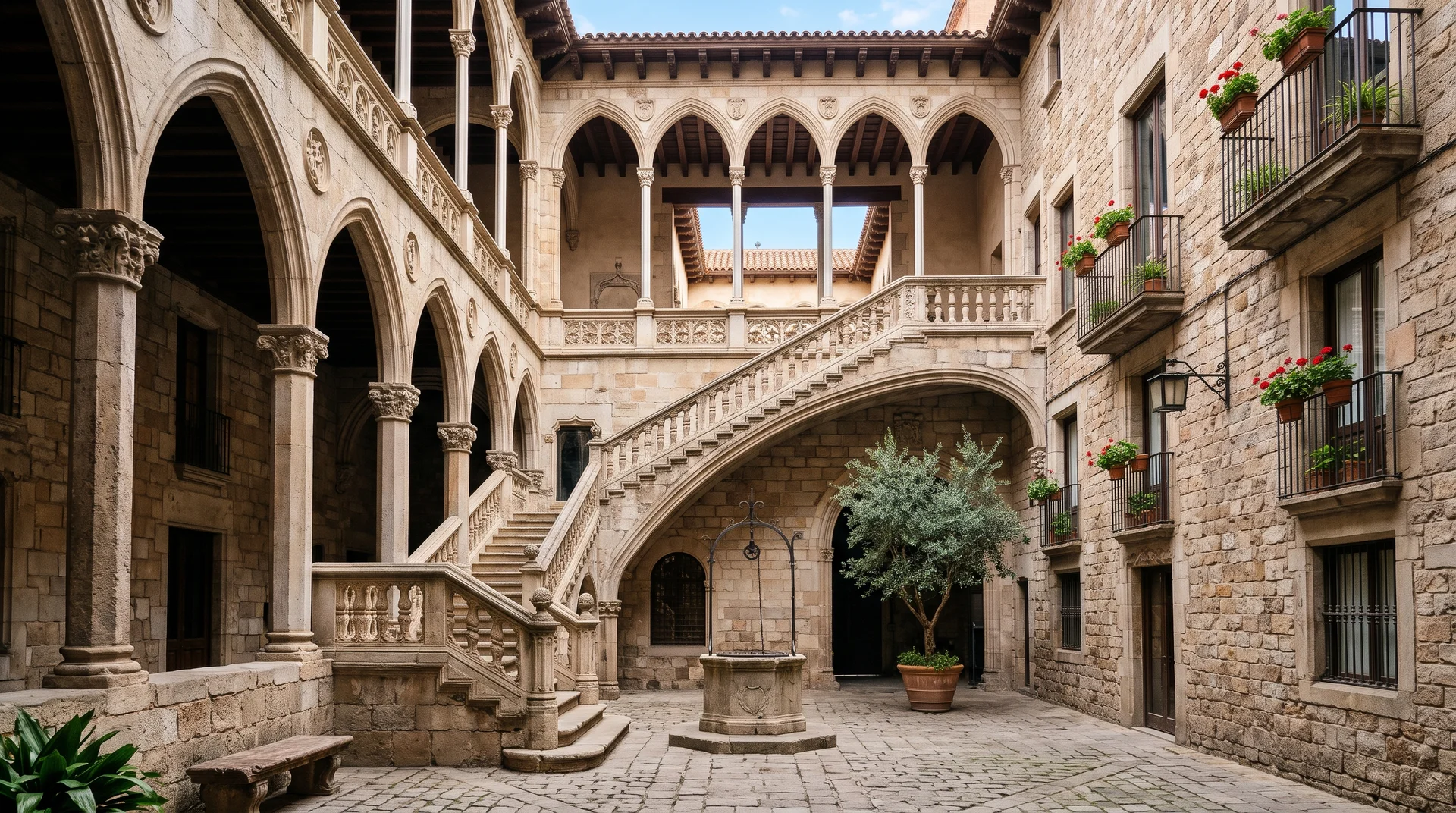
Housed in five adjoining medieval palaces on Carrer Montcada, this museum does not show the Picasso of the posters but the young man learning his craft: academy drawings of astonishing virtuosity at fifteen, blue canvases from his Barcelona years, then the series of 58 variations on Velázquez's Las Meninas, the centrepiece of the collection. You leave with a very clear sense of what the city gave the artist. Expect around €15, free on Thursday late afternoons and the first Sunday of the month, when online booking fills early. Closed Mondays. The arcaded courtyards alone are worth a look. A few steps away, the basilica of Santa Maria del Mar, pure Catalan Gothic, can be visited free outside guided-tour slots. Metro Jaume I (L4).
10/13Palau de la Música Catalana: a concert hall under a glass skylight
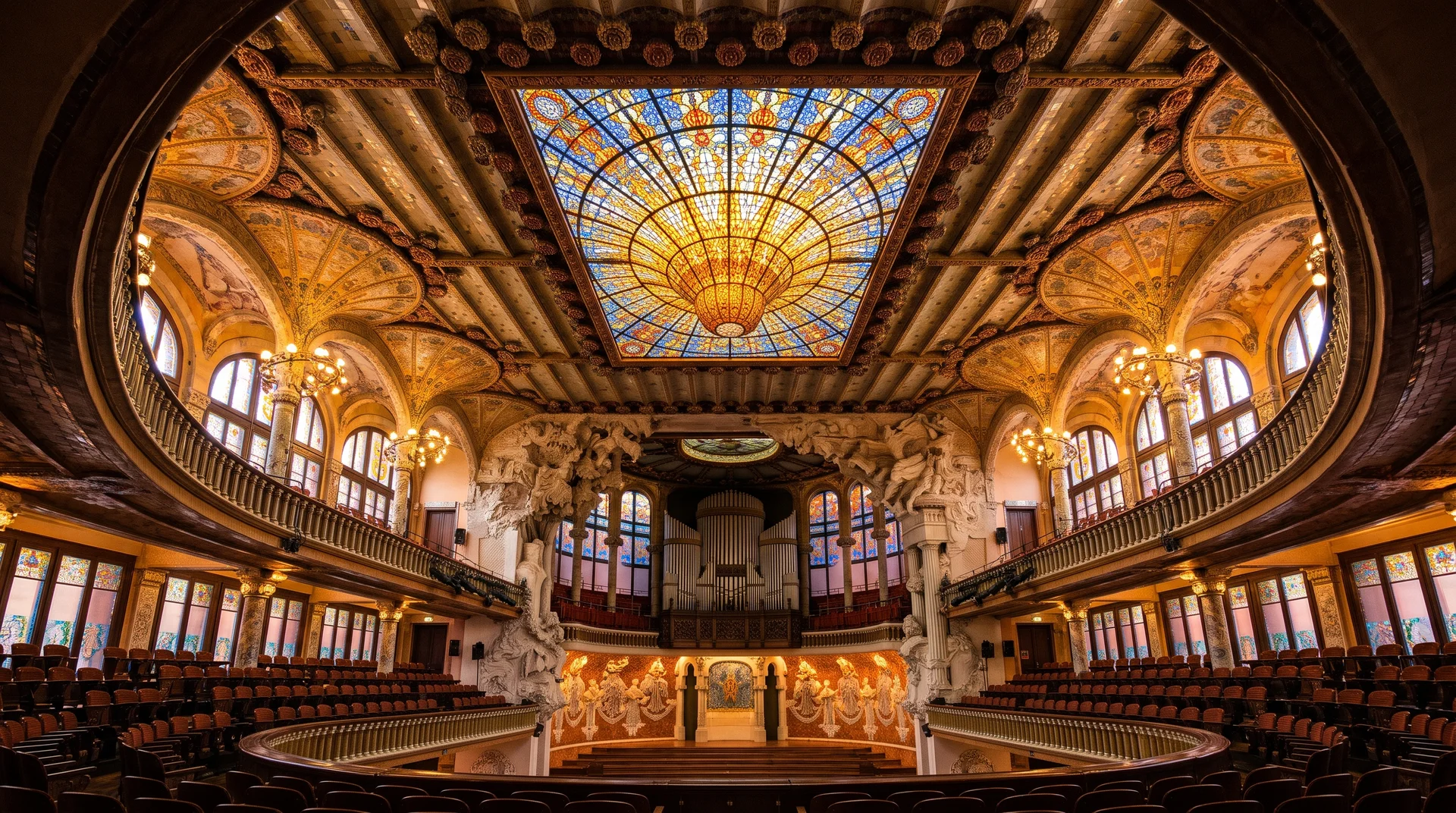
This is Barcelona's least expected modernist jewel, and perhaps the most beautiful concert hall in Europe. Lluís Domènech i Montaner brought daylight in through an inverted skylight, a vast teardrop of amber and blue glass suspended above the stalls, framed by mosaics, rose windows and sculpted muses bursting out of the walls. Guided tours last fifty minutes, cost around €22, run in several languages and are mostly scheduled in the morning. Better still, attend a concert, often chamber music or Spanish guitar, with tickets from about twenty euros in the evening or at Sunday matinees. Watching the skylight glow while the music plays is an experience of its own. A UNESCO World Heritage site. Metro Urquinaona (L1, L4).
11/13Tibidabo: the century-old funfair above the city
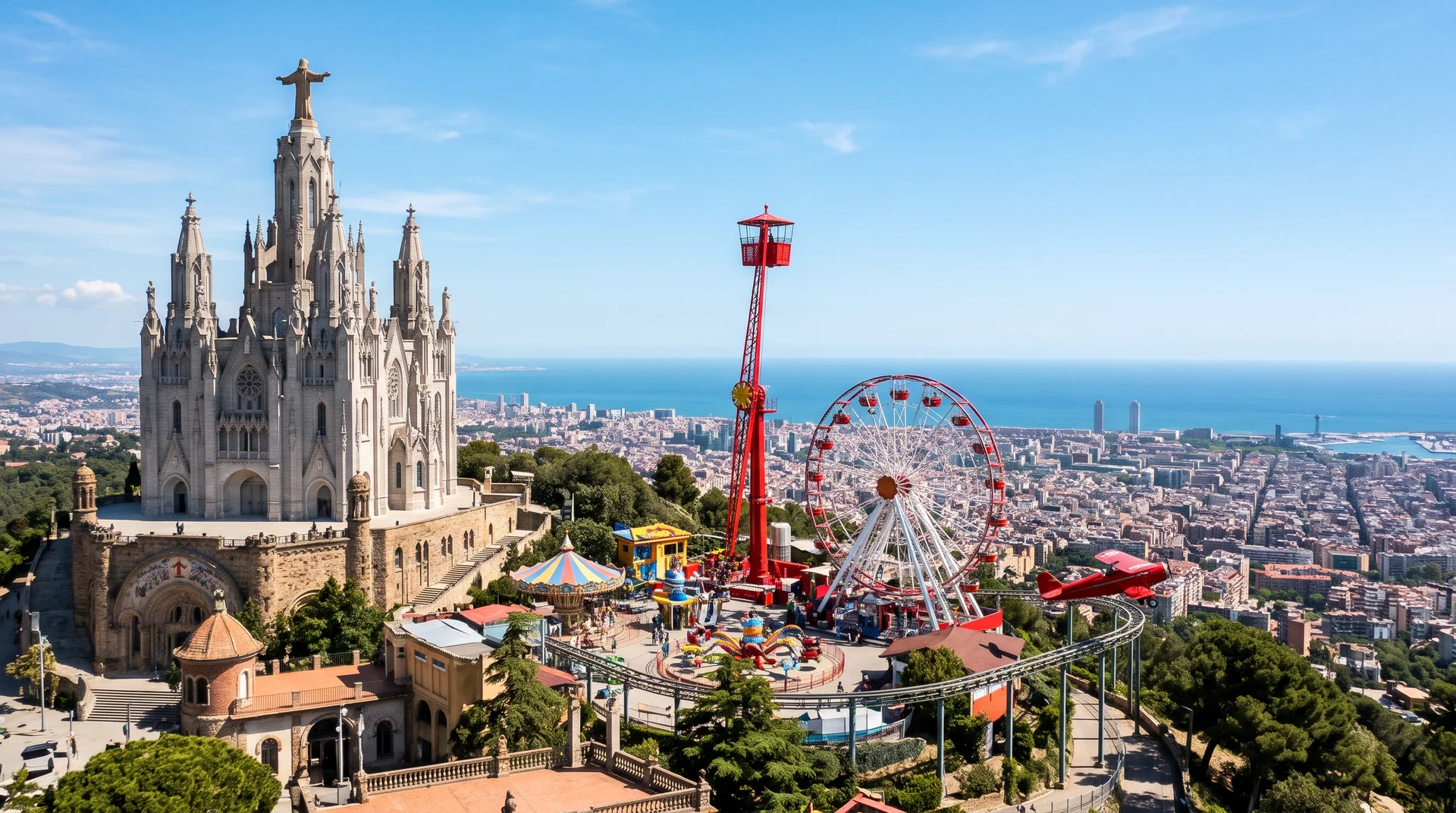
On the summit of the mountain that overlooks Barcelona, 512 metres up, an amusement park opened in 1901 shares the ridge with the Sagrat Cor basilica and its bronze Christ with outstretched arms. It is the family outing par excellence: the Avió, a 1928 aeroplane ride, the Museu dels Autòmats with its collection of fairground automata, and a Ferris wheel that seems to spin out over the void. The full ticket runs around €35, but the much cheaper "Camí del Cel" option covers the panorama and a handful of historic rides. The basilica is free to enter, with a few euros for the lift to the terrace. Opening is limited out of season, often weekends only, so check the calendar before you set out. Reach it via the Tramvia Blau and funicular from Plaça Kennedy, or the Tibibus from Plaça Catalunya.
12/13Recinte Modernista de Sant Pau: the most beautiful hospital in the world
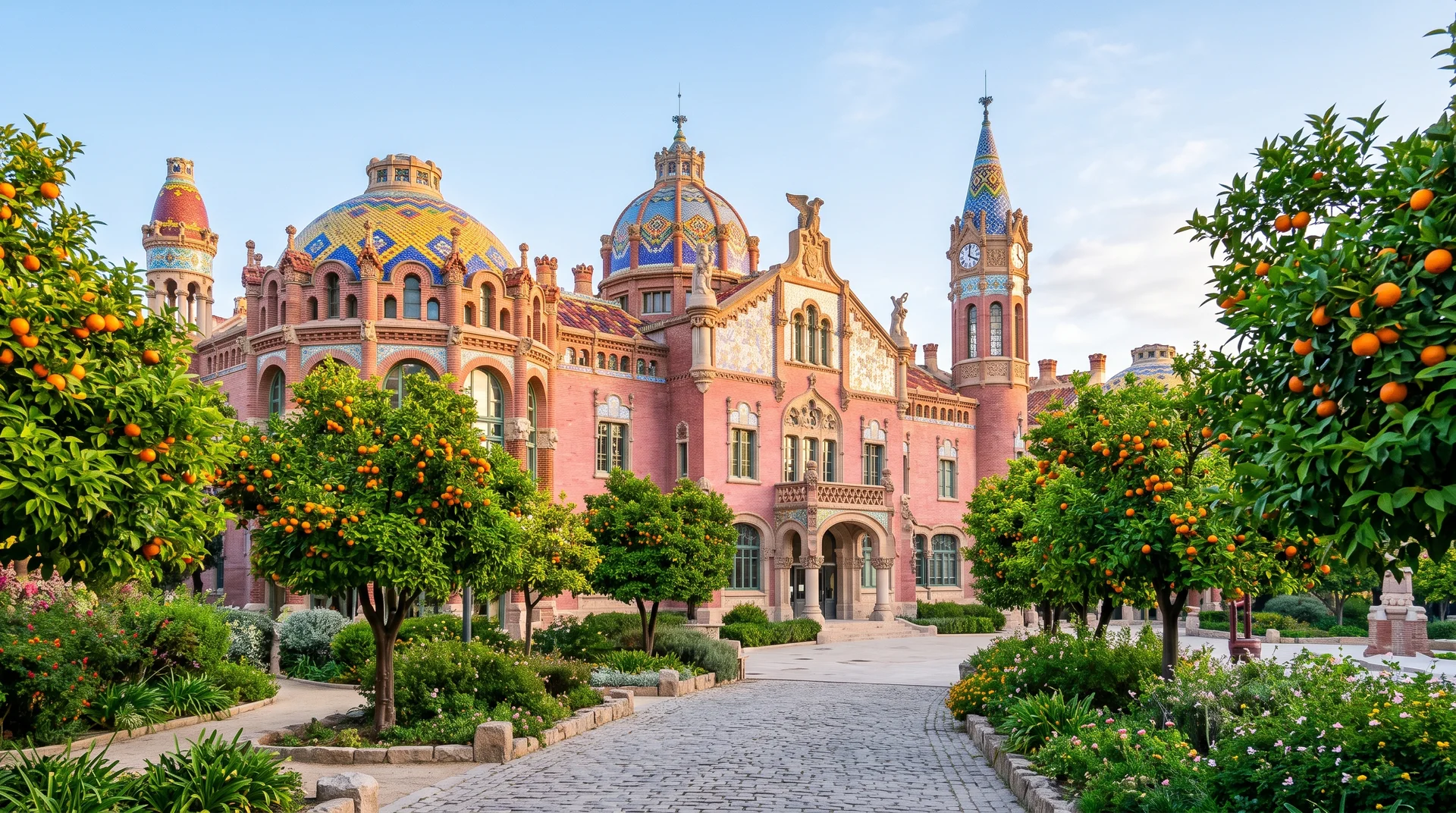
Fifteen minutes on foot from the Sagrada Família, and yet almost deserted: twelve pavilions of pink brick, ceramic and stained glass set in gardens of orange trees, designed by Domènech i Montaner to heal through beauty and light. The hospital operated until 2009; the site is now a UNESCO-listed museum where you walk the underground galleries that once linked the pavilions, then the Sant Salvador hall under its mosaic dome. Expect around €16, roughly €12 for self-guided entry, free on the first Sunday of the month. Open daily, with an earlier close on Sundays. It is the perfect breath of air after the crowds at the basilica, and one of the few major modernist sites where you can sit on a bench undisturbed. Metro Sant Pau-Dos de Maig (L5) or Guinardó (L4).
13/13Bunkers del Carmel: the 360-degree view locals keep for themselves
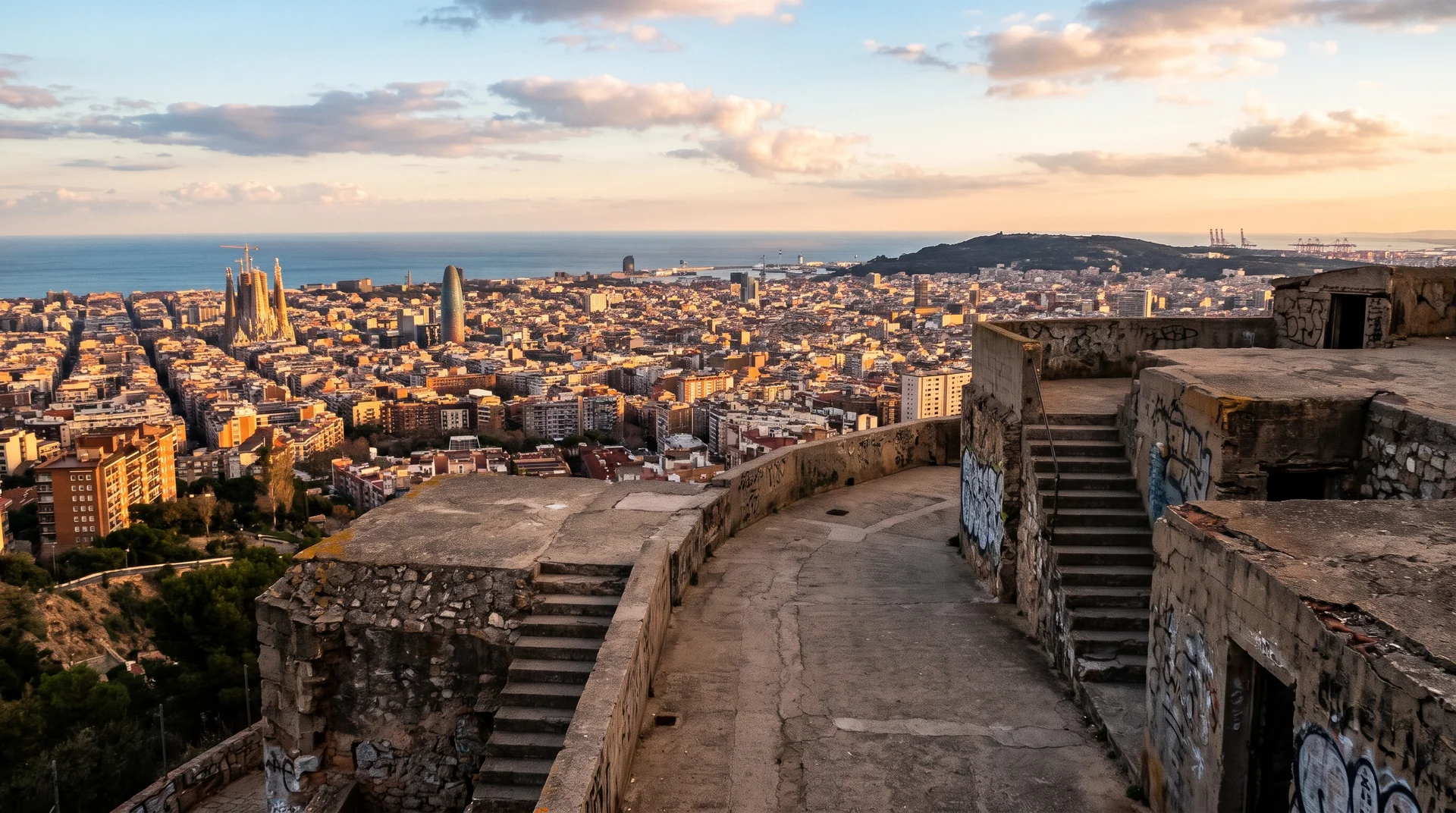
On the ridge of the Turó de la Rovira, the concrete platforms of a civil war anti-aircraft battery command the finest view in Barcelona: the whole city laid flat, from the Sagrada Família to the port, the sea on one side and the Collserola hills on the other. Access is free, but hours are now regulated, generally 9am to 7.30pm with a night-time closure, to protect the neighbourhood's peace. Come in late afternoon, roughly an hour before sunset, when the light gilds the façades of the Eixample. Bring water, a hat and proper shoes, as the final climb is steep and shadeless. The small MUHBA interpretation centre on site tells the story of the battery and of the shanty dwellings that occupied it until the 1990s. Bus 119, or metro Alfons X (L4) and a twenty-minute walk.