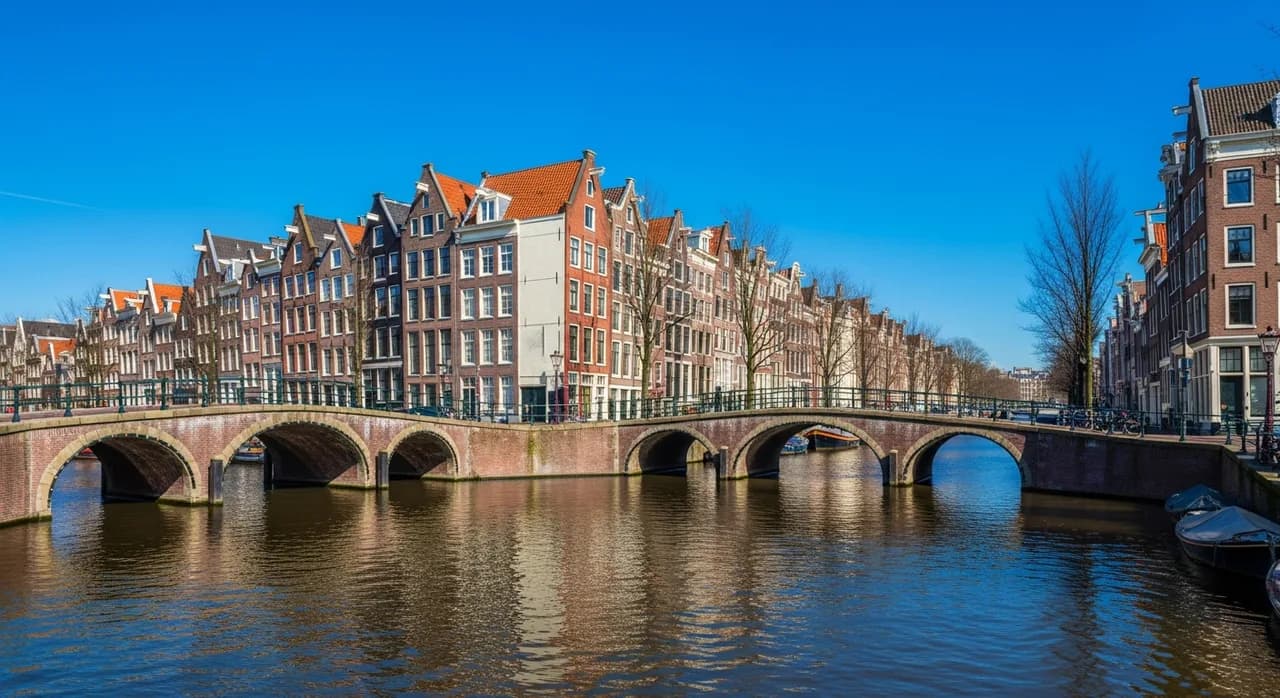
Amsterdam fits in the blink of an eye: 165 canals, 1,280 bridges, leaning brick houses mirrored in the water and a soundtrack of bicycle bells. You can walk from a world-class museum to a silent garden courtyard in ten minutes, and it is exactly this human scale that makes the Dutch capital so easy to love, even with children in tow. Behind the postcard lies a major cultural capital: Rembrandt and Van Gogh have their cathedrals here, the 17th-century canal ring is UNESCO-listed, and neighbourhood markets overflow with warm stroopwafels and fresh herring. Here are the twelve experiences that genuinely matter, from the most iconic to the most under-the-radar — all of them daytime, all of them family-friendly.
✈️ Flights right now to Amsterdam on Yoosky
Complete guide
In this article
- The Rijksmuseum: two hours face to face with the Dutch Golden Age
- The Anne Frank House: the hidden annex that changed how the world remembers
- The Van Gogh Museum: the world's largest collection, told as one life
- A canal cruise: seeing Amsterdam from the water, the way it was built to be seen
- The Jordaan and its hofjes: wandering the city's most photogenic quarter
- Vondelpark by bike: adopting the only real local means of transport
- Albert Cuypmarkt: tasting real Dutch street food
- NEMO Science Museum: where children are finally allowed to touch everything
- Zaanse Schans: working windmills twenty minutes away by train
- The Begijnhof: a secret courtyard steps from the noisiest square
- Het Scheepvaartmuseum: climbing aboard an East India ship
- Micropia: the only museum in the world devoted to microbes
1/12The Rijksmuseum: two hours face to face with the Dutch Golden Age
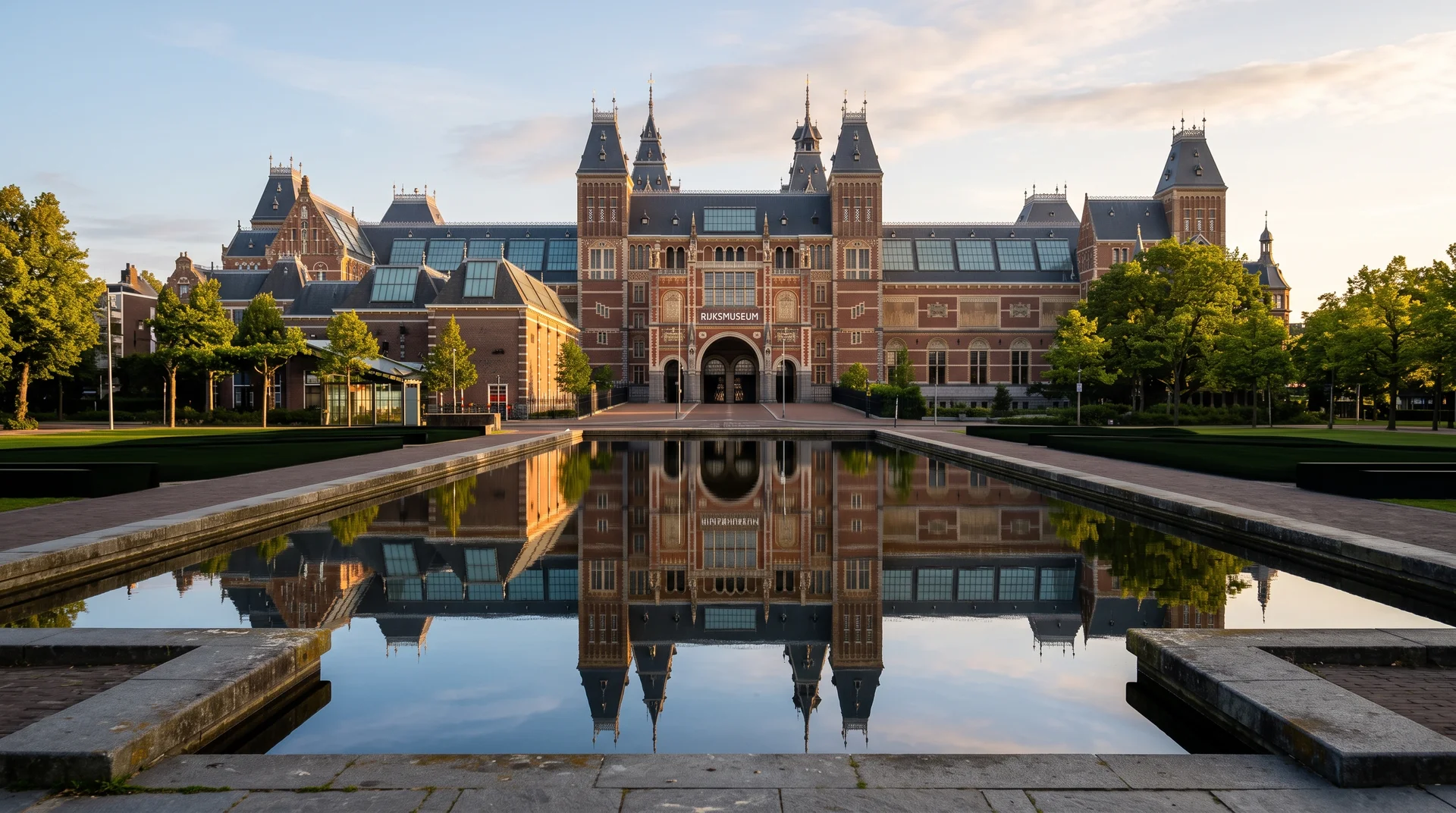
This is the obvious starting point. Behind its neo-Gothic facade, the Rijksmuseum unfolds 8,000 works along 1.5 kilometres of galleries, but everything converges on the Gallery of Honour and Rembrandt's Night Watch, restored in full public view in recent years. Around it: Vermeer, Frans Hals, astonishingly precise 17th-century dolls' houses and ship models that hold children's attention better than any painting. Tickets are around €25, free under 18, open daily 9am to 5pm. Book a timed slot online and aim for opening time or the final hour: between 11am and 3pm the Gallery of Honour becomes a tight corridor. The outdoor garden is free to enter and makes a perfect breather.
2/12The Anne Frank House: the hidden annex that changed how the world remembers
At 263 Prinsengracht, a concealed door behind a swinging bookcase opens onto the rooms where eight people hid for 761 days. The route is deliberately bare, stripped of furniture at Otto Frank's own request, and rarely less than overwhelming: pencil marks tracking a child's height on the wall, film-star photos glued up by a thirteen-year-old, the original diary in its case. Expect around €16 for adults and €7 for ages 10 to 17, by timed online ticket only, often six weeks ahead — nothing is sold at the door. Allow an hour, and bear in mind the museum itself advises against visiting with children under 10. Afterwards, walk along the canal for a while: you will want to.
3/12The Van Gogh Museum: the world's largest collection, told as one life
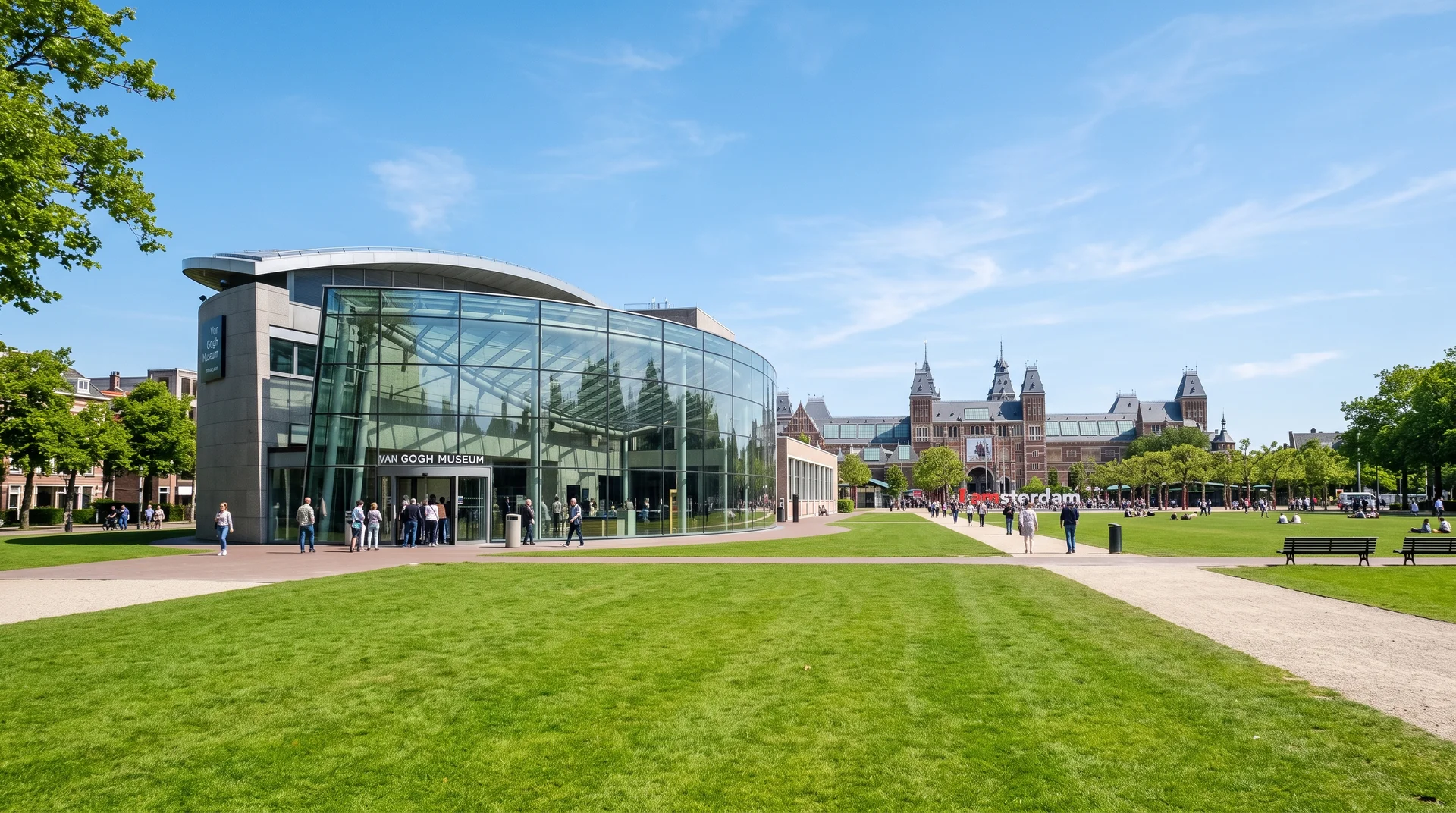
200 paintings, 500 drawings and 700 letters: nowhere else can you follow Vincent van Gogh this closely. The chronological route across four floors is a remarkably clear lesson — the sombre peasants of Brabant, the explosion of colour in Paris, Sunflowers and The Bedroom in Arles, then the turbulent fields of Auvers. The letters to his brother Theo, displayed at eye level, turn the visit into something intimate. Around €24 for adults, free under 18, open 9am to 6pm with late Friday openings. Timed tickets are compulsory and the museum sells out days ahead in high season. Museumplein, right outside, offers a lawn where children can run between two museums.
4/12A canal cruise: seeing Amsterdam from the water, the way it was built to be seen
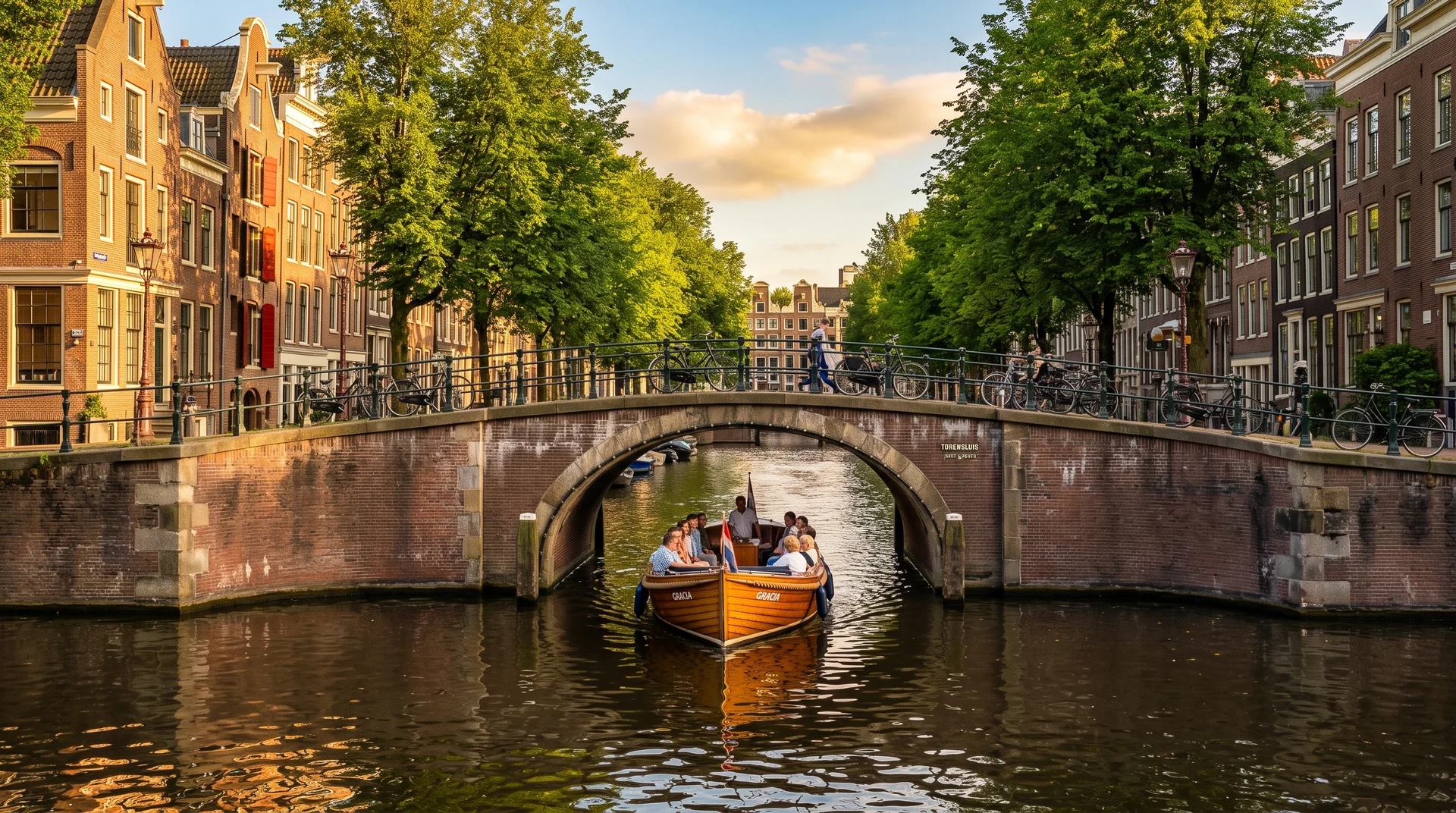
This is not a tourist trap — it is the right way to understand the city. The 17th-century canal ring (Herengracht, Keizersgracht, Prinsengracht) is UNESCO-listed, and from a boat deck you finally read what the street hides: bell and step gables, hoisting beams still fixed under the roofs, houses just 2.5 metres wide, shaped by a tax on facade width. Expect €18 to €22 for a one-hour loop leaving from Central Station, the Damrak or the Rijksmuseum. Glass-roofed boats rescue a rainy day, but if the sky is clear choose a late-afternoon open boat: low light raking across the brickwork is the finest moment of any Amsterdam day.
5/12The Jordaan and its hofjes: wandering the city's most photogenic quarter
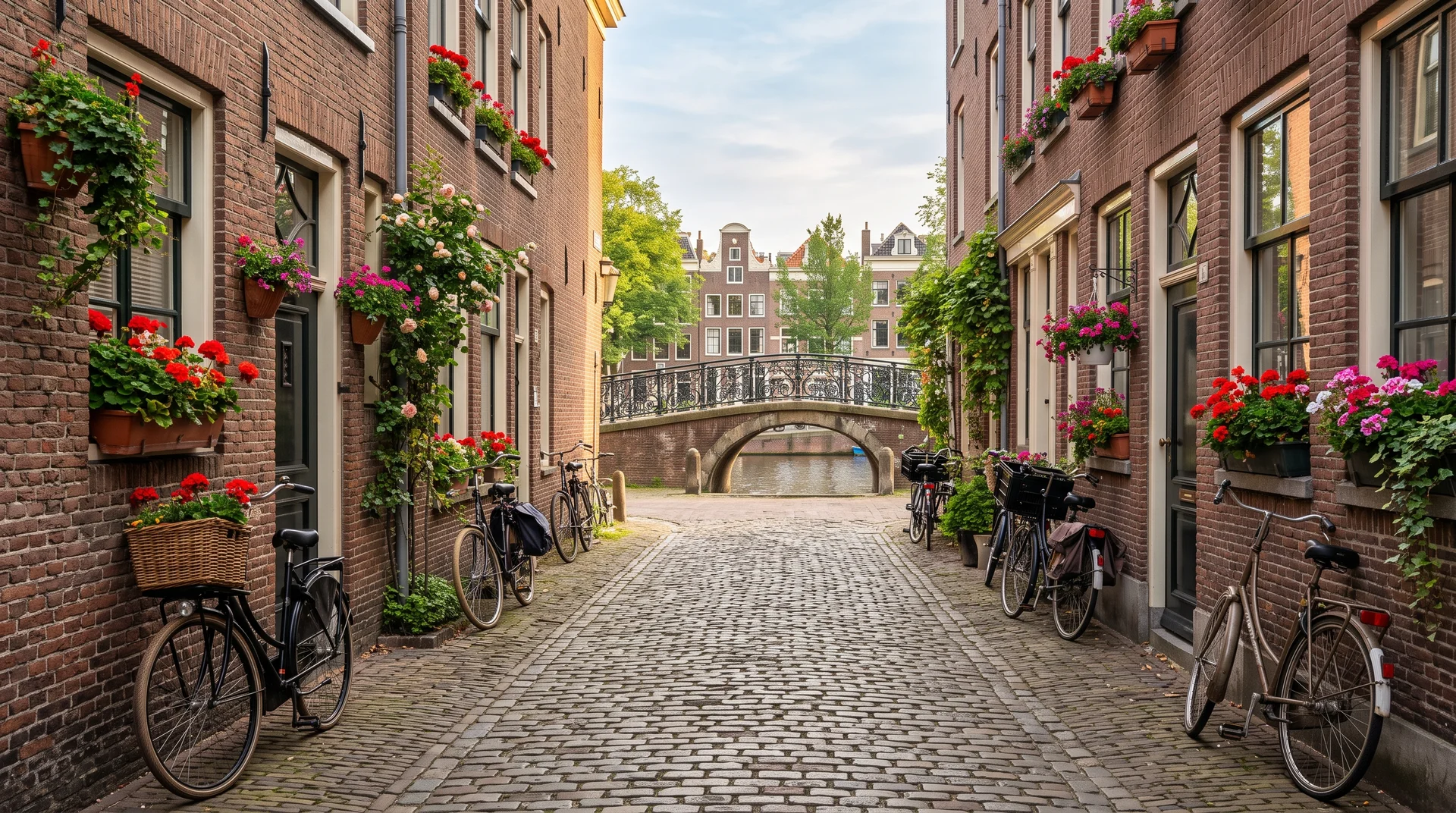
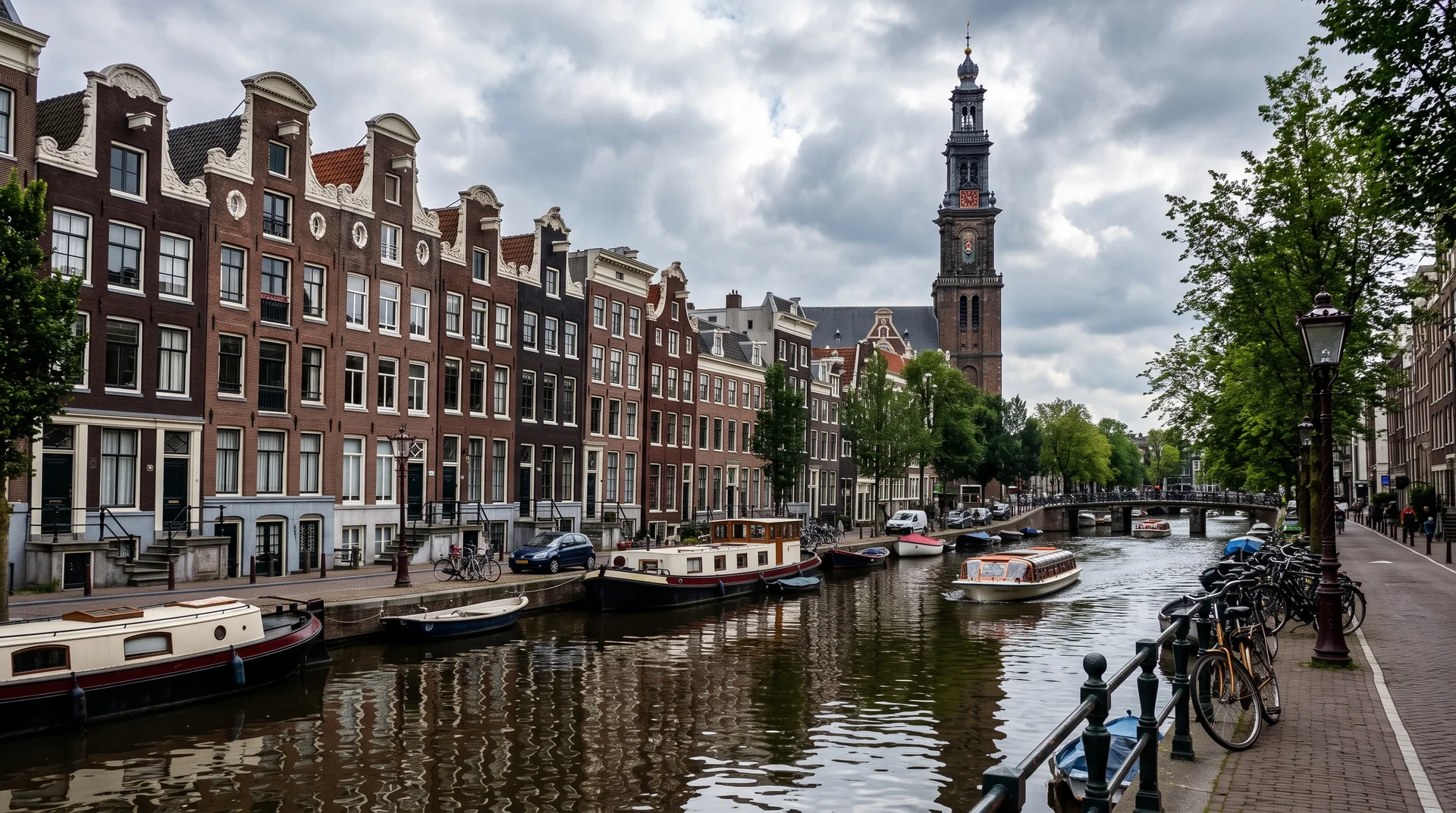
A former artisans' suburb turned into Amsterdam's most charming maze, the Jordaan is best visited without an itinerary: narrow lanes, facades buried in hollyhocks, antique shops and above all the hofjes — 17th-century garden courtyards built to house widows, hidden behind anonymous doors. Push open the one at Karthuizerhof or Suyckerhofje and the silence drops instantly. Add the nine small streets of the 9 Straatjes next door, the Westerkerk tower you can climb from April to October for about €10, and the Noordermarkt market on Saturday mornings. All of it is free, museums and cafes aside. Time it for a Sunday morning, when the district belongs only to its residents and its bells.
6/12Vondelpark by bike: adopting the only real local means of transport
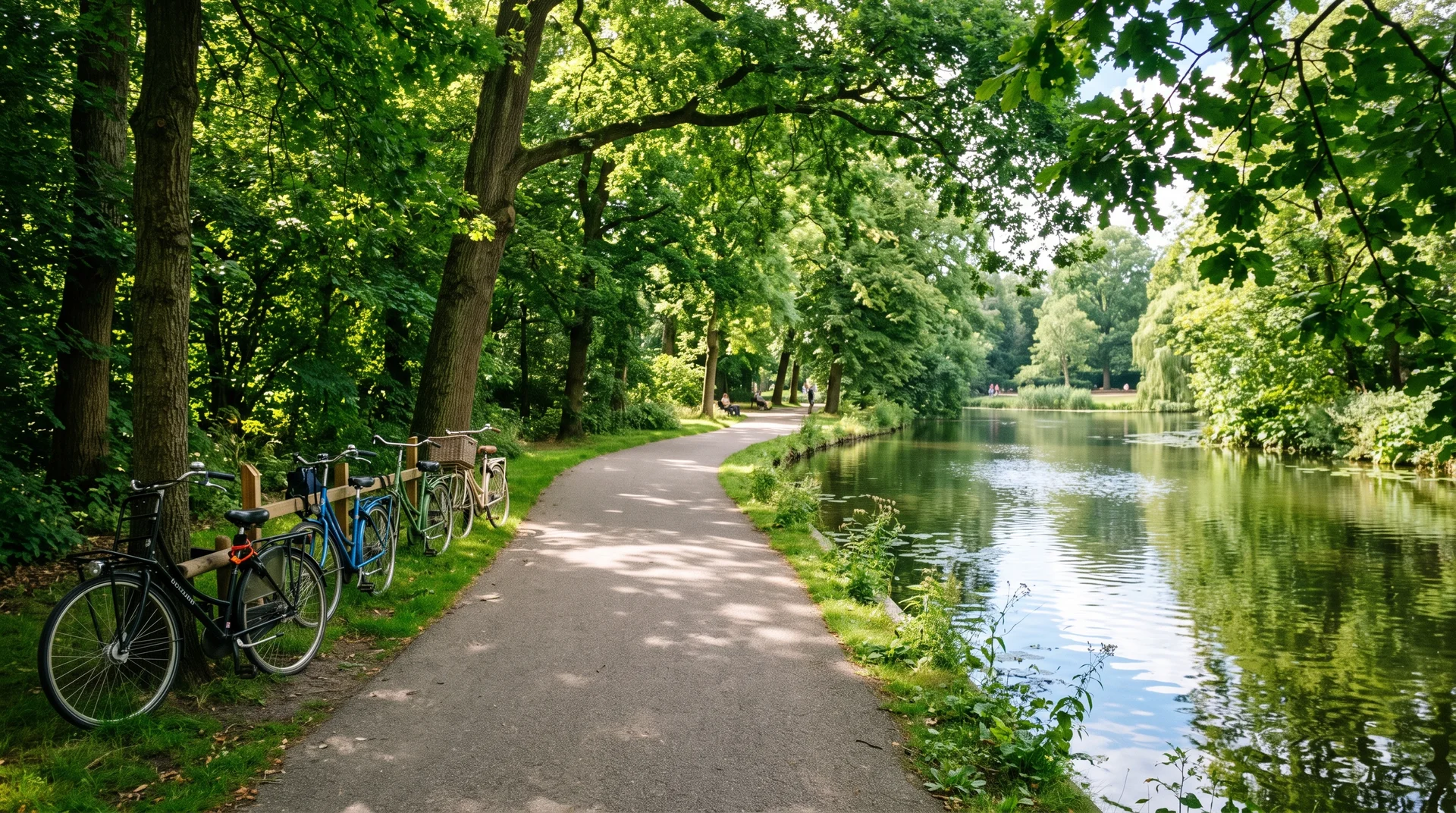
Amsterdam has more bicycles than residents, and Vondelpark is where to take it up stress-free: 47 hectares of paths lined with ponds, lawns, playgrounds and an open-air theatre staging free Sunday shows in summer. Rental runs about €12 to €15 a day from outlets near Leidseplein or Vondelstraat, helmets optional and child seats available everywhere. The park is always open and free to enter. Two rules are worth the trip: ride on the right, signal every turn with your arm, and never stop in the middle of a cycle lane — locally, that is the equivalent of braking on a motorway. Carry on afterwards into Oud-Zuid and its Art Nouveau villas.
7/12Albert Cuypmarkt: tasting real Dutch street food
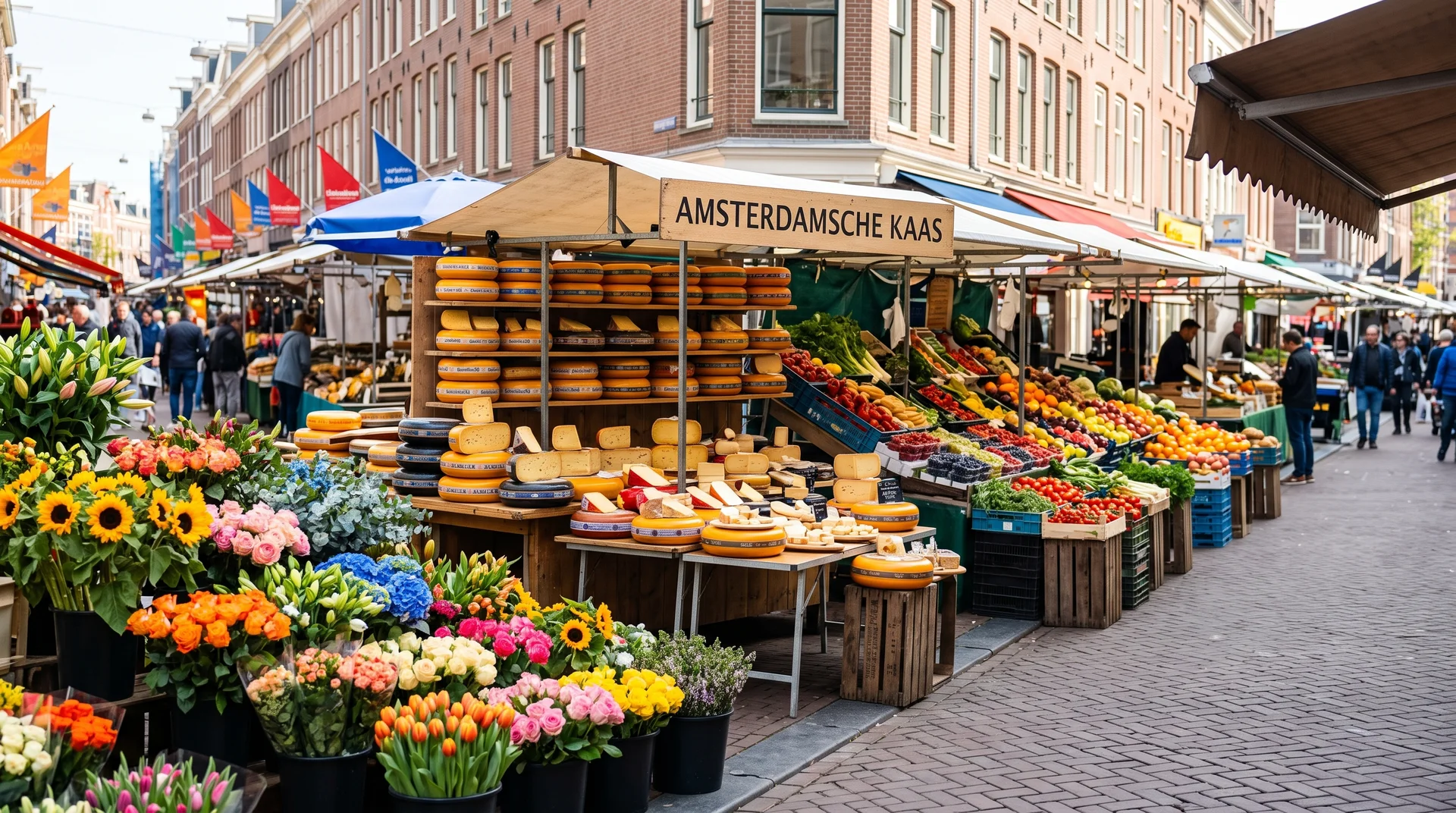
A kilometre of stalls in the De Pijp district, this is the largest street market in the Netherlands and the city's best working-class canteen. Come for three things: a stroopwafel pressed in front of you and still warm (about €3), a paper cone of poffertjes dusted with icing sugar, and a raw herring served with onions and pickles, swallowed head tipped back — the local integration test. Add cut-to-order Gouda, tulip bulbs to take home, and the Surinamese fabric and spice stalls that tell the district's migration story. Open Monday to Saturday, 9am to 5pm, free entry, card payment accepted almost everywhere. Arrive before noon: after that, the central aisle becomes a river.
8/12NEMO Science Museum: where children are finally allowed to touch everything
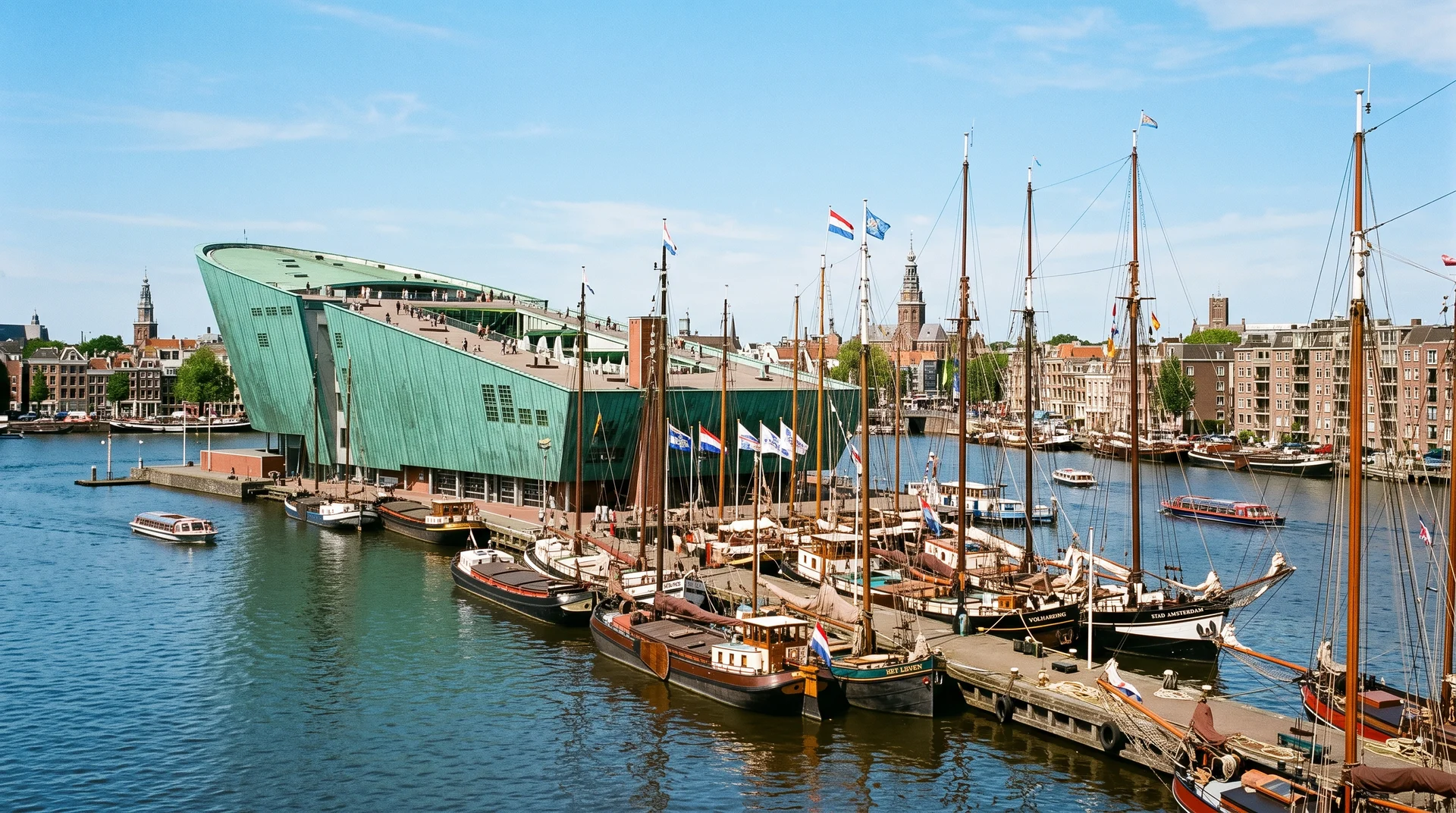
Recognisable by its green ship's-hull roof designed by Renzo Piano, NEMO is five floors of hands-on experiments: blowing a giant bubble around yourself, triggering a chain reaction, tipping a suspension bridge, playing researcher in a lab coat in a real laboratory. Nothing sits behind glass, everything is meant to be handled, and labels are in Dutch and English. Expect about €19.50 from age 4, free below, open daily 10am to 5.30pm during school holidays. The regulars' secret: the roof terrace is free and accessible independently of the museum, offering one of the finest panoramas over the harbour and the old city's bell towers — plus water fountains where children always end up soaked.
9/12Zaanse Schans: working windmills twenty minutes away by train
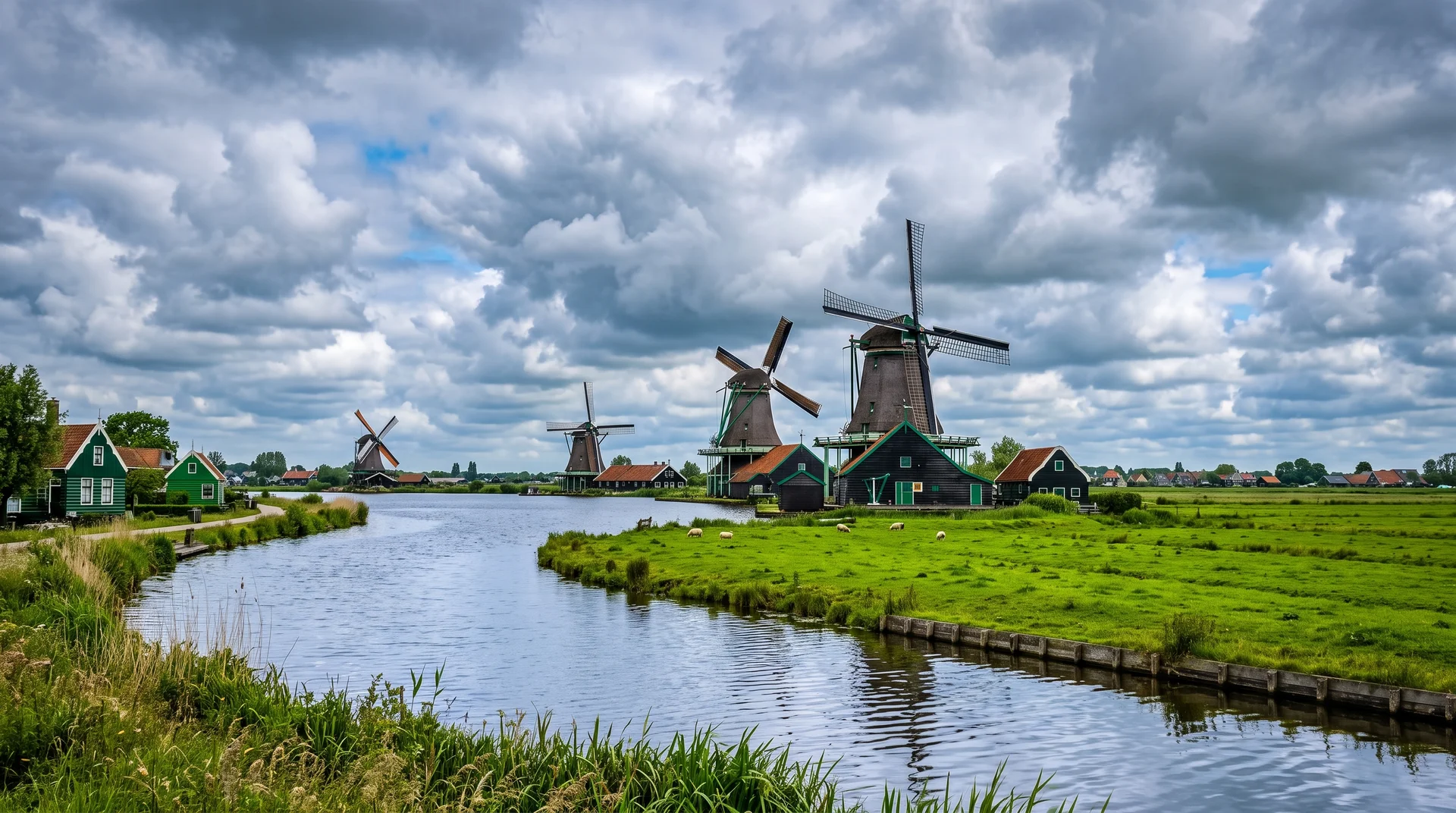
This is the best-value day trip from Amsterdam: 18 minutes by train from Central Station to Zaandijk Zaanse Schans, then a ten-minute walk. You emerge into a reconstructed 18th-century village along the river Zaan, with eight windmills that genuinely turn — one grinding pigments, another spices, a third sawing planks — and interiors you can visit for €6 to €7 each. The site itself is free to enter, as are the clog workshop and the cheese dairy, both of which offer tastings. The train costs about €8 return. Arrive before 10am or after 4pm: in between, coaches pour thousands of visitors into a hamlet of a few hundred. In spring, pair it with the tulip fields of Keukenhof, open late March to mid-May (around €22).
10/12The Begijnhof: a secret courtyard steps from the noisiest square
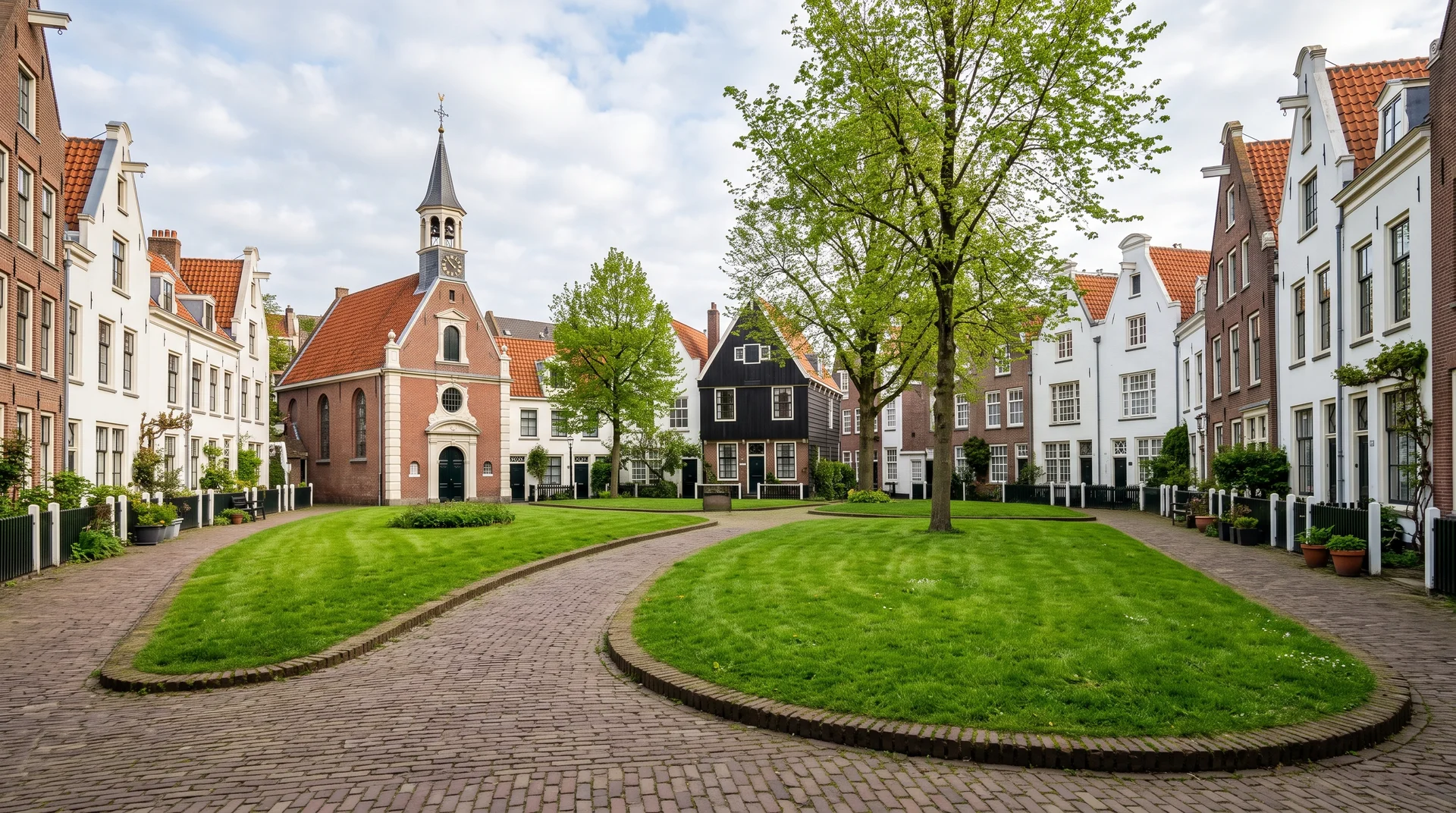
Fifty metres from the bustle of the Spui, a low door opens onto a rectangle of lawn ringed by white 14th-century houses. This is the Begijnhof, founded for the beguines, lay women who lived communally without taking permanent vows. Inside you will find number 34, the oldest wooden house in Amsterdam (around 1528), a tiny clandestine chapel concealed behind an ordinary facade, and a silence that feels genuinely unreal in this part of town. Entry is free, 9am to 5pm, but the courtyard is still lived in: no groups, no picnics, and voices stay low — signs make the point firmly. Ten minutes is enough, and it is exactly the pause a day in the centre calls for.
11/12Het Scheepvaartmuseum: climbing aboard an East India ship
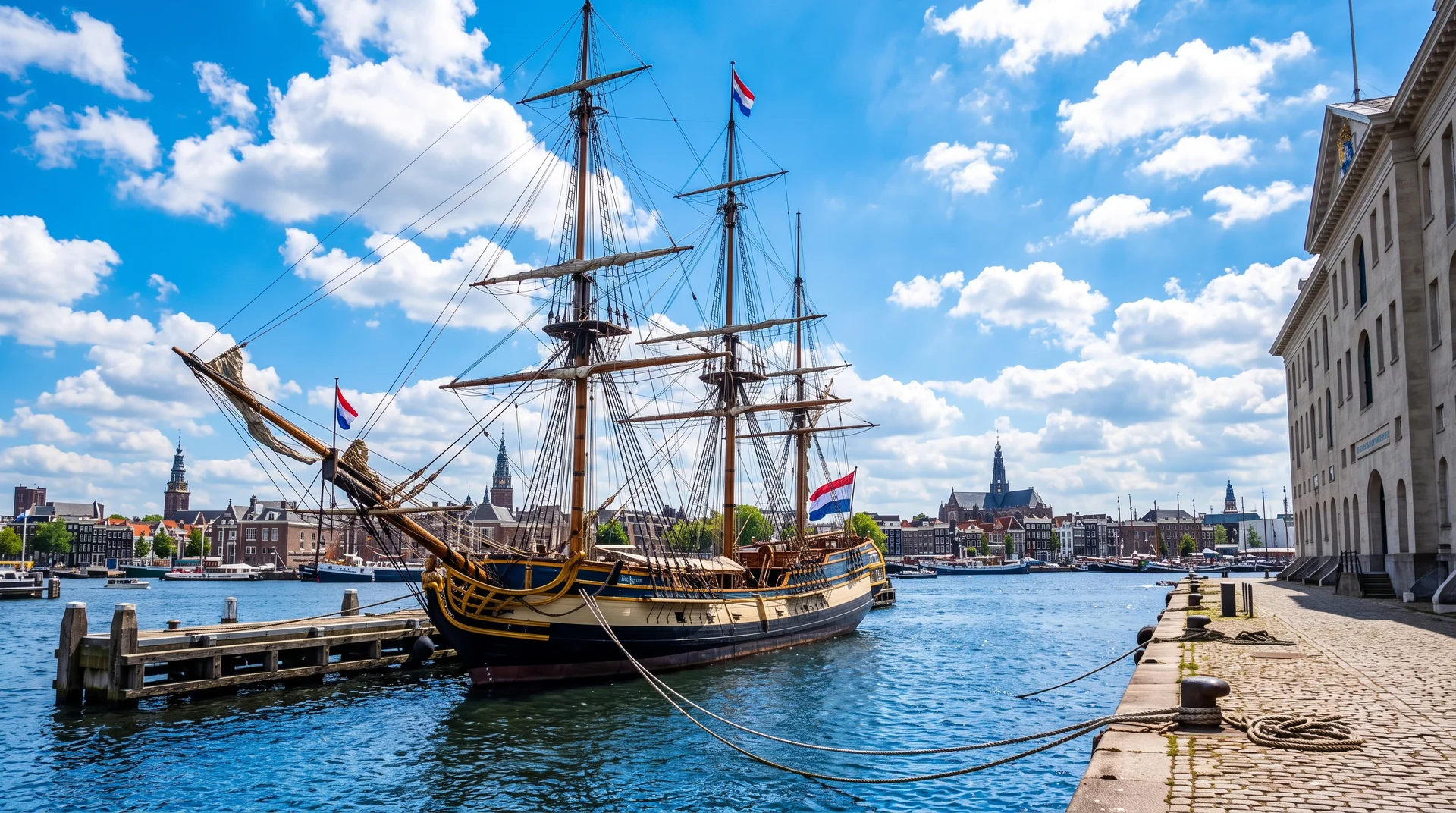
Housed in the naval arsenal of 1656, the national maritime museum tells how a country smaller than Brittany came to dominate the oceans. The highlight is moored outside: a full-size replica of the Amsterdam, a three-masted East India Company ship whose decks, hold, galley and hammocks you can explore — with an honest account of life on board and of colonial trade, slavery included. Inside, a whole room of antique maps, gilded royal barges and a navigation simulator for children. Around €18.50, free under 3, open 10am to 5pm. It is a ten-minute walk from NEMO: together the two make an excellent harbour-and-science day.
12/12Micropia: the only museum in the world devoted to microbes
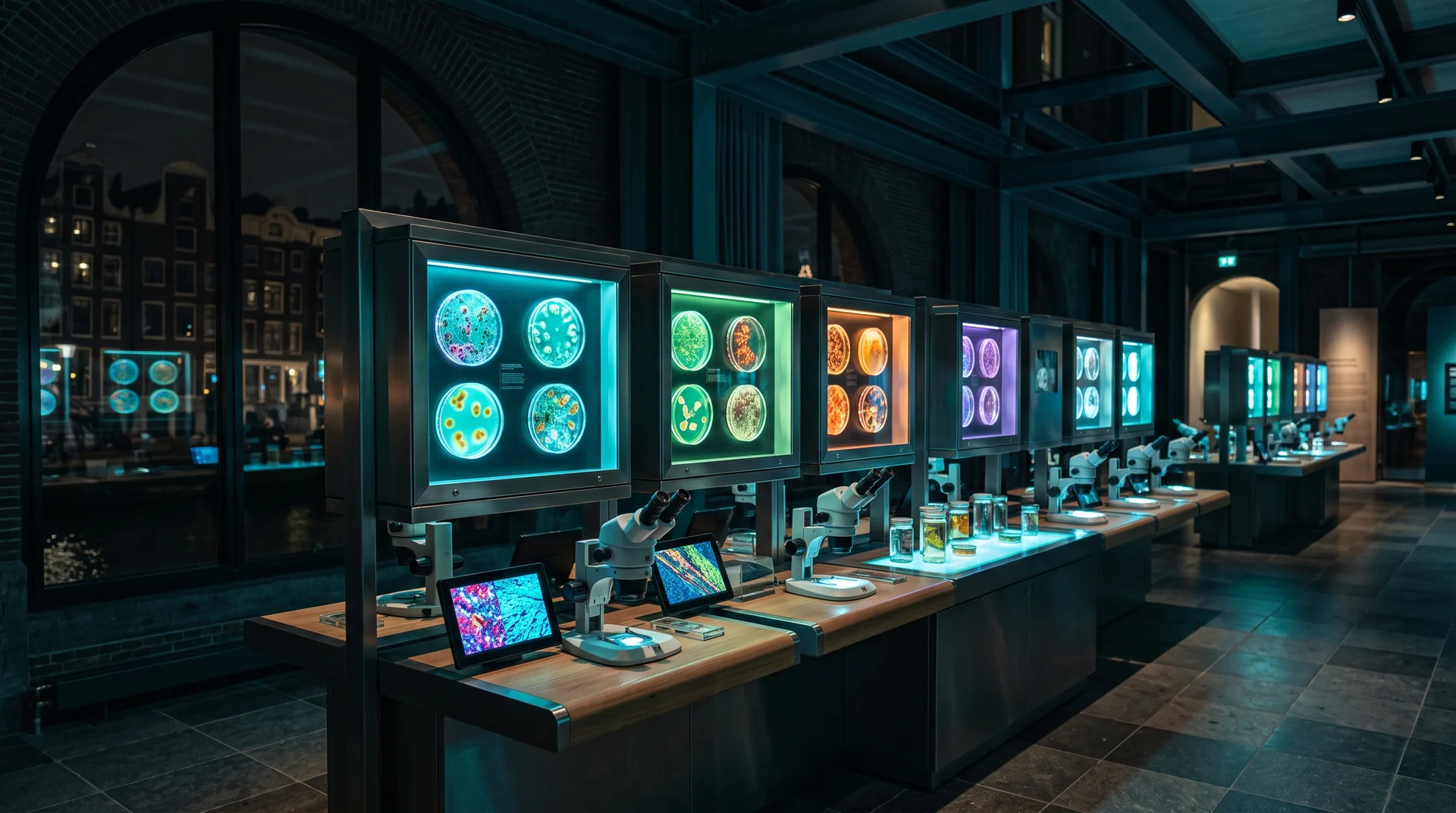
This is the visit nobody mentions and the one children remember most. Micropia, attached to Artis zoo, is the first museum in the world devoted entirely to micro-organisms: you watch living tardigrades through an electron microscope you steer yourself, meet the bacteria that make cheese, and step into a body scanner that cheerfully reports how many kilos of microbes you carry around. The showstopper is the wall of Petri dishes, each colony drawing a different shape. Around €18 on its own, about €29 combined with Artis, open 9am to 5pm, Tuesday to Sunday depending on the season. Allow one to one and a half hours, and use the chance to cross the neighbouring zoological park, one of Europe's oldest (1838) and beautifully planted.