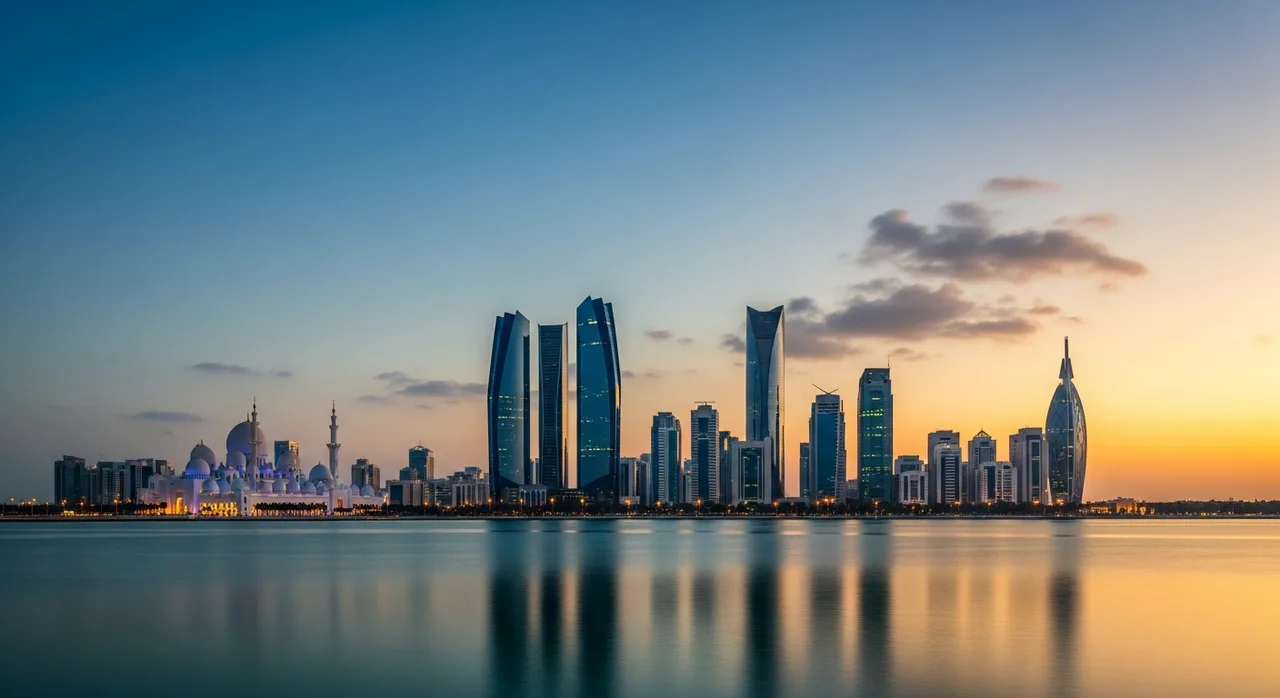
You arrive in Abu Dhabi thinking you know the script — glass towers, sand, sheer excess — and the Emirati capital methodically proves you wrong. Here, the marble of a white mosque catches the setting sun like the inside of a shell, a Jean Nouvel museum lets daylight rain through a perforated dome, and twenty minutes from downtown, silent mangroves shelter herons and flamingos. More spread out, slower and far greener than neighbouring Dubai, the city rewards families who take their time: supervised beaches in the morning, air-conditioned museums in the afternoon, the dunes of the Rub al Khali the next day. Here are the twelve experiences that reveal Abu Dhabi's true depth, from the most iconic to the most under-the-radar.
✈️ Flights right now to Abu Dhabi on Yoosky
Complete guide
In this article
- Sheikh Zayed Grand Mosque: Abu Dhabi's white marble masterpiece
- Louvre Abu Dhabi: Jean Nouvel's rain of light on Saadiyat Island
- Qasr Al Watan: stepping inside the Emirati presidential palace
- The Corniche: eight kilometres of waterfront and a Blue Flag beach
- Yas Island: Ferrari World and Warner Bros, the ultimate family day out
- Qasr Al Hosn: the city's oldest building tells the story of the pre-oil Emirates
- Jubail Mangrove Park: silent kayaking among herons and flamingos
- Saadiyat Beach: natural dunes, hawksbill turtles and turquoise water
- The Liwa Desert: sleeping on the edge of the Rub al Khali, the world's largest sand sea
- Sir Bani Yas Island: the Emirati safari where oryx and giraffes roam
- Observation Deck at 300: the whole city from the 74th floor of Etihad Towers
- Al Mina markets: fish, dates and carpets, Abu Dhabi's everyday face
1/12Sheikh Zayed Grand Mosque: Abu Dhabi's white marble masterpiece
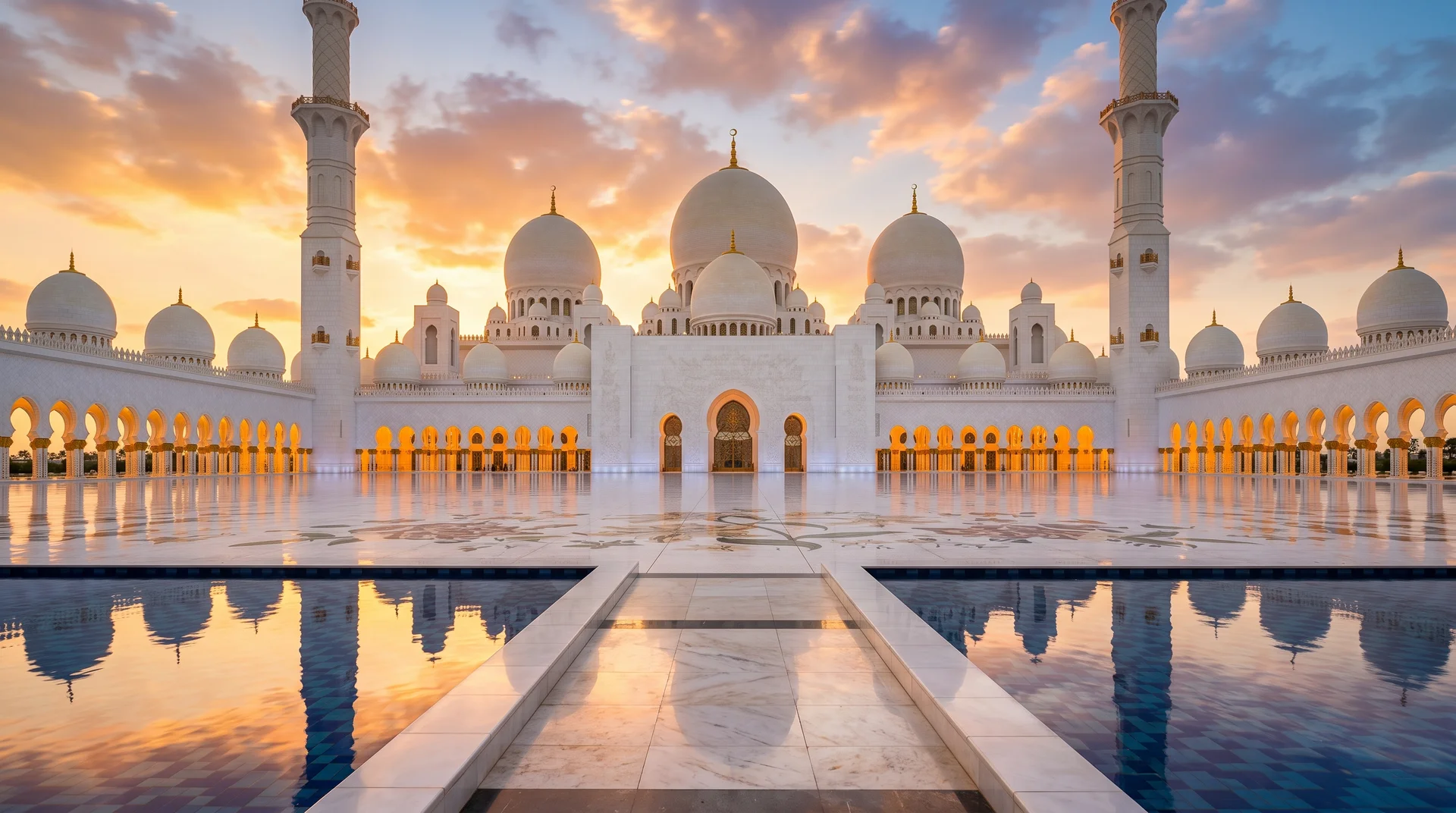
Eighty-two domes, a thousand columns inlaid with mother-of-pearl and the world's largest hand-woven carpet (5,700 m², two years of work): the Sheikh Zayed Grand Mosque impresses less through statistics than through the softness of its light. Macedonian marble turns pink in late afternoon, then moon-blue once the night lighting comes on. Entry is free and access runs through the Wahat Al Karama visitor centre; book your time slot online, it is mandatory. Open 9am to 10pm (Fridays from 4:30pm). Modest dress is required, and abayas and headscarves are lent free of charge to women visitors. Arrive around 4:30pm to catch both golden hour and the illuminations, and bring socks — the floors are walked barefoot.
2/12Louvre Abu Dhabi: Jean Nouvel's rain of light on Saadiyat Island
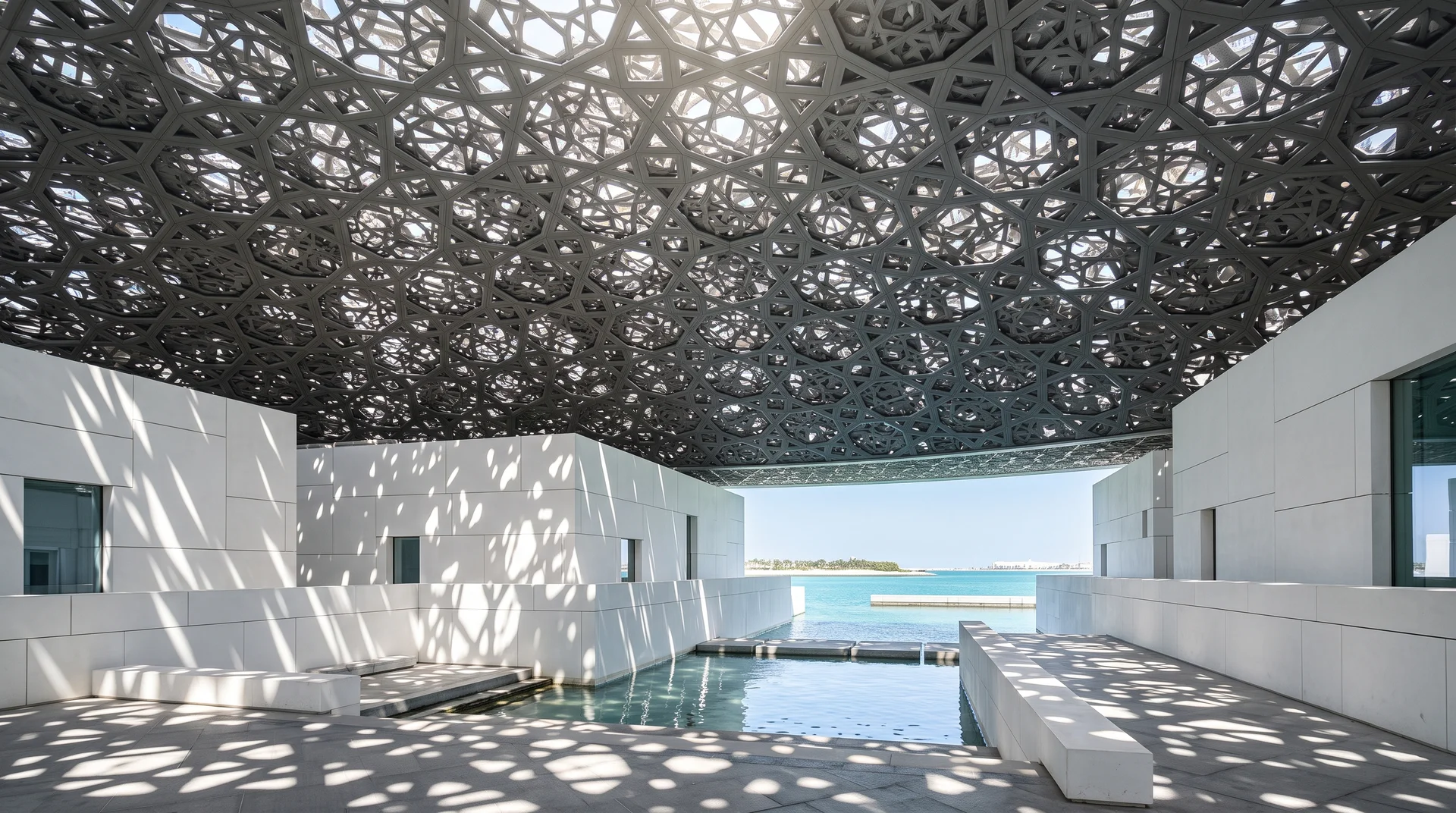
Beneath a 180-metre dome made of 7,850 layered steel stars, eight thousand shafts of sunlight fall onto the white walkways: Jean Nouvel calls it the "rain of light", and the effect alone justifies the trip. The chronological rather than geographical layout sets a Gandharan Buddha against a Bellini Madonna, a Gothic bible against a Mamluk Quran — a lesson in comparative humanity that lands remarkably well with children. Allow 2.5 hours for the twelve galleries. Open Tuesday to Sunday, 10am-6:30pm (until 8:30pm at weekends), closed Mondays; around AED 65 (€16), free for under-18s. The Children's Museum and the waterside pier walk, with the sea lapping at your feet, round the visit off perfectly.
3/12Qasr Al Watan: stepping inside the Emirati presidential palace
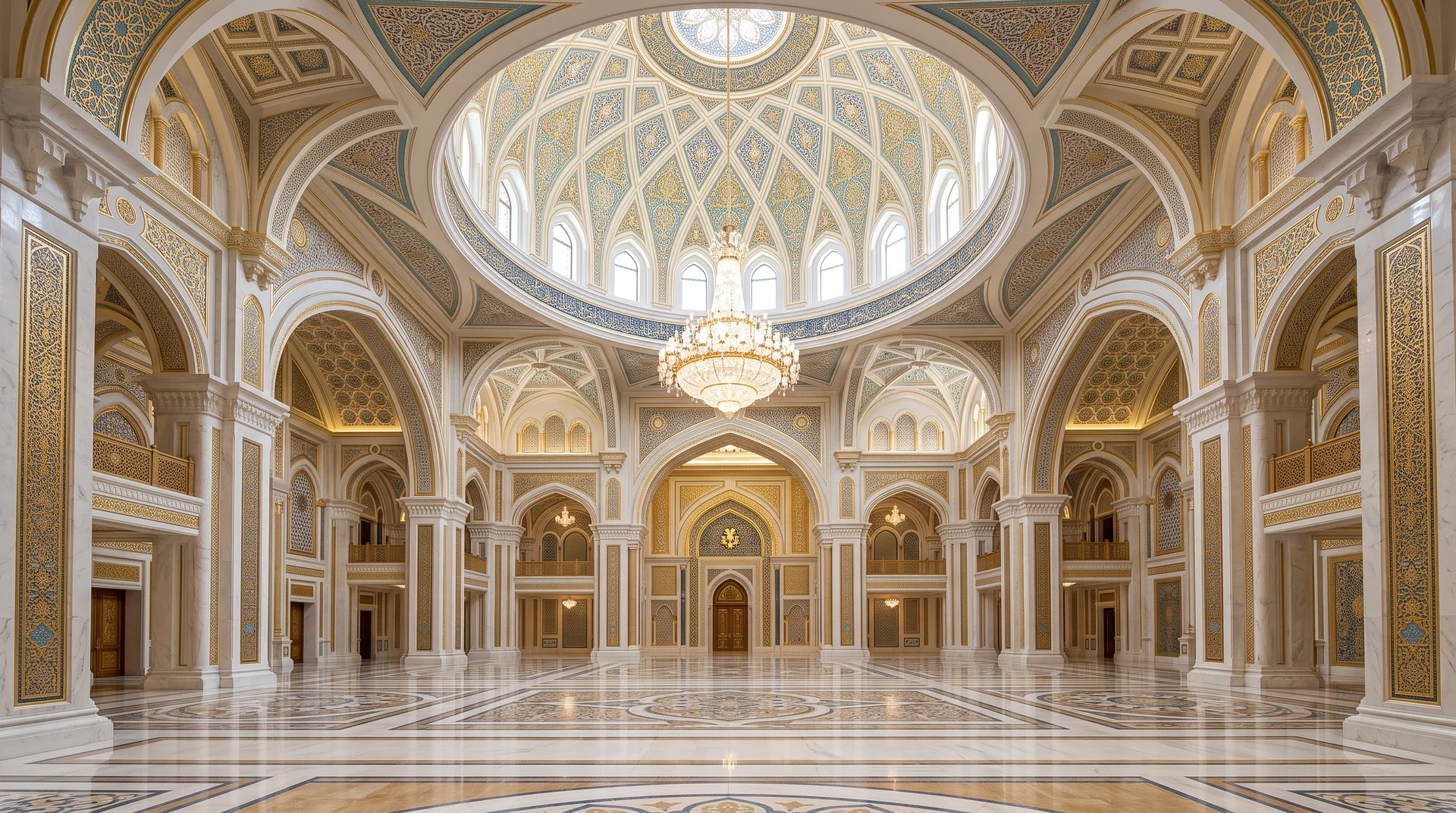
Working palaces open to the public are rare: Qasr Al Watan, seat of the Emirati presidency, has been one since 2019, and the contrast with the pomp you might expect is striking. Everything is geometry and whiteness — the Great Hall rises beneath a 37-metre dome, the central chandelier weighs eight tonnes, and the Palace library holds Arabic manuscripts on science and astronomy. The Presidential Banquet hall, laid for 300 guests, is also part of the route. Open daily 10am to 8pm (last entry 6:30pm), around AED 65 (€16) for adults, free for under-4s. Stay until 7:30pm: the Palace in Motion sound and light show, projected onto the façade, is included in the ticket.
4/12The Corniche: eight kilometres of waterfront and a Blue Flag beach
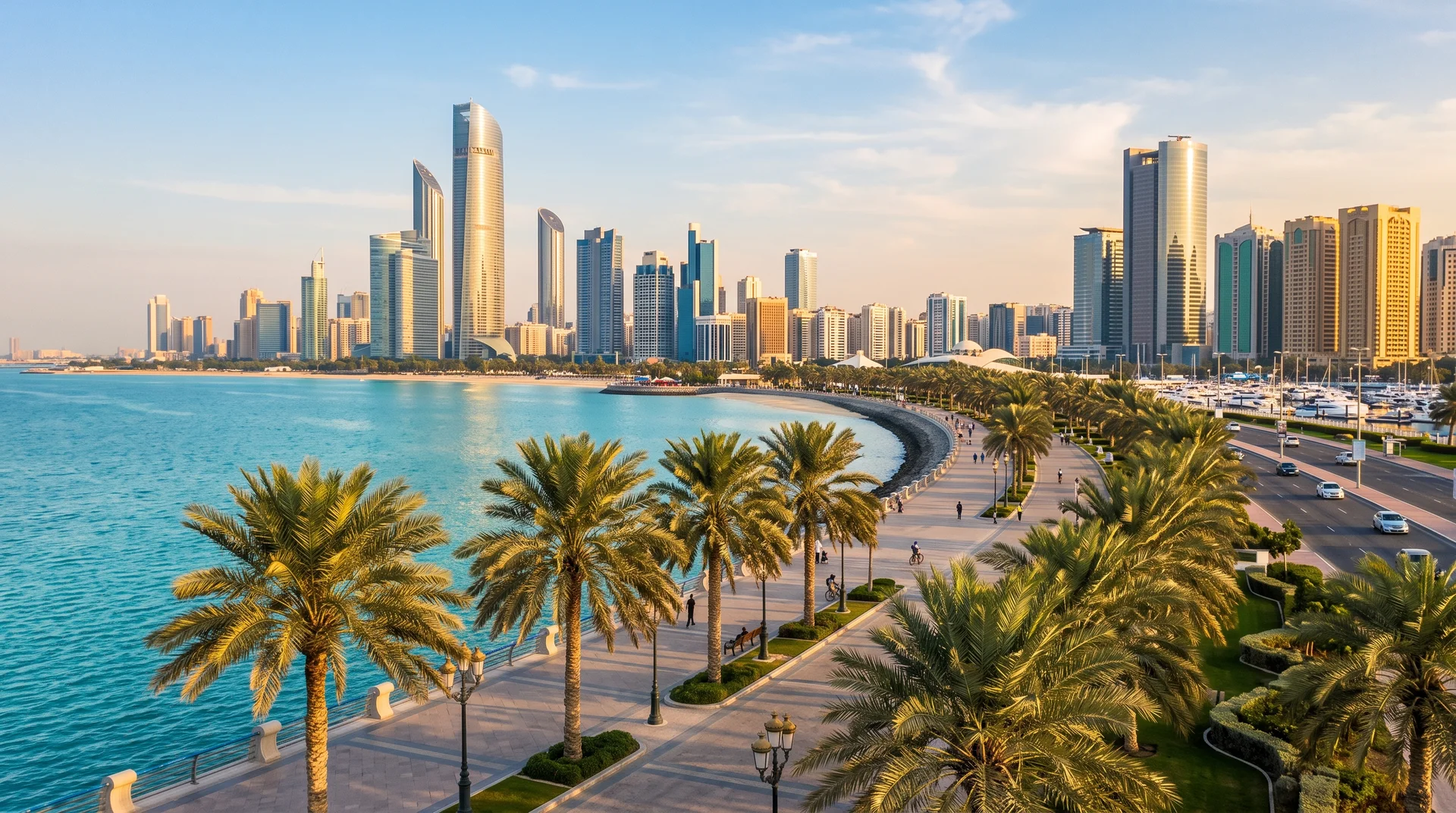
This is the city's open-air living room: eight kilometres of palm-lined promenade between the marina and the port, with separated cycle lanes, playgrounds and a permanent view of the skyline. Blue Flag-certified Corniche Beach offers pale sand and shallow water that is ideal with children; access to the supervised family zone costs around AED 10-25 (€3-6), sun loungers and showers included, open 8am-8pm. Rent a bike from the self-service docks to cover the loop in an hour. Mind the heat: from June to September temperatures top 40°C and the humidity makes exertion genuinely risky — save the walk for sunrise or after 5pm, and keep drinking water throughout.
5/12Yas Island: Ferrari World and Warner Bros, the ultimate family day out
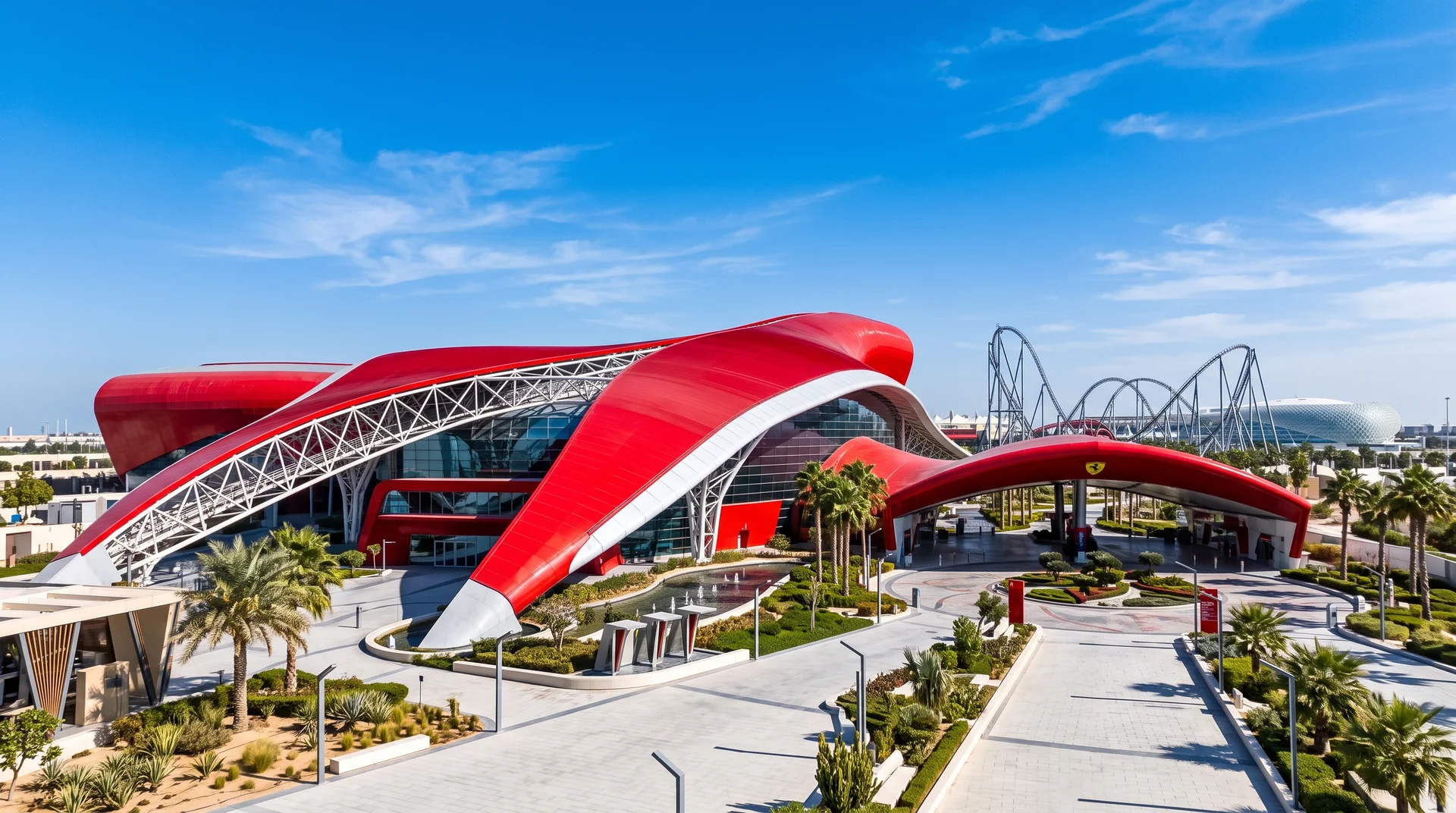
On this man-made island, ten minutes from downtown by causeway, three major parks divide the day between them. Ferrari World is home to Formula Rossa, the world's fastest rollercoaster (0 to 240 km/h in 4.9 seconds), but also a carousel and simulators for younger visitors. Warner Bros World, entirely indoors and air-conditioned, is the city's best refuge during the hottest hours. Yas Waterworld completes the trio with 45 water attractions. Budget around AED 345 (€85) per park per adult, with general opening hours of 11am-8pm; the multi-park pass cuts the bill substantially. High-acceleration rides are not advised for anyone with heart, neck or back conditions — the boarding signs say so, and they are worth taking seriously.
6/12Qasr Al Hosn: the city's oldest building tells the story of the pre-oil Emirates
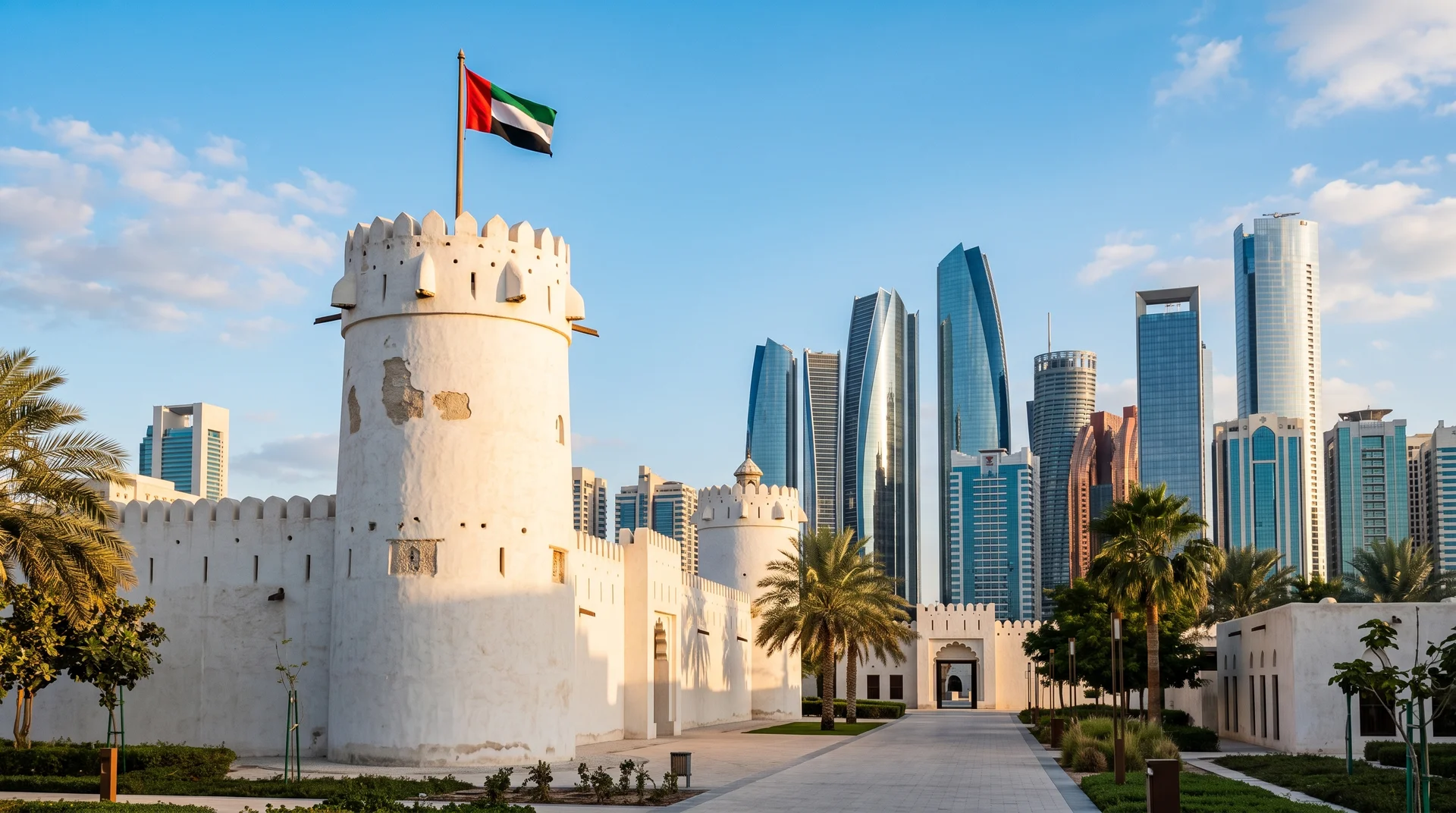
This coral-and-shell fort, whitewashed and built around a 1761 watchtower, was created to protect the island's only freshwater well. It served in turn as the sheikhs' residence, seat of government and national archive before eleven years of restoration. The museum it now houses uses objects and archive film to tell the story of a society of pearl divers and Bedouin that transformed within a single generation. The House of Artisans, in the same compound, demonstrates al sadu weaving and talli embroidery live. Open 10am to 8pm (Fridays noon-8pm), around AED 30 (€7.50), free for under-18s. Ninety minutes is enough, and it is the best possible introduction to everything else on your trip.
7/12Jubail Mangrove Park: silent kayaking among herons and flamingos
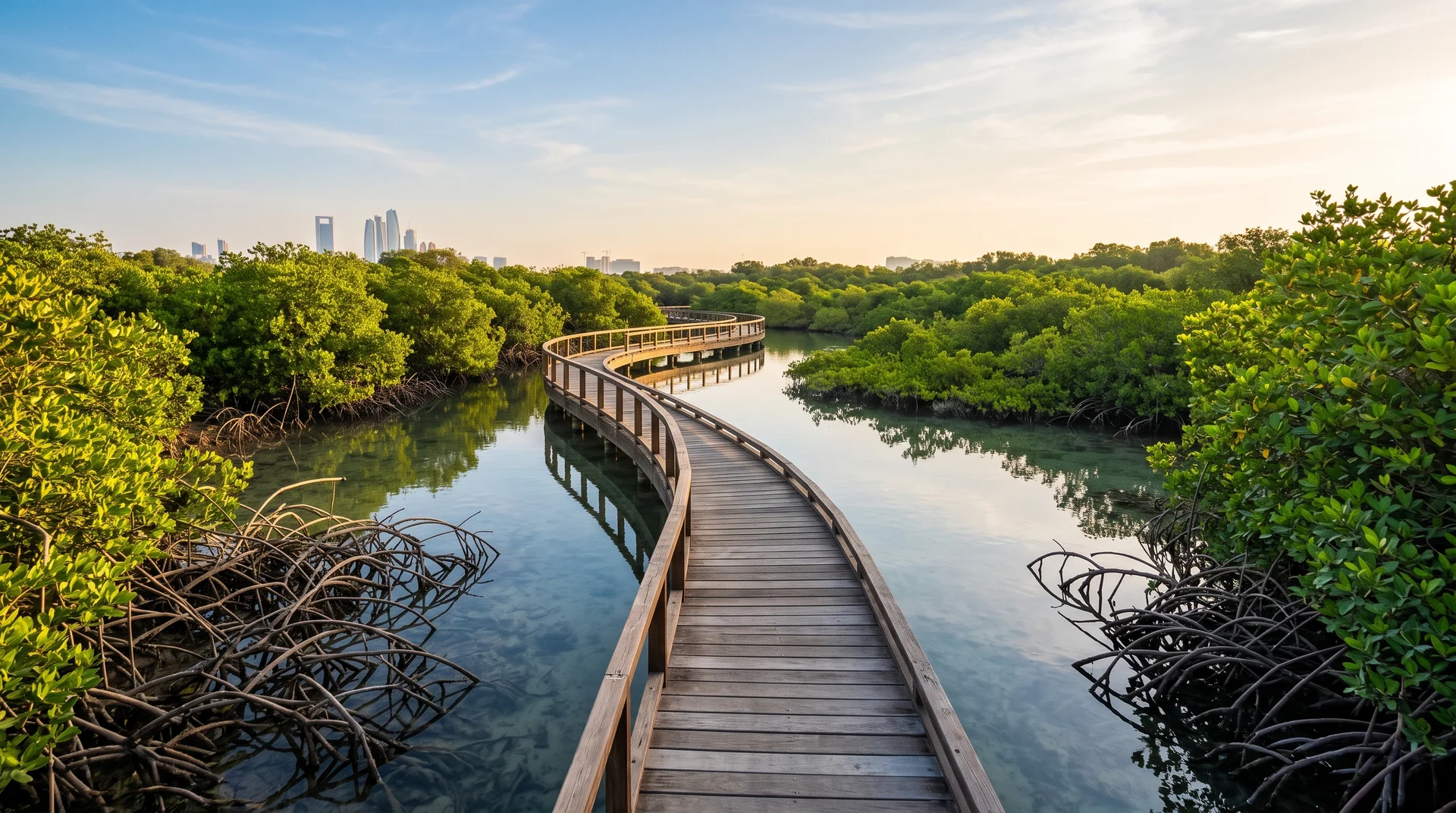
Nobody pictures Abu Dhabi green, and yet: the capital holds nearly 75% of the UAE's mangroves, a maze of channels you paddle through within a few metres of the roots. Grey herons, egrets, fiddler crabs and, in winter, flamingos make for a surprisingly tranquil spectacle ten minutes from downtown. Jubail Mangrove Park has a two-kilometre boardwalk, free for the short loop, and guided kayak outings from around AED 130 (€32) for an hour — open to children from age 5 in a tandem. Open 8am to 7pm. Book the morning slot: the light is lower and the heat manageable. A hat, sunscreen and water are non-negotiable.
8/12Saadiyat Beach: natural dunes, hawksbill turtles and turquoise water
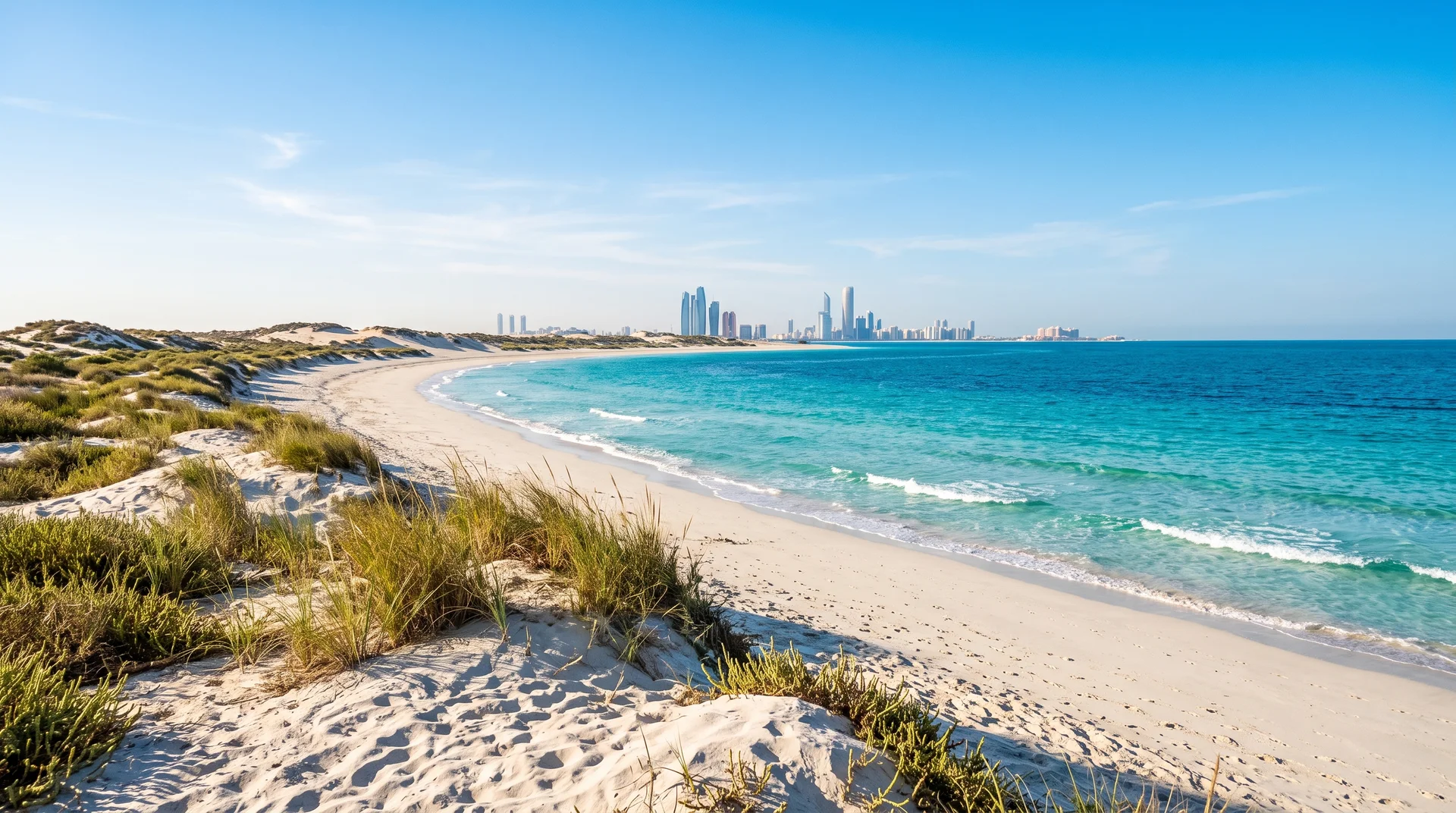
Ten minutes from the Louvre, Saadiyat Public Beach unrolls nine hundred metres of white sand backed by protected dunes — one of the emirate's last natural beaches. Critically endangered hawksbill turtles nest here between March and June, when zones are marked off and lighting reduced; respect the signage scrupulously. Dolphins occasionally pass offshore in the late afternoon. Public beach access costs around AED 25 (€6) on weekdays, with loungers and parasols extra; open 8am to 7pm, with lifeguards on duty and swimming flags posted. Currents can run strong on the eastern side: swim between the flags, and keep children in the sheltered supervised zone.
9/12The Liwa Desert: sleeping on the edge of the Rub al Khali, the world's largest sand sea
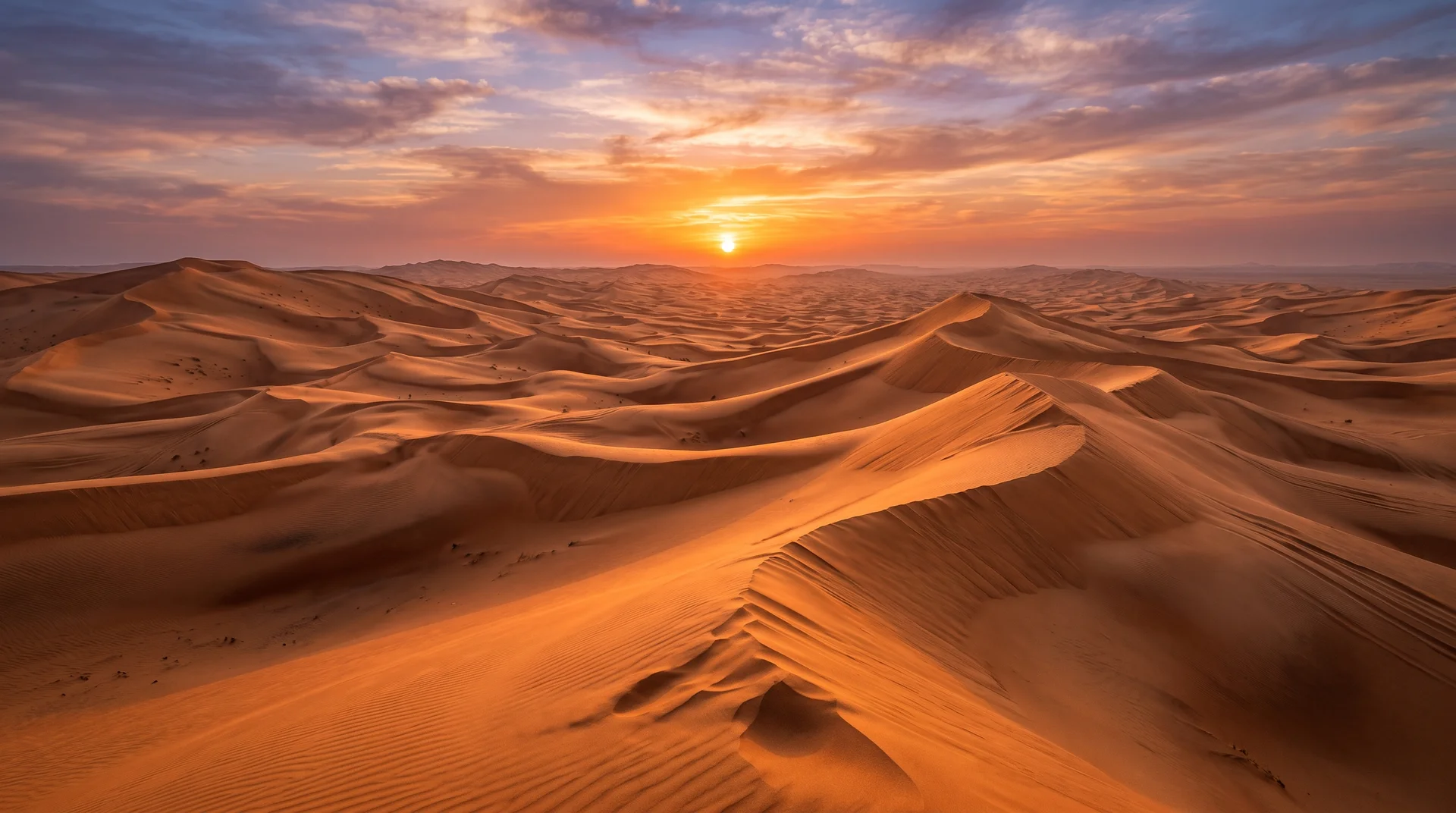
Two and a half hours south, the Liwa oasis opens onto the Rub al Khali, a 650,000 km² immensity where dunes reach 300 metres. Moreeb Dune, one of the highest climbable dunes on earth, takes about forty minutes of happy suffering on foot — the summit panorama repays every step. Day trips from Abu Dhabi run around AED 450-700 (€110-170) including transfers, dune bashing and dinner under canvas; an overnight at a desert camp buys you the Milky Way with zero light pollution. Never head off-road alone in a 4x4: getting bogged down is common, phone coverage is patchy and summer temperatures exceed 45°C. Best season: November to March.
10/12Sir Bani Yas Island: the Emirati safari where oryx and giraffes roam
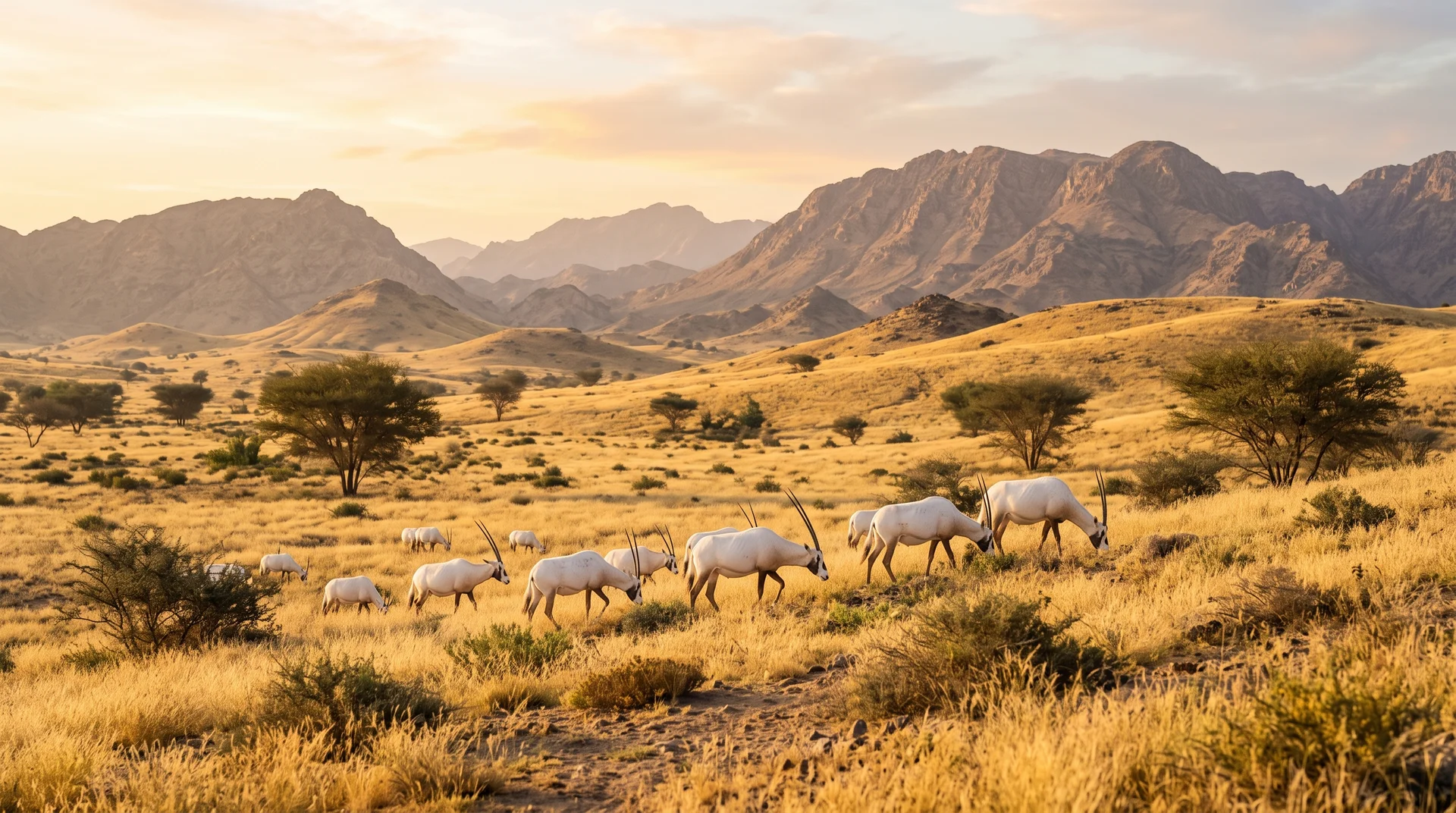
Sheikh Zayed turned it into his personal reserve back in 1971; today the Arabian Wildlife Park covers more than half this Gulf island and shelters nearly 17,000 free-roaming animals — Arabian oryx saved from extinction, gazelles, giraffes, cheetahs. Open-sided 4x4 safaris depart at sunrise and sunset, the hours when wildlife genuinely moves; mountain biking, kayaking and horse riding round out the programme. Getting there means a 2.5-hour drive to Jebel Dhanna then a 25-minute ferry; budget from AED 400 (€100) for the excursion, and consider an overnight to justify the journey. Booking is essential, as the number of vehicles per slot is deliberately capped.
11/12Observation Deck at 300: the whole city from the 74th floor of Etihad Towers
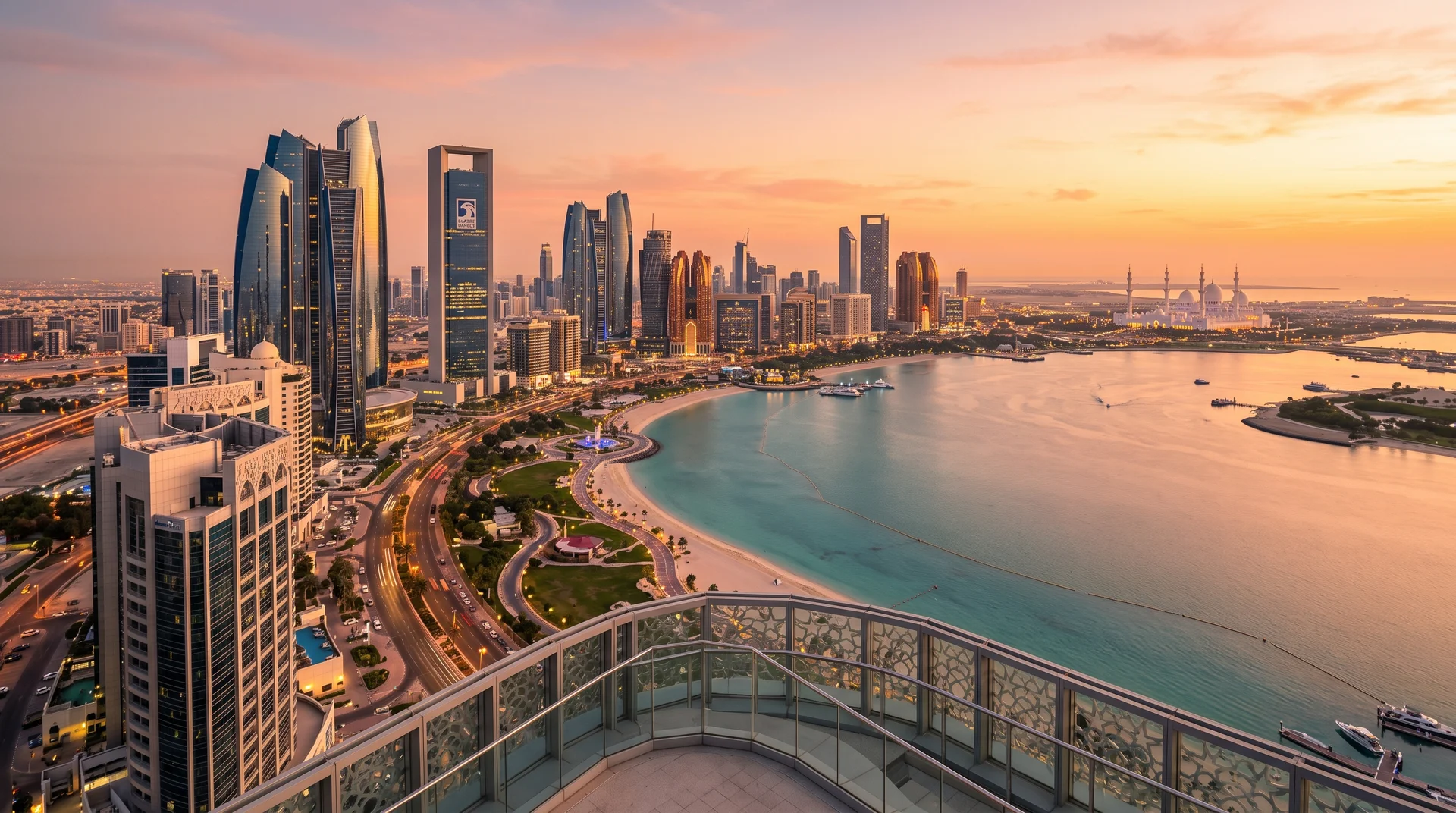
Perched 300 metres up in Tower 2 of the Etihad Towers, this glass-walled platform delivers the capital's widest panorama: the Corniche in one clean sweep, the Emirates Palace, Lulu and Saadiyat islands, and on clear days the distant outline of Dubai's towers. The classic package pairs access with an afternoon tea served against the windows — scones, Arabic pastries and scented teas — for around AED 130 (€32) per person, part of which is redeemable against your order. Open daily 10am to 6pm; book the 5pm slot to watch the city tip into golden light. The floor-to-ceiling windows are exactly that: children love them, anyone with a fear of heights rather less.
12/12Al Mina markets: fish, dates and carpets, Abu Dhabi's everyday face
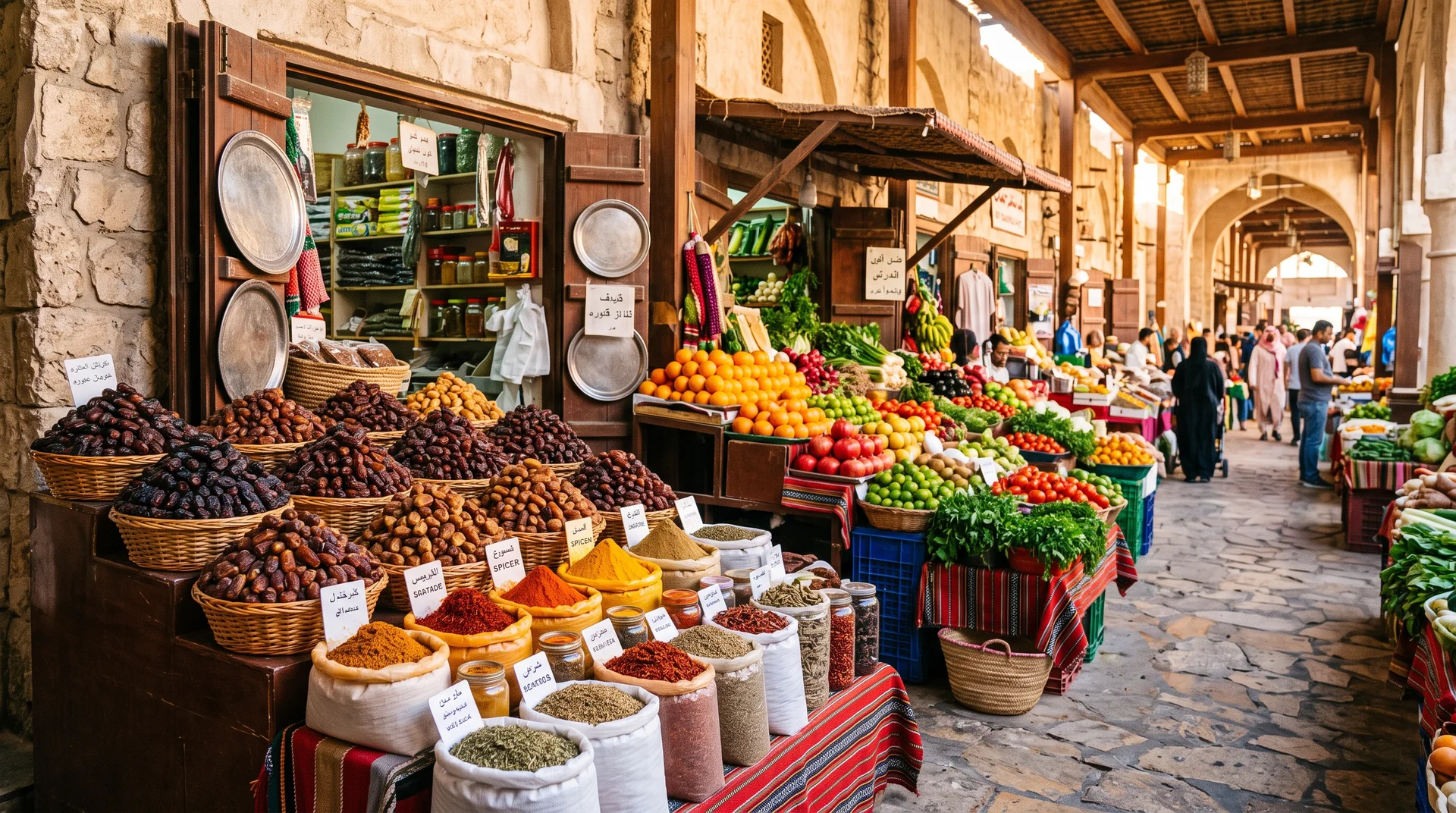
This is the city's best-kept secret, and probably its most authentic hour. In the Al Mina port district, four markets run one into the next: the fish market, where Gulf grouper and prawns are sold from 6am and grilled on the spot for a few dirhams; the fruit and vegetable market, piled high with khalas dates and mangoes; the Iranian carpet market, where haggling is an art form; and the plant souk. Open roughly 6am to 10pm, free entry. Come early for the auction atmosphere, bring cash — cards are hit-and-miss — and try karak chai, the spiced milk tea that costs AED 2 and that the whole city drinks standing up.